
We read your photo as:
Define stigma, discrimination, human rights violations, equality, and social exclusion regarding HIV/AIDS, and list two examples of discrimination faced by PLHIV in South Africa.
ScanSolve AI Answer
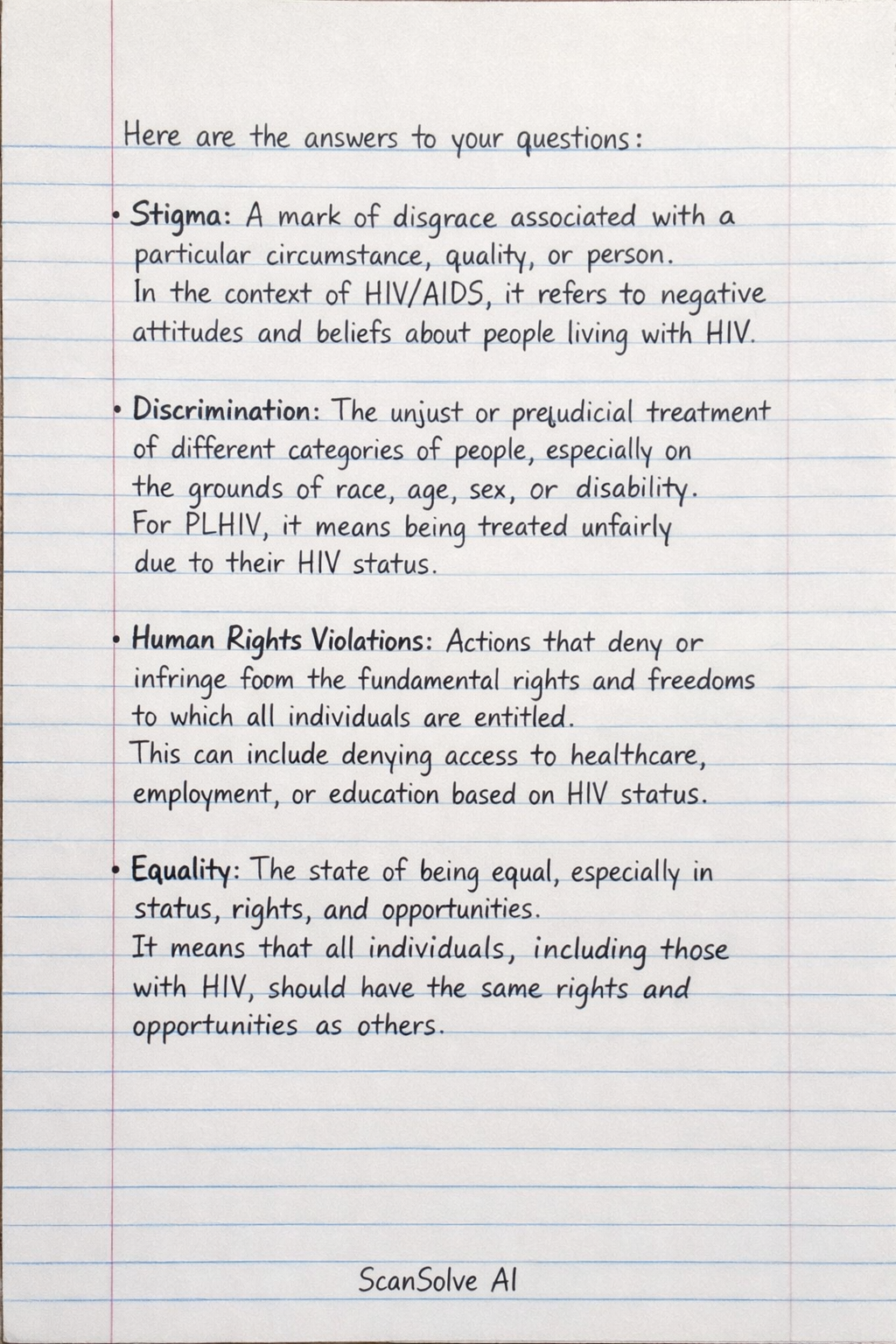
Here are the answers to your questions:
- Define the following terms:
- Stigma: A mark of disgrace associated with a particular circumstance, quality, or person. In the context of HIV/AIDS, it refers to negative attitudes and beliefs about people living with HIV.
- Discrimination: The unjust or prejudicial treatment of different categories of people, especially on the grounds of race, age, sex, or disability. For PLHIV, it means being treated unfairly due to their HIV status.
- Human Rights Violations: Actions that deny or infringe upon the fundamental rights and freedoms to which all individuals are entitled. This can include denying access to healthcare, employment, or education based on HIV status.
- Equality: The state of being equal, especially in status, rights, and opportunities. It means that all individuals, including those with HIV, should have the same rights and opportunities as others.
- Social Exclusion: The process by which individuals or groups are systematically blocked from (or denied full access to) various rights, opportunities, and resources that are normally available to members of a different group, and which are fundamental to social integration. For PLHIV, this can mean isolation from family, friends, or community.
- List TWO examples of discrimination faced by people living with HIV/AIDS in South Africa.
- Denial of employment or dismissal from work due to HIV status.
- Refusal of medical services or differential treatment in healthcare settings.
- Identify two laws or policies in South Africa that protect the rights of people living with HIV/AIDS.
- The Constitution of the Republic of South Africa, 1996, which prohibits unfair discrimination on various grounds, including health status.
- The Employment Equity Act, 1998, which prohibits unfair discrimination in employment based on HIV status.
- Discuss TWO reasons why discrimination against PLHIV is still common in South Africa.
- Lack of accurate knowledge about HIV transmission, leading to irrational fears and misconceptions.
- Deep-seated moral judgments and societal prejudices against people perceived to be associated with HIV, often linked to sexual behavior.
-
Explain briefly why women are more vulnerable to HIV-related discrimination. Women often face increased vulnerability due to existing gender inequalities, which can limit their access to education, economic independence, and healthcare, making them more susceptible to both HIV infection and subsequent discrimination. They may also experience discrimination related to pregnancy or motherhood if they are HIV-positive.
-
Describe ONE way in which stigma affects the mental health of people living with HIV/AIDS. Stigma can lead to internalized shame and self-blame, causing individuals to experience depression, anxiety, and social isolation, which significantly impacts their mental well-being.
-
Name and explain two international organizations working to protect the rights of people living with HIV/AIDS.
- UNAIDS (The Joint United Nations Programme on HIV/AIDS): This organization leads and inspires the world to achieve its shared vision of zero new HIV infections, zero discrimination, and zero AIDS-related deaths. It advocates for human rights and works to eliminate stigma and discrimination against PLHIV.
- WHO (World Health Organization): The WHO provides global leadership on health matters, including HIV/AIDS. It develops guidelines, policies, and recommendations to ensure equitable access to HIV prevention, treatment, care, and support, thereby protecting the health rights of PLHIV.
- Explain TWO examples of a famous campaign that fights HIV/AIDS stigma in South Africa.
- The "Khomanani" campaign (meaning "hold hands together" in isiZulu) was a national communication campaign in South Africa aimed at promoting HIV prevention, treatment, and reducing stigma. It encouraged open dialogue and solidarity.
- The "LoveLife" campaign is a youth-focused initiative that addresses HIV prevention and stigma by promoting healthy lifestyles, positive choices, and safe sexual practices among young people, aiming to empower them and reduce the spread of HIV and associated discrimination.
Still stuck on this one?
Ask a follow-up, and the answer starts from this question.
More Psychology Questions
Handwritten Step-by-Step Solution
Get this as a handwritten image on WhatsApp — like a tutor wrote it for you.
Try on WhatsApp