
We read your photo as:
What are the key aspects of discussing abuse, who to talk to, and the challenges faced by a listener?
ScanSolve AI Answer
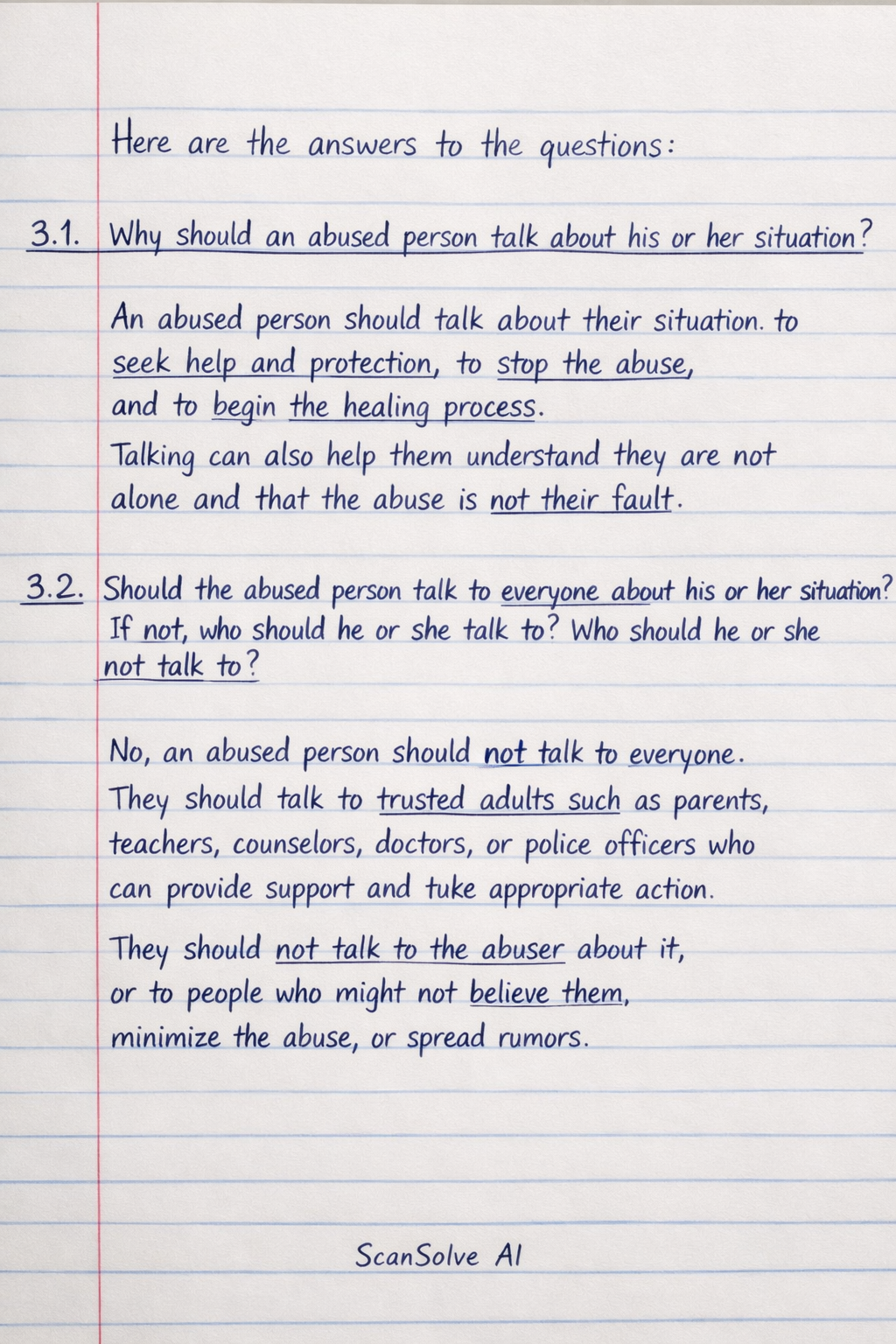
Here are the answers to the questions:
3.1. Why should an abused person talk about his or her situation?
An abused person should talk about their situation to seek help and protection, to stop the abuse, and to begin the healing process. Talking can also help them understand they are not alone and that the abuse is not their fault.
3.2. Should the abused person talk to everyone about his or her situation? If not, who should he or she talk to? Who should he or she not talk to?
No, an abused person should not talk to everyone. They should talk to trusted adults such as parents, teachers, counselors, doctors, or police officers who can provide support and take appropriate action. They should not talk to the abuser about it, or to people who might not believe them, minimize the abuse, or spread rumors.
3.3. Victims of abuse often need good friends to listen to them when want to talk about their situation. As the friend of an abused person, what are some of the challenges you might face as a listener?
As a friend listening to an abused person, some challenges include feeling emotionally overwhelmed or distressed, not knowing what to say or how to help, feeling helpless, or fearing for your friend's safety. You might also struggle with the responsibility of keeping a secret or the difficulty of encouraging them to seek professional help.
Still stuck on this one?
Ask a follow-up, and the answer starts from this question.
More Psychology Questions
Handwritten Step-by-Step Solution
Get this as a handwritten image on WhatsApp — like a tutor wrote it for you.
Try on WhatsApp