
We read your photo as:
What are the key elements of a successful patient interview, including ideal space, listening skills, and handling patient emotions?
ScanSolve AI Answer
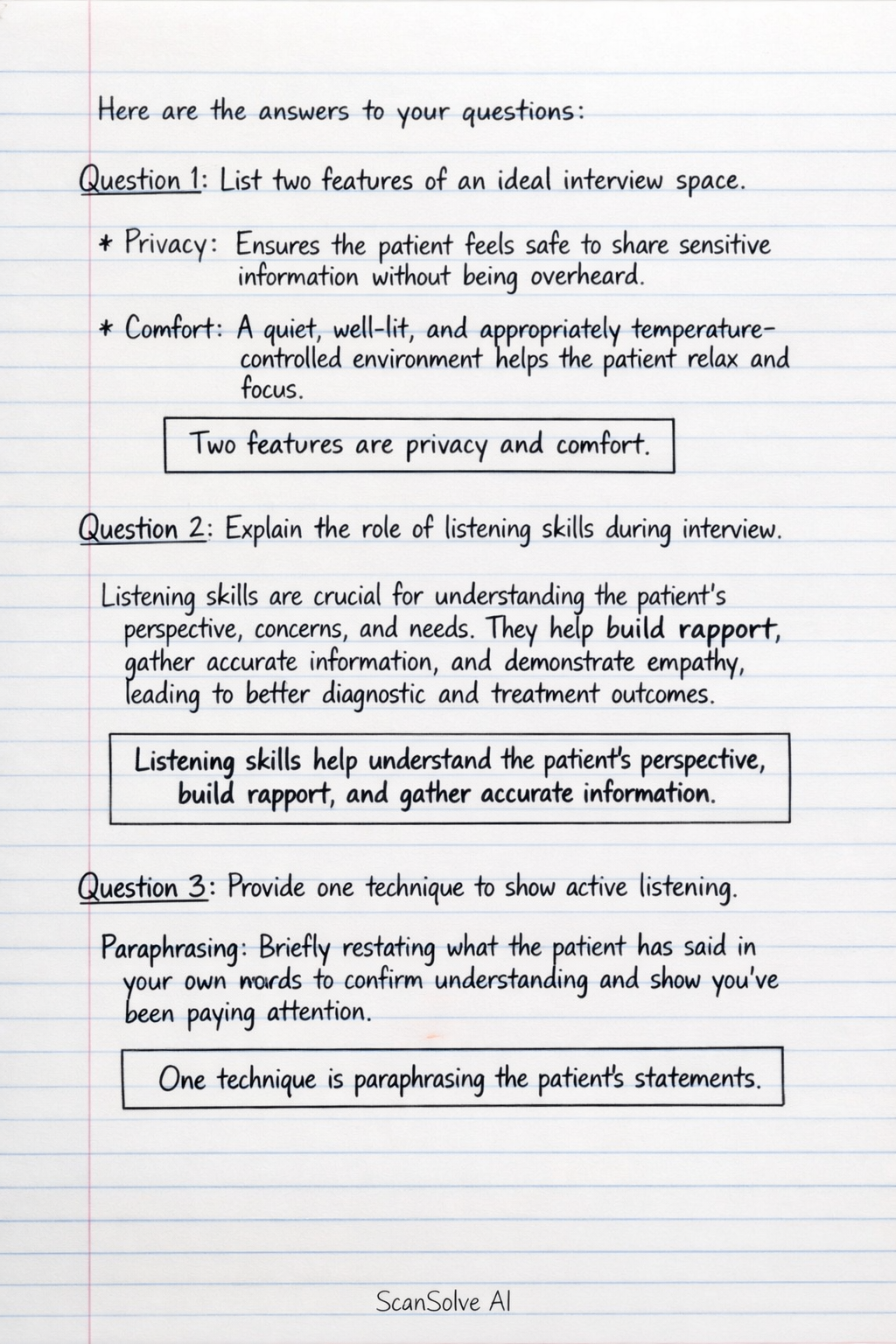
Here are the answers to your questions:
List two features of an ideal interview space.
- Privacy: Ensures the patient feels safe to share sensitive information without being overheard.
- Comfort: A quiet, well-lit, and appropriately temperature-controlled environment helps the patient relax and focus.
Explain the role of listening skills during interview.
Listening skills are crucial for understanding the patient's perspective, concerns, and needs. They help build rapport, gather accurate information, and demonstrate empathy, leading to better diagnostic and treatment outcomes.
Provide one technique to show active listening.
Paraphrasing: Briefly restating what the patient has said in your own words to confirm understanding and show you've been paying attention.
A patient is upset. Should you maintain eye contact?
Yes, generally maintain appropriate eye contact. It conveys attentiveness, empathy, and respect. However, be sensitive to cultural norms and avoid staring, which can be perceived as aggressive or uncomfortable.
What is the purpose of clarifying statements?
Clarifying statements are used to ensure accurate understanding of what the patient has communicated. They help resolve ambiguities, confirm details, and prevent misinterpretations, leading to more precise information gathering.
Why should clinicians collaborate on the plan?
Collaboration ensures the treatment plan is patient-centered and realistic. It empowers the patient, increases their adherence to the plan, and incorporates their values and preferences, leading to better outcomes and satisfaction.
Patient asks, "Am I going to die?" How should you respond?
Respond with honesty and empathy, acknowledging their fear. Provide accurate information about their prognosis in a sensitive manner, focusing on current treatment goals and support available, without giving false hope or definitive timelines unless medically certain.
What is a common mistake when responding to emotions?
A common mistake is minimizing or dismissing the patient's feelings (e.g., "Don't worry, it'll be fine"). This can make the patient feel unheard, invalidated, and less likely to share further emotions.
Why should patients be asked to repeat the plan?
Asking patients to repeat the plan (the "teach-back" method) confirms their understanding of the information and instructions. It helps identify any misunderstandings or gaps in knowledge, ensuring better adherence and safety.
What is the danger of denial?
The danger of denial is that it can prevent patients from accepting their condition or engaging in necessary treatment. This can lead to delayed care, worsening health outcomes, and a lack of preparation for future challenges.
Why should patients be allowed to decline information?
Patients have the right to autonomy and to control what information they receive about their health. Forcing information can be distressing, erode trust, and is unethical. Clinicians should respect their wishes while ensuring they are aware of potential consequences.
$\boxed{\text{Patients should be allowed to decline information to respect their autonomy and avoid
Still stuck on this one?
Ask a follow-up, and the answer starts from this question.
More Psychology Questions
Handwritten Step-by-Step Solution
Get this as a handwritten image on WhatsApp — like a tutor wrote it for you.
Try on WhatsApp