
We read your photo as:
Explain what bullying is, list and explain two common types of bullying in your school, and describe three reasons why people bully others.
Psychology
ScanSolve AI Answer
Step-by-step solution
5 stepsHere are the answers to Question 7 and Question 8:
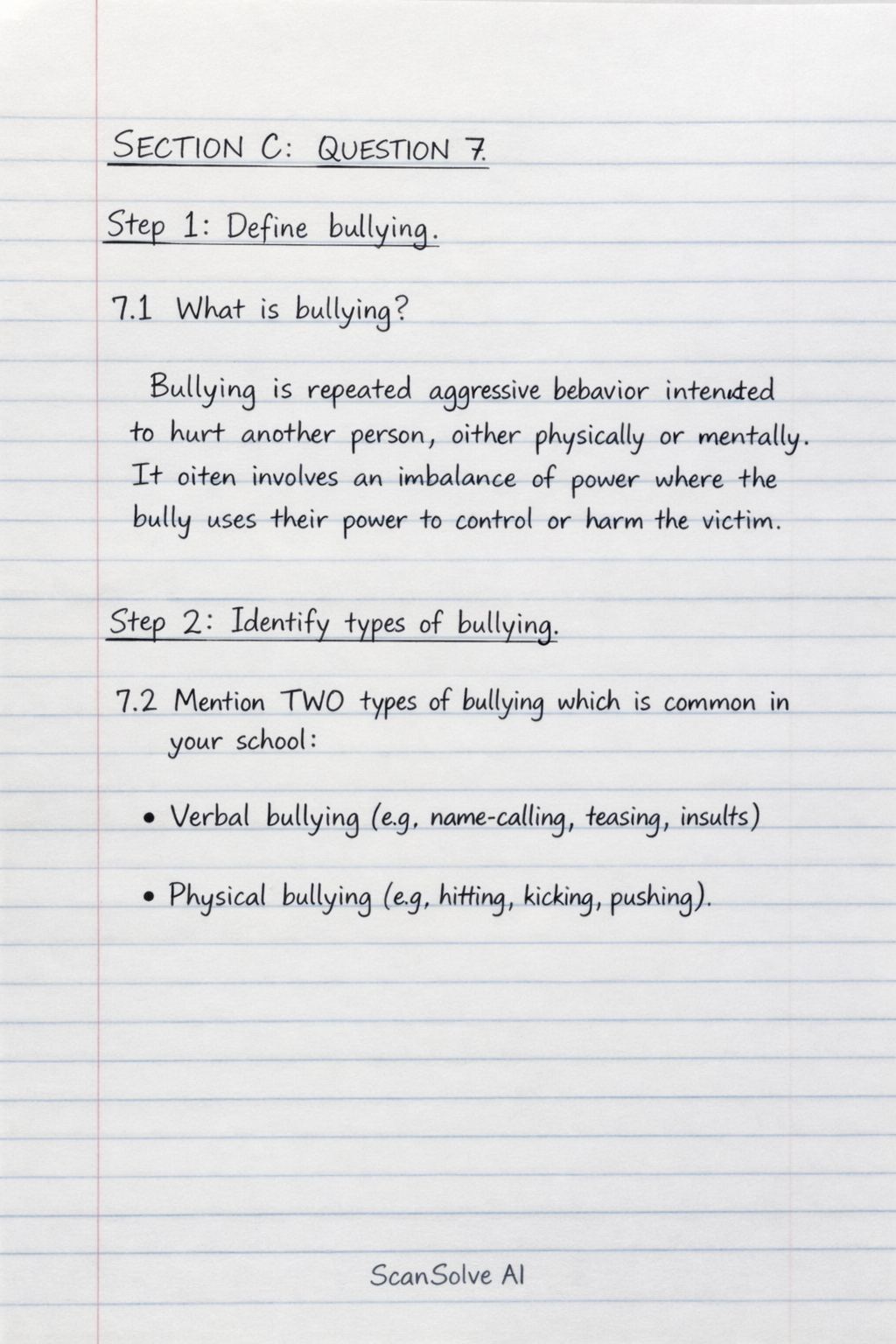
SECTION C: QUESTION 7
Define bullying.
- 7.1 What is bullying? Bullying is repeated aggressive behavior intended to hurt another person, either physically or mentally. It often involves an imbalance of power where the bully uses their power to control or harm the victim.
Identify types of bullying.
- 7.2 Mention TWO types of bullying which is common in your school.
- Verbal bullying (e.g., name-calling, teasing, insults)
- Physical bullying (e.g., hitting, kicking, pushing)
- Social bullying (e.g., excluding someone, spreading rumors)
- Cyberbullying (e.g., sending mean messages online, posting embarrassing photos) (Choose any two from the above)
- 7.2 Mention TWO types of bullying which is common in your school.
Identify reasons for bullying.
- 7.3 Identify THREE reasons why people bully others?
- To feel powerful or superior to others.
- They may have been bullied themselves or come from homes where aggression is common.
- To fit in with a certain group or gain social status.
- Jealousy or insecurity about themselves. (Choose any three from the above)
- 7.3 Identify THREE reasons why people bully others?
Describe effects of bullying on mental health.
- 7.4 Describe THREE effects of bullying on a victim's mental health?
- Anxiety and Depression: Victims often experience feelings of sadness, hopelessness, and constant worry.
- Low Self-Esteem: Bullying can make victims feel worthless and damage their confidence.
- Social Withdrawal: Victims may isolate themselves from friends and activities they once enjoyed.
- Difficulty Concentrating: Stress from bullying can make it hard to focus in school or on other tasks. (Choose any three from the above)
QUESTION 8
- 7.4 Describe THREE effects of bullying on a victim's mental health?
Write a paragraph on helping a bully.
- You know someone who is a bully at your school, and you would like to help him/her to stop bullying others. Write a paragraph of about 5-6 lines and suggest ways that could help him/her to stop bullying. If I knew a bully at school, I would try to understand why they are bullying, perhaps by talking to them privately and calmly about their behavior. I would suggest they seek help from a trusted adult, like a teacher or counselor, who can provide support and guidance. It's important to help them understand the negative impact their actions have on others and encourage them to develop empathy. I would also suggest they find positive ways to gain attention and build self-esteem, such as joining a club or sport, rather than through hurting others.
Was this helpful?
Still stuck on this one?
Ask a follow-up, and the answer starts from this question.
Got a different question?Ask your own question
More Psychology Questions
QDefine bullying, explain how it occurs in schools, and discuss its causes.QPresent on the causes and effects of bullying in schools.QSummarize the provided text on bullying, covering its effects, causes, victims, bystanders…QExplain the reasons for bullying, referencing the provided image of "Black Swan's" 7 reasons.QWhat are the warning signs of bullying in schools for both victims and bullies?
Handwritten Step-by-Step Solution
Get this as a handwritten image on WhatsApp — like a tutor wrote it for you.
Try on WhatsApp