
We read your photo as:
Explain what your understanding of the concept self-talk is. 12. Distinguish between positive and negative self-talk by means of an example. 13. List TWO difficult issues that young people experience daily. 14. Explain how positive self-talk can benefit your self-confidence.
ScanSolve AI Answer
Here are the answers to your questions:
-
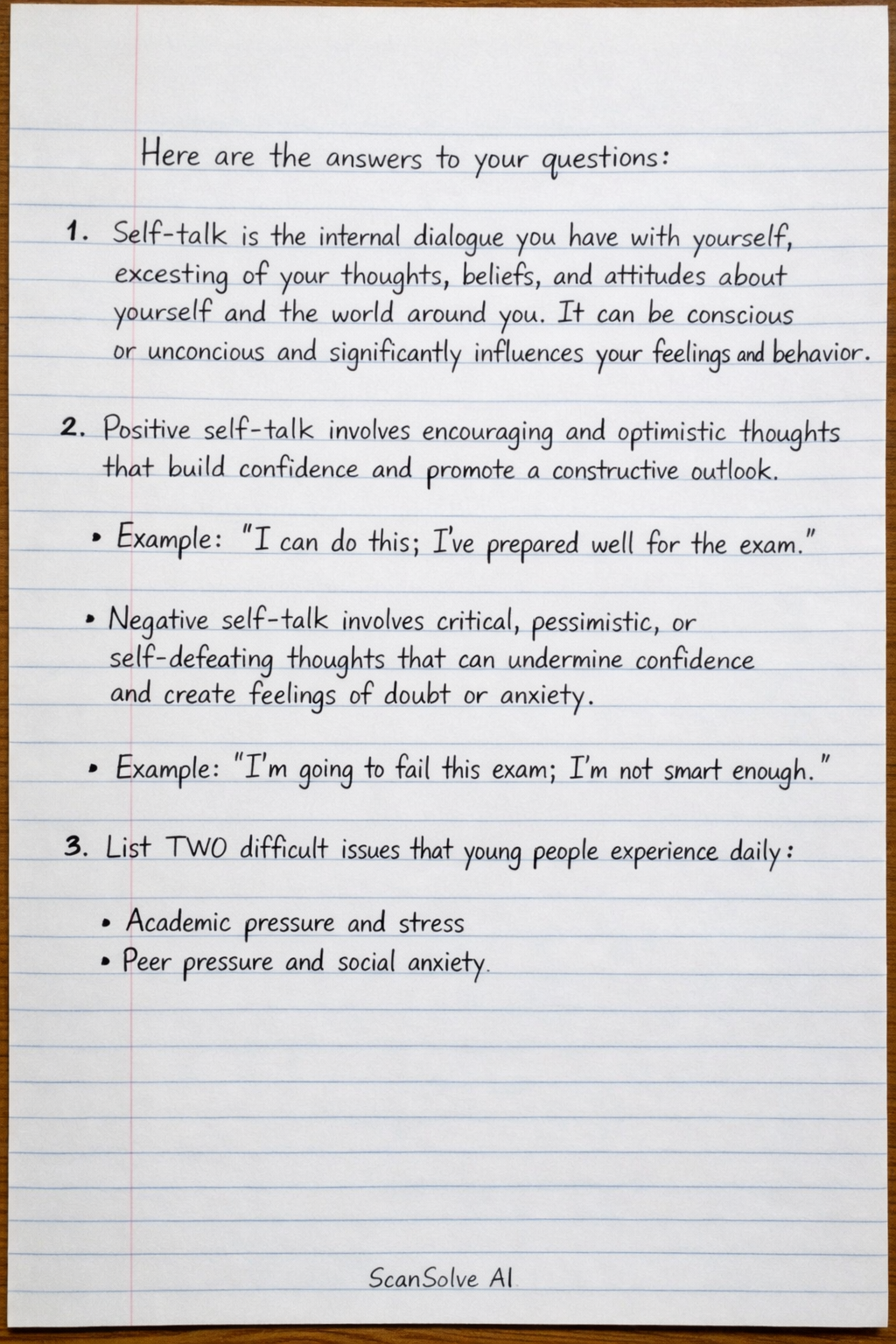
Explain what your understanding of the concept self-talk is. Self-talk is the internal dialogue you have with yourself, consisting of your thoughts, beliefs, and attitudes about yourself and the world around you. It can be conscious or unconscious and significantly influences your feelings and behavior.
-
Distinguish between positive and negative self-talk by means of an example.
- Positive self-talk involves encouraging and optimistic thoughts that build confidence and promote a constructive outlook.
- Example: "I can do this; I've prepared well for the exam."
- Negative self-talk involves critical, pessimistic, or self-defeating thoughts that can undermine confidence and create feelings of doubt or anxiety.
- Example: "I'm going to fail this exam; I'm not smart enough."
- Positive self-talk involves encouraging and optimistic thoughts that build confidence and promote a constructive outlook.
-
List TWO difficult issues that young people experience daily.
- Academic pressure and stress
- Peer pressure and social anxiety
-
Explain how positive self-talk can benefit your self-confidence. Positive self-talk enhances self-confidence by reinforcing a belief in one's abilities and worth. It helps to reframe challenges as opportunities, reduces self-doubt, and fosters a resilient mindset, making individuals more likely to take risks and persevere towards their goals.
Still stuck on this one?
Ask a follow-up, and the answer starts from this question.
More Psychology Questions
Handwritten Step-by-Step Solution
Get this as a handwritten image on WhatsApp — like a tutor wrote it for you.
Try on WhatsApp