
We read your photo as:
A group of children exhibit symptoms like oedema, protruding bellies, thin dry peeling skin, brittle hair, and lack of appetite. Their diet primarily consists of white rice, cassava, and bread. What c
ScanSolve AI Answer
Answer
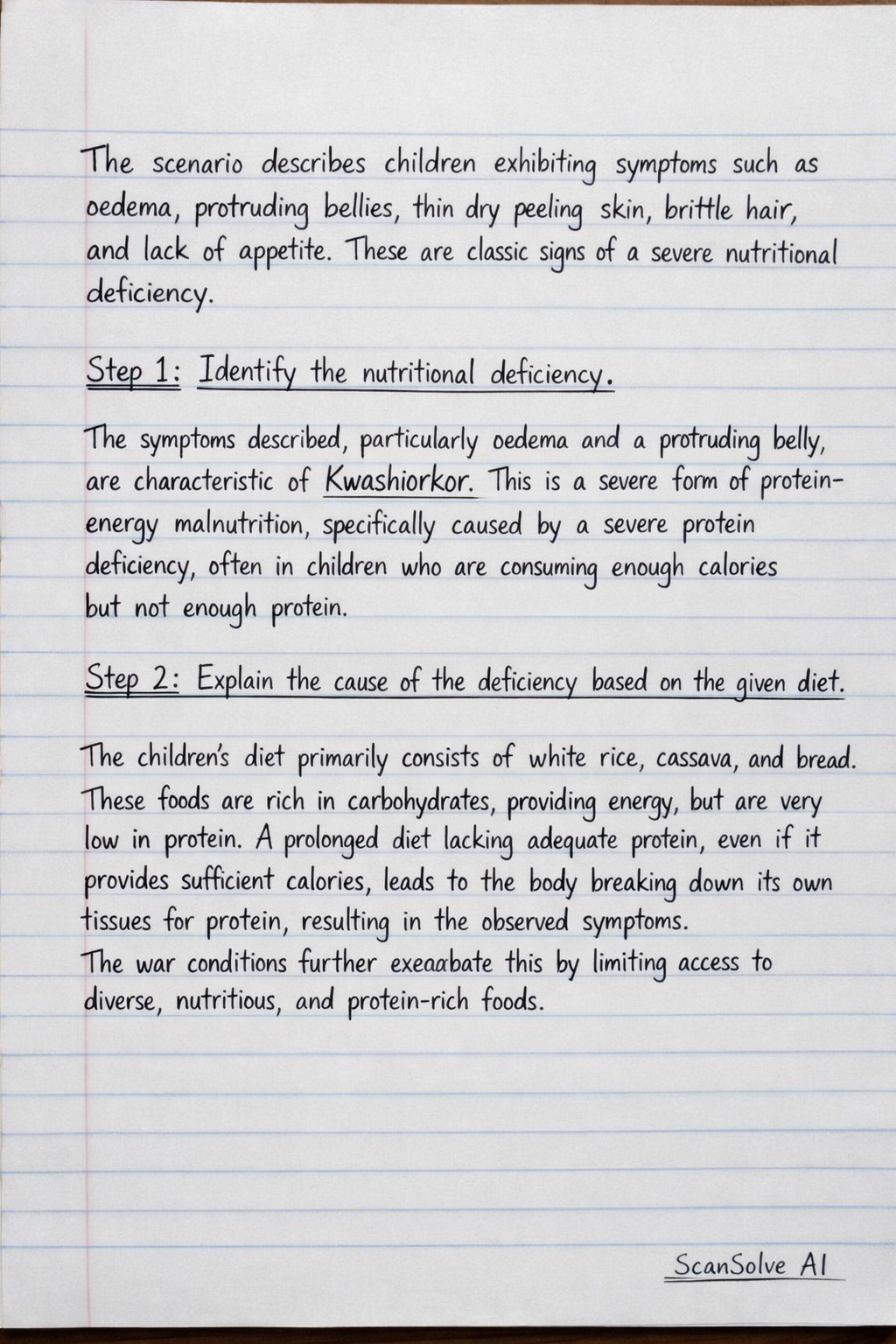
The scenario describes children exhibiting symptoms such as oedema, protruding bellies, thin dry peeling skin, brittle hair, and lack of appetite. These are classic signs of a severe nutritional deficiency.
Step-by-step solution
4 stepsIdentify the nutritional deficiency.
The symptoms described, particularly oedema and a protruding belly, are characteristic of Kwashiorkor. This is a severe form of protein-energy malnutrition, specifically caused by a severe protein deficiency, often in children who are consuming enough calories but not enough protein.
Explain the cause of the deficiency based on the given diet.
The children's diet primarily consists of white rice, cassava, and bread. These foods are rich in carbohydrates, providing energy, but are very low in protein. A prolonged diet lacking adequate protein, even if it provides sufficient calories, leads to the body breaking down its own tissues for protein, resulting in the observed symptoms. The war conditions further exacerbate this by limiting access to diverse, nutritious, and protein-rich foods.
Suggest ways the parents can manage the condition.
Parents can manage the condition by:
- Introducing protein-rich foods: Gradually incorporate protein sources into the children's diet. Examples include legumes (lentils, beans, chickpeas), groundnuts, fortified cereals, and if available, small amounts of eggs, milk powder, or fish.
- Diversifying the diet: While staple carbohydrates are important, parents should try to include a variety of food groups. Even small amounts of different foods can provide a wider range of nutrients.
- Frequent small meals: Children with Kwashiorkor often have poor appetite. Offering small, frequent, nutrient-dense meals throughout the day can help ensure they consume enough food.
- Hygiene and sanitation: Maintaining good hygiene is crucial as malnourished children are highly susceptible to infections, which can worsen their condition.
- Seeking medical help: For severe cases, medical intervention is necessary to manage complications like infections, dehydration, and electrolyte imbalances.
Design a diet to manage the situation, with reasons.
The diet should focus on providing adequate protein and energy, along with essential vitamins and minerals, using accessible foods.
- Breakfast: Fortified porridge made from maize or rice flour mixed with groundnut paste or mashed lentils.
- Reason: The porridge provides carbohydrates for energy. Groundnut paste or lentils are excellent sources of plant-based protein, crucial for tissue repair and growth. Fortification (if available) adds micronutrients.
- Mid-morning Snack: A small piece of bread (if available) with a thin spread of groundnut paste or a small portion of cooked beans.
- Reason: Provides additional protein and energy in a digestible form, helping to maintain nutrient intake between main meals.
- Lunch: Boiled cassava or rice served with a thick stew made from lentils, beans, or chickpeas, and any available local green leafy vegetables (e.g., spinach, amaranth leaves).
- Reason: Cassava/rice provides energy. Legumes are vital for protein. Green leafy vegetables supply essential vitamins (like Vitamin A and C) and minerals (like iron), which are often deficient in malnourished children.
- Afternoon Snack: A piece of ripe fruit (if available, e.g., banana, mango) or a small portion of cooked sweet potato.
- Reason: Fruits provide vitamins, minerals, and natural sugars for quick energy. Sweet potatoes offer carbohydrates and some vitamins.
- Dinner: A meal similar to lunch, perhaps with a different legume or vegetable, or a small portion of fish (if accessible and affordable).
- Reason: Ensures continued intake of protein and micronutrients. Fish provides high-quality animal protein and essential fatty acids.
- Breakfast: Fortified porridge made from maize or rice flour mixed with groundnut paste or mashed lentils.
Still stuck on this one?
Ask a follow-up, and the answer starts from this question.
More Biology Questions
Handwritten Step-by-Step Solution
Get this as a handwritten image on WhatsApp — like a tutor wrote it for you.
Try on WhatsApp