
We read your photo as:
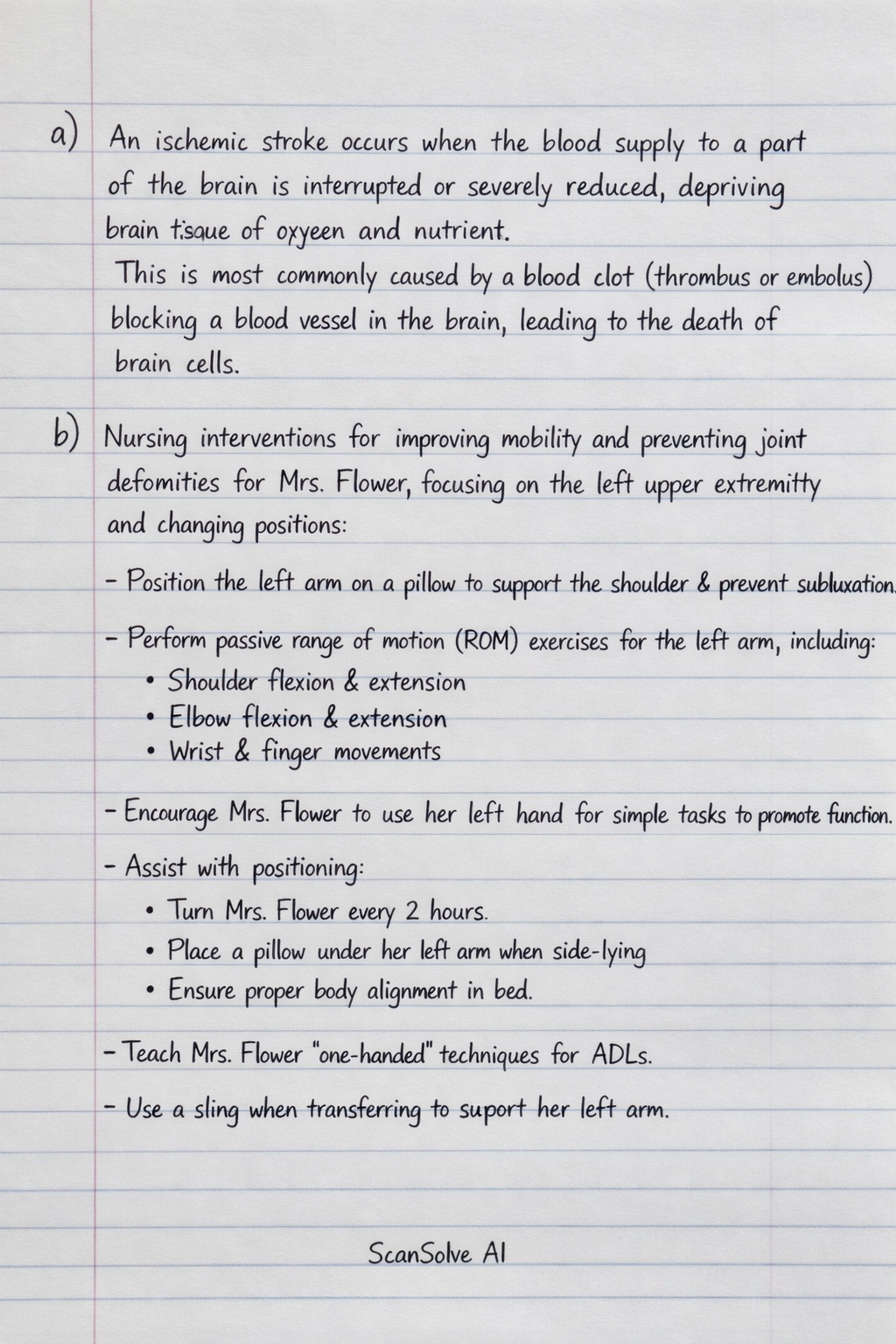
An ischemic stroke occurs when the blood supply to a part of the brain is interrupted or severely reduced, depriving brain tissue of oxygen and nutrients. This is most commonly caused by a blood cl
ScanSolve AI Answer
a)
An ischemic stroke occurs when the blood supply to a part of the brain is interrupted or severely reduced, depriving brain tissue of oxygen and nutrients. This is most commonly caused by a blood clot (thrombus or embolus) blocking a blood vessel in the brain, leading to the death of brain cells.
b)
Nursing interventions for improving mobility and preventing joint deformities for Mrs. Flower, focusing on the left upper extremity and changing positions:
-
The upper extremity (left, flaccid):
- Proper positioning: Position the left arm to prevent shoulder subluxation and contractures. This includes supporting the arm on pillows in slight abduction and external rotation, with the wrist in a neutral position and fingers slightly flexed. A hand splint or cone may be used to prevent finger contractures.
- Passive Range of Motion (PROM): Perform PROM exercises to all joints of the left upper extremity (shoulder, elbow, wrist, fingers) several times a day to maintain joint flexibility, prevent stiffness, and improve circulation.
- Support during transfers/mobility: When Mrs. Flower is moved or sits up, ensure the flaccid arm is supported (e.g., with a sling, pillow, or lap tray) to prevent injury or pulling on the shoulder joint.
- Skin integrity: Regularly inspect the skin of the left arm and hand for signs of pressure injury, especially in the palm and under the arm, due to lack of movement.
-
Changing positions:
- Regular turning schedule: Turn Mrs. Flower every 2 hours (or more frequently based on skin assessment) to prevent pressure ulcers and promote circulation.
- Proper body alignment: When repositioning, ensure correct anatomical alignment of the entire body, using pillows to support limbs, head, and trunk to maintain natural curves and prevent joint stress.
- Gradual elevation: Gradually elevate the head of the bed to promote orthostatic tolerance and prepare for sitting up.
- Encourage active participation: If possible, encourage Mrs. Flower to assist with repositioning by using her unaffected side to push or pull, promoting active movement and strength.
c)
Assistive devices to enhance self-care after an ischemic stroke:
-
Dressing:
- Button hook: Helps fasten buttons with one hand.
- Zipper pull: Assists with zipping clothes.
- Long-handled shoehorn: Allows putting on shoes without bending.
- Dressing stick: Aids in pulling up pants or retrieving clothing.
-
Bathing/Hygiene:
- Shower chair/bench: Provides a safe seating option in the shower.
- Long-handled sponge/brush: Extends reach for washing difficult-to-access body parts.
- Grab bars: Installed in the bathroom for stability and support during transfers.
- Adaptive toothbrush/toothpaste dispenser: Designed for easier grip and one-handed use.
-
Eating:
- Adaptive utensils: Feature built-up or weighted handles for easier grip and control.
- Plate guard/non-slip mat: Prevents food from sliding off the plate or dishes from moving.
- Two-handled cup with lid: Provides a secure grip and prevents spills.
-
Mobility/Transfers:
- Walker/Cane: Provides support and stability for ambulation.
- Wheelchair: For longer distances or when ambulation is not feasible.
- Transfer board: Facilitates safe transfers between surfaces (e.g., bed to chair).
- Bedside commode: Offers a convenient toileting option near the bed.
-
Other:
- Reacher/grabber tool: Extends reach to pick up objects from the floor or high shelves.
- Adaptive cutting board: Features spikes or clamps to hold food in place for one-handed cutting.
Still stuck on this one?
Ask a follow-up, and the answer starts from this question.
More Biology Questions
Handwritten Step-by-Step Solution
Get this as a handwritten image on WhatsApp — like a tutor wrote it for you.
Try on WhatsApp