
We read your photo as:
Describe the characteristics of Flemish Giants, types of cattle and poultry, nutritional diseases, duck breeds, castration methods, and injection precautions for livestock.
ScanSolve AI Answer
No problem, Abdul! Here are the solutions for the questions in the image:
3. (a)
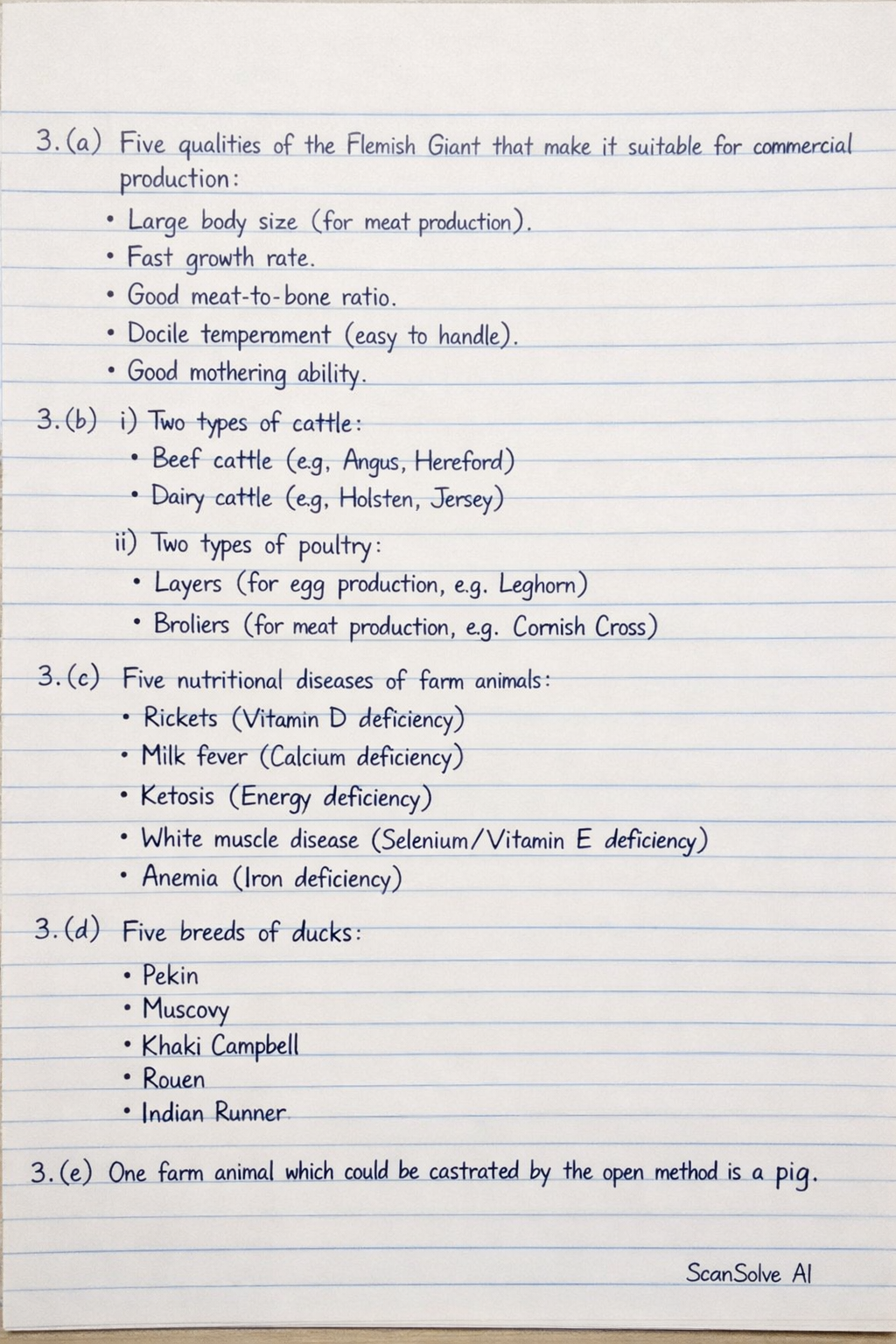
Five qualities of the Flemish Giant that make it suitable for commercial production:
- Large body size (for meat production).
- Fast growth rate.
- Good meat-to-bone ratio.
- Docile temperament, making them easy to handle.
- Good mothering ability.
3. (b)
- i) Two types of cattle:
- Beef cattle (e.g., Angus, Hereford)
- Dairy cattle (e.g., Holstein, Jersey)
- ii) Two types of poultry:
- Layers (for egg production, e.g., Leghorn)
- Broilers (for meat production, e.g., Cornish Cross)
3. (c)
Five nutritional diseases of farm animals:
- Rickets (Vitamin D deficiency)
- Milk fever (Calcium deficiency)
- Ketosis (Energy deficiency)
- White muscle disease (Selenium/Vitamin E deficiency)
- Anemia (Iron deficiency)
3. (d)
Five breeds of ducks:
- Pekin
- Muscovy
- Khaki Campbell
- Rouen
- Indian Runner
3. (e)
One farm animal which could be castrated by the open method is a pig.
4. (a)
Four precautions when administering medication to livestock using injection method:
- Ensure the needle and syringe are sterile.
- Clean and disinfect the injection site on the animal's skin.
- Use the correct needle size and length for the animal and injection type.
- Administer the correct dosage of medication.
4. (b)
Five functions of vitamins in farm animals:
- Promote growth and development.
- Boost immune system function.
- Aid in metabolism of carbohydrates, fats, and proteins.
- Maintain healthy vision (e.g., Vitamin A).
- Support reproductive health.
4. (c)
- i) Define the term coprophagy: Coprophagy is the ingestion of feces (dung or droppings).
- ii) Three farm animals that exhibit coprophagy:
- Rabbits
- Pigs
- Horses
4. (d)
Five disadvantages of the deep litter system of rearing chicken:
- Risk of disease outbreak if litter is not managed properly.
- Ammonia build-up can cause respiratory problems.
- Higher labor requirement for litter management.
- Can attract pests like rodents and insects.
- Difficulty in identifying sick birds in a large flock.
5. (a)
Five factors that could reduce egg production on a poultry farm:
- Poor nutrition (e.g., inadequate protein, calcium).
- Stress (e.g., overcrowding, sudden changes).
- Disease outbreaks (e.g., Newcastle disease, Marek's disease).
- Inadequate lighting program.
- Extreme temperatures (too hot or too cold).
5. (b)
Three possible internal defects of chicken egg:
- Blood spots
- Meat spots
- Double yolk
5. (c)
Five by-products of cereal commonly fed to farm animals:
- Wheat bran
- Maize germ meal
- Rice bran
- Barley malt sprouts
- Oat hulls
5. (d)
Four symptoms of poisoning in poultry:
- Diarrhea
- Vomiting
- Lethargy/Weakness
- Convulsions/Tremors
5. (e)
Animal protein feeds should be sterilized before they are fed to farm animals to eliminate harmful pathogens (like bacteria, viruses, or parasites) that could be present in the raw animal products. This prevents the spread of diseases to the farm animals and ultimately to humans who consume the animal products.
Still stuck on this one?
Ask a follow-up, and the answer starts from this question.
More Biology Questions
Handwritten Step-by-Step Solution
Get this as a handwritten image on WhatsApp — like a tutor wrote it for you.
Try on WhatsApp