
Chemical industries:types raw materials and relevance, biotechnology
ScanSolve AI Answer
-
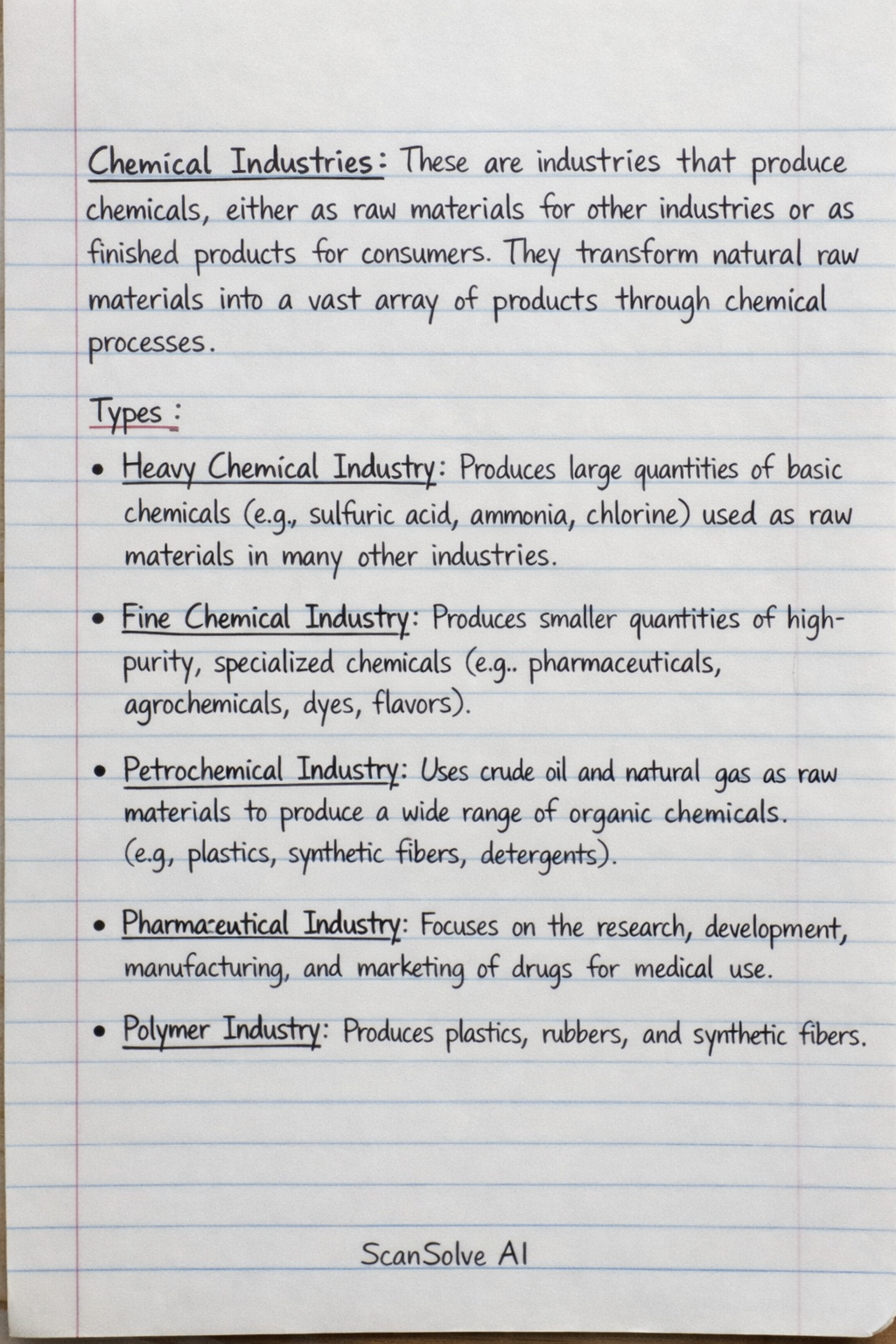
Chemical Industries: These are industries that produce chemicals, either as raw materials for other industries or as finished products for consumers. They transform natural raw materials into a vast array of products through chemical processes.
-
Types:
- Heavy Chemical Industry: Produces large quantities of basic chemicals (e.g., sulfuric acid, ammonia, chlorine) used as raw materials in many other industries.
- Fine Chemical Industry: Produces smaller quantities of high-purity, specialized chemicals (e.g., pharmaceuticals, agrochemicals, dyes, flavors).
- Petrochemical Industry: Uses crude oil and natural gas as raw materials to produce a wide range of organic chemicals (e.g., plastics, synthetic fibers, detergents).
- Pharmaceutical Industry: Focuses on the research, development, manufacturing, and marketing of drugs for medical use.
- Polymer Industry: Produces plastics, rubbers, and synthetic fibers.
-
Raw Materials:
- Fossil Fuels: Crude oil, natural gas, coal (for petrochemicals, plastics, energy).
- Minerals: Salt (for chlorine, sodium hydroxide), limestone (for cement, lime), sulfur (for sulfuric acid), phosphate rock (for fertilizers).
- Air: Nitrogen (for ammonia, fertilizers), oxygen (for combustion, steelmaking).
- Water: Used as a solvent, reactant, and for cooling.
- Agricultural Products: Plant oils, starches, cellulose (for biofuels, bioplastics, paper).
-
Relevance: Chemical industries are fundamental to modern society. They provide essential materials for almost every sector, including agriculture (fertilizers, pesticides), healthcare (medicines), construction (cement, plastics), textiles (synthetic fibers), electronics, transportation, and food processing. They drive economic growth and improve quality of life by enabling the production of countless products.
-
-
Biotechnology: This is the application of biological organisms, systems, or processes to develop or make products for specific uses. It combines biology with technology to solve problems and create new products.
- Relevance/Applications:
- Medicine: Development of new drugs, vaccines, gene therapies, diagnostic tools, and personalized medicine.
- Agriculture: Creation of genetically modified crops with improved yields, pest resistance, and nutritional value; development of bio-pesticides and bio-fertilizers.
- Industry: Production of enzymes for detergents, biofuels (e.g., ethanol), bioplastics, and industrial chemicals through fermentation.
- Environmental Remediation: Use of microorganisms to clean up pollution (bioremediation) and treat wastewater.
- Food Production: Fermentation processes for bread, cheese, yogurt, and alcoholic beverages; development of food additives.
- Relevance/Applications:
Still stuck on this one?
Ask a follow-up, and the answer starts from this question.
More Biology Questions
Handwritten Step-by-Step Solution
Get this as a handwritten image on WhatsApp — like a tutor wrote it for you.
Try on WhatsApp