
We read your photo as:
Describe adaptations of a leaf for photosynthesis and transpiration.
Biology
ScanSolve AI Answer
Step-by-step solution
2 stepsDescribe adaptations of a leaf for photosynthesis (11.1).
- 11.1 Photosynthesis:
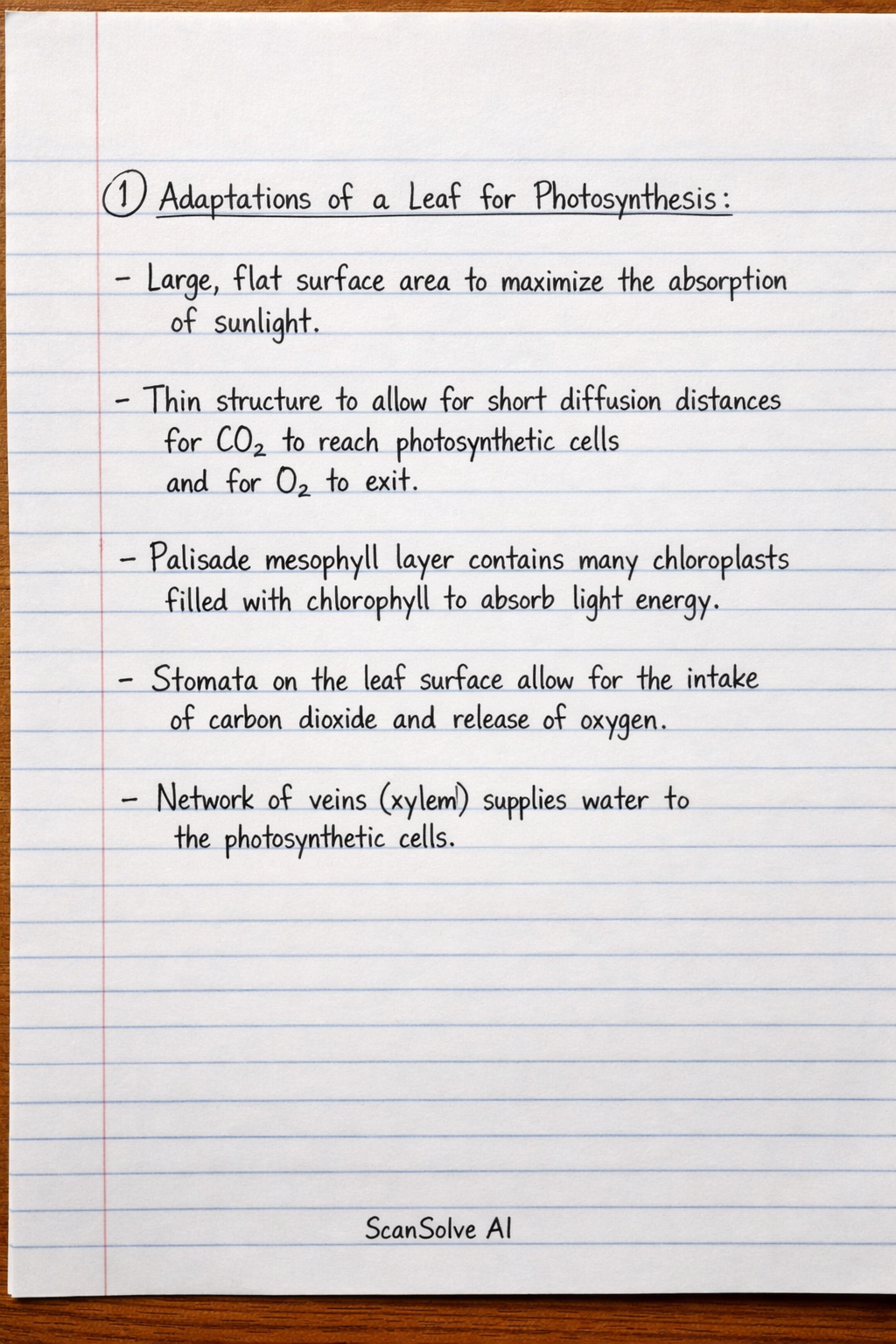
- Leaves have a large, flat surface area to maximize the absorption of sunlight.
- They are thin to allow for short diffusion distances for carbon dioxide to reach the photosynthetic cells and for oxygen to exit.
- The palisade mesophyll layer contains numerous chloroplasts, which are packed with chlorophyll to absorb light energy.
- Stomata on the leaf surface allow for the intake of carbon dioxide and release of oxygen.
- A network of veins (xylem) supplies water to the photosynthetic cells.
- 11.1 Photosynthesis:
Describe adaptations of a leaf for transpiration (11.2).
- 11.2 Transpiration:
- Stomata, primarily on the lower epidermis, allow for the diffusion of water vapor out of the leaf.
- The spongy mesophyll layer has large air spaces, creating a large internal surface area for water to evaporate from the cell surfaces into the air spaces.
- A network of xylem vessels in the veins transports water from the roots to the leaves, replacing the water lost through transpiration.
- The cuticle on the leaf surface is a waxy layer that reduces uncontrolled water loss from the epidermis.
- 11.2 Transpiration:
Was this helpful?
Still stuck on this one?
Ask a follow-up, and the answer starts from this question.
Got a different question?Ask your own question
More Biology Questions
QDescribe the adaptations of the maize leaf for photosynthesis, define action and absorption…QWhat are the functions and adaptations of epidermal cells, stomatal pores, guard cells, xylem…QExplain the functions and adaptations of root hairs in plants, and identify substances transported…QExplain diffusion and active transport, including factors affecting diffusion and examples of active…QDescribe adaptations of xerophytes to their habitat, including adaptations for reducing water loss…
Browse by topic:Biochemistry
Handwritten Step-by-Step Solution
Get this as a handwritten image on WhatsApp — like a tutor wrote it for you.
Try on WhatsApp