
Explain the difference between RBC values in the above show
ScanSolve AI Answer
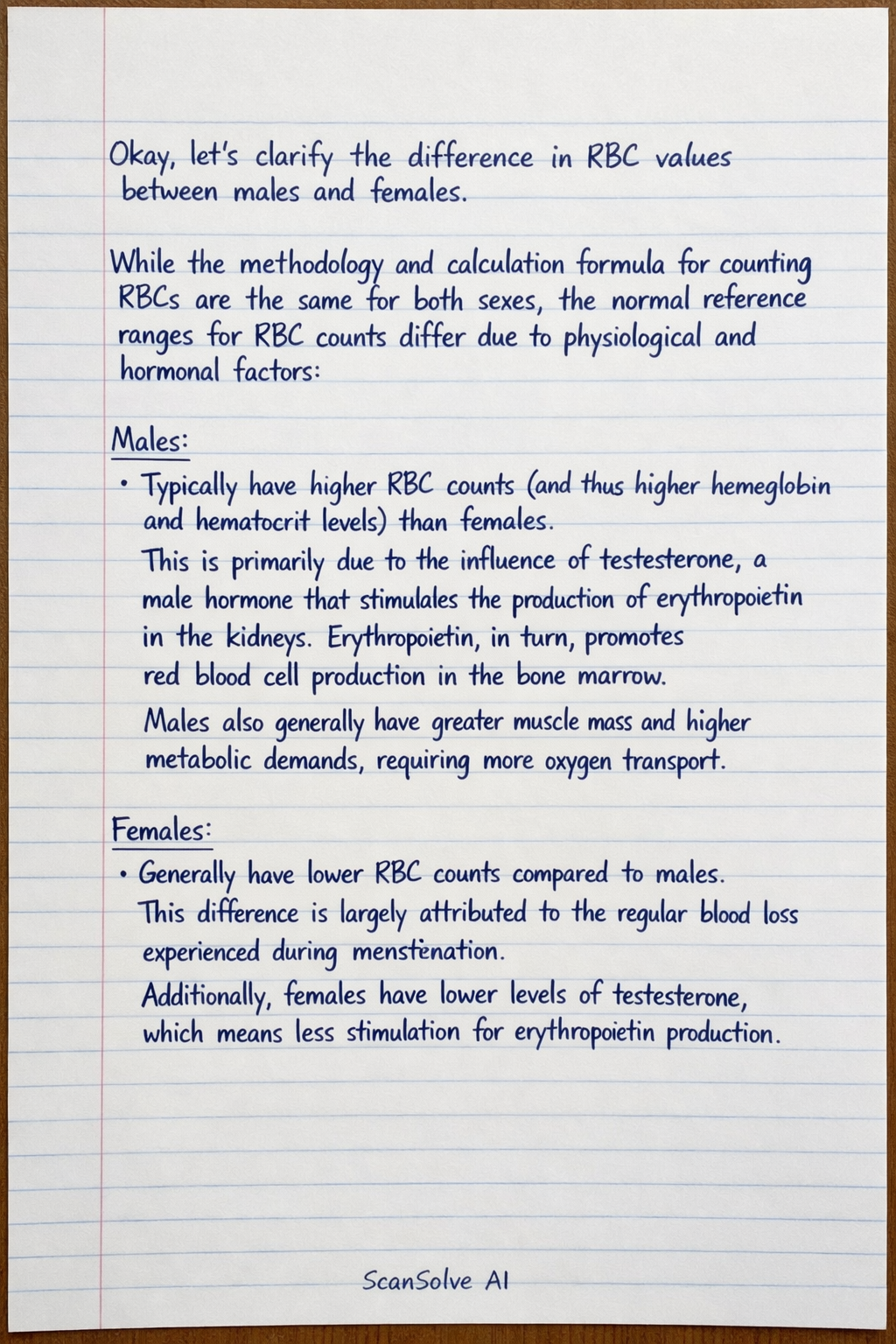
Okay, let's clarify the difference in RBC values between males and females.
While the methodology and calculation formula for counting RBCs are the same for both sexes, the normal reference ranges for RBC counts differ due to physiological and hormonal factors:
-
Males: Typically have higher RBC counts (and thus higher hemoglobin and hematocrit levels) than females. This is primarily due to the influence of testosterone, a male hormone that stimulates the production of erythropoietin in the kidneys. Erythropoietin, in turn, promotes red blood cell production in the bone marrow. Males also generally have greater muscle mass and higher metabolic demands, requiring more oxygen transport.
-
Females: Generally have lower RBC counts compared to males. This difference is largely attributed to the regular blood loss experienced during menstruation. Additionally, females have lower levels of testosterone, which means less stimulation for erythropoietin production.
Therefore, when interpreting an RBC count, it's crucial to compare the result to the appropriate sex-specific reference range to determine if it's within normal limits.
Still stuck on this one?
Ask a follow-up, and the answer starts from this question.
More Biology Questions
Handwritten Step-by-Step Solution
Get this as a handwritten image on WhatsApp — like a tutor wrote it for you.
Try on WhatsApp