
We read your photo as:
Differentiate between CT Scan, MRI Scan, X-ray, and Ultrasound imaging techniques.
ScanSolve AI Answer
The question asks to differentiate (meaning to distinguish or explain the differences between) the following medical imaging techniques:
-
CT Scan (Computed Tomography Scan): This imaging technique uses a series of X-ray images taken from different angles around the body. A computer then processes these images to create detailed cross-sectional views, or slices, of bones, blood vessels, and soft tissues. It's excellent for diagnosing bone fractures, internal injuries, and certain cancers.
-
MRI Scan (Magnetic Resonance Imaging Scan): Unlike CT scans or X-rays, MRI uses a powerful magnetic field and radio waves to produce detailed images of organs and soft tissues. It does not use ionizing radiation. MRI is particularly good for examining the brain, spinal cord, joints, and other soft tissues, providing high-contrast images.
-
X-ray: A standard X-ray uses a small dose of ionizing radiation to create images of the inside of the body. It's primarily used to visualize bones and detect issues like fractures, pneumonia, or foreign objects. Soft tissues are not clearly visible on a standard X-ray.
-
Ultrasound: This technique uses high-frequency sound waves to create real-time images of structures inside the body. A transducer sends sound waves into the body, and the echoes are used to form an image. Ultrasound does not use ionizing radiation and is commonly used for pregnancy monitoring, examining abdominal organs, and assessing blood flow.
Still stuck on this one?
Ask a follow-up, and the answer starts from this question.
More Biology Questions
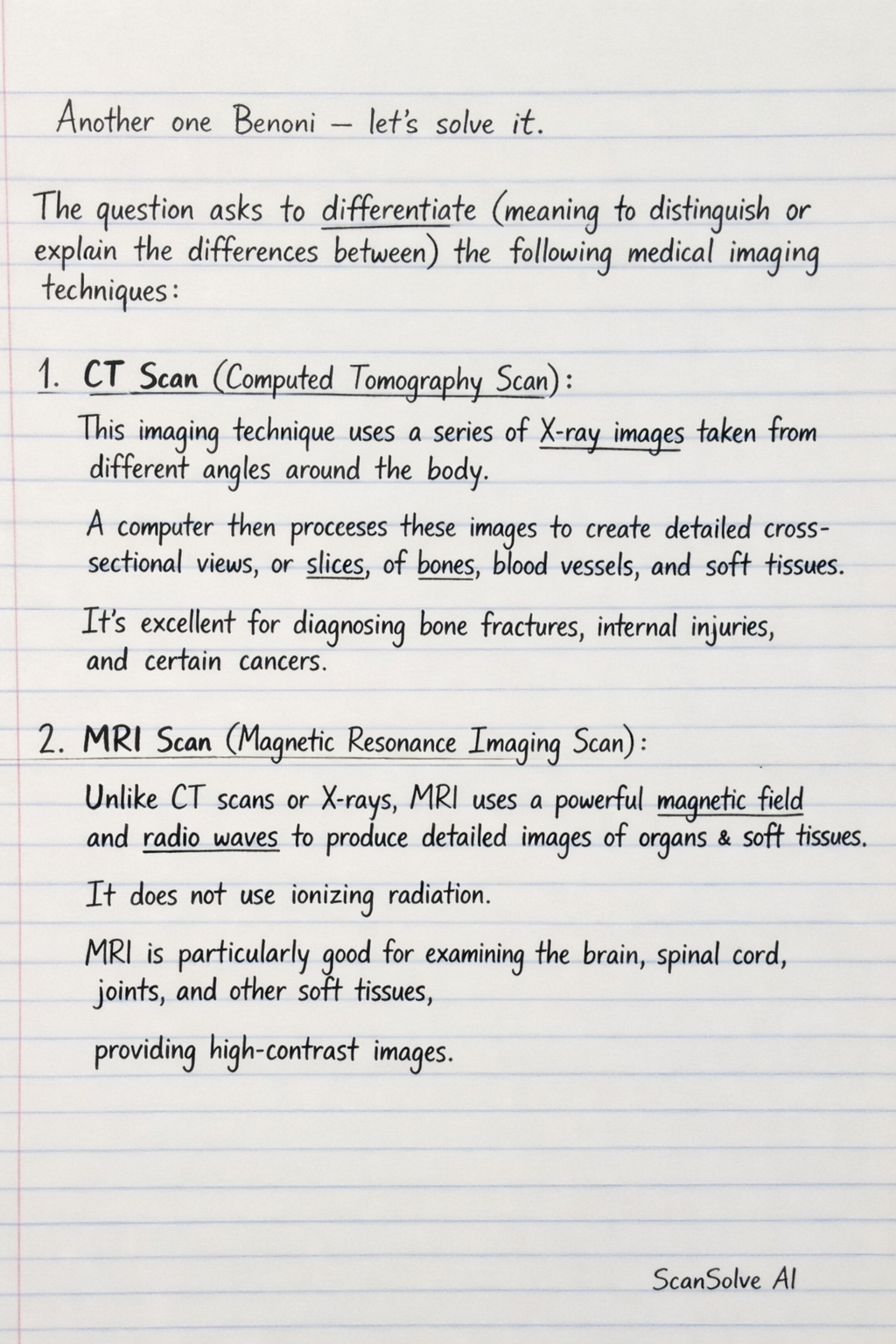
Handwritten Step-by-Step Solution
Get this as a handwritten image on WhatsApp — like a tutor wrote it for you.
Try on WhatsApp