

This biology question covers important biological concepts and processes. The step-by-step explanation below helps you understand the underlying mechanisms and reasoning.
ScanSolve AI Answer
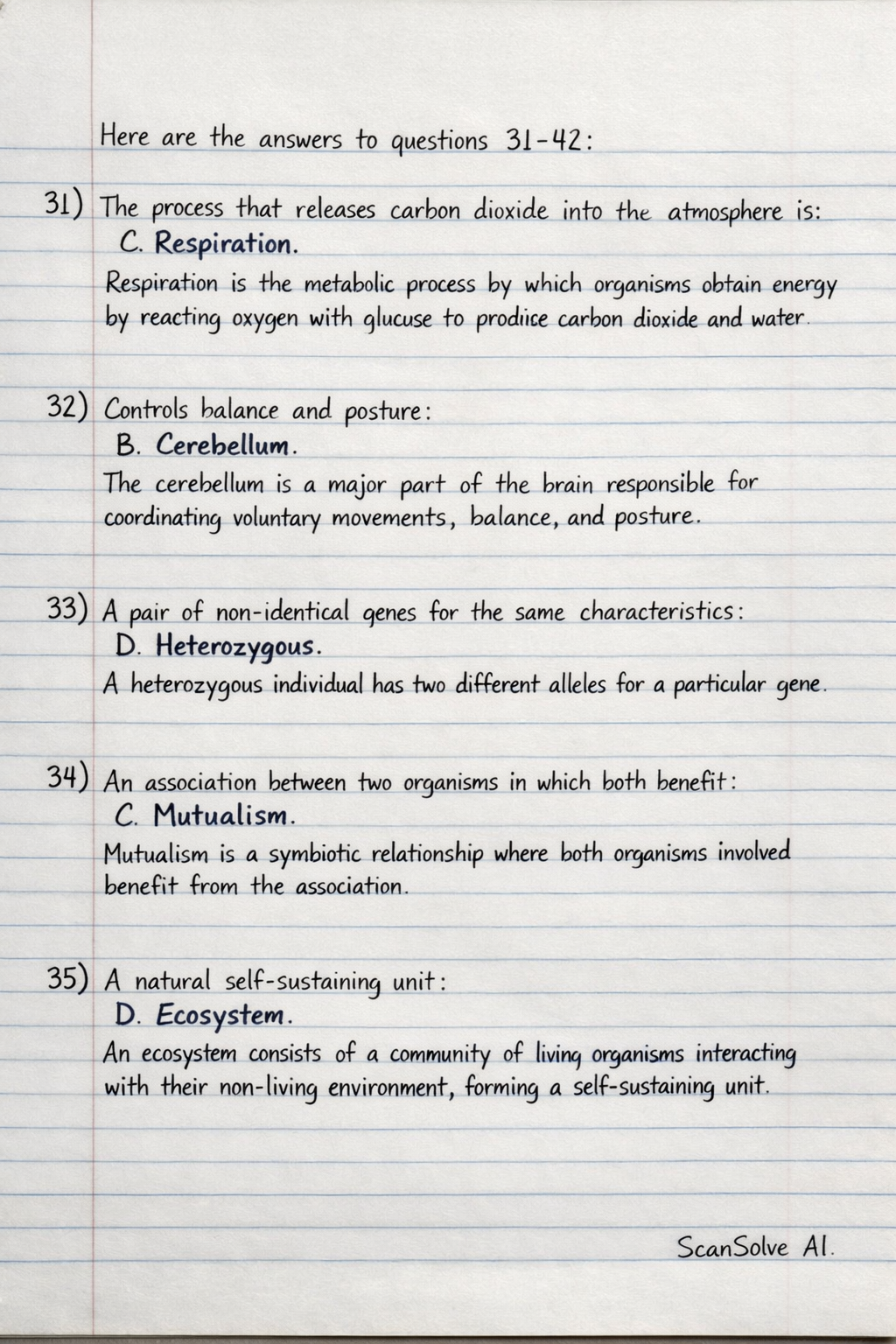
Here are the answers to questions 31-42: 31) The process that releases carbon dioxide into the atmosphere is: C. Respiration. Respiration is the metabolic process by which organisms obtain energy by reacting oxygen with glucose to produce carbon dioxide and water. 32) Controls balance and posture: B. Cerebellum. The cerebellum is a major part of the brain responsible for coordinating voluntary movements, balance, and posture. 33) A pair of non-identical genes for the same characteristics: D. Heterozygous. A heterozygous individual has two different alleles for a particular gene. 34) An association between two organisms in which both benefit: C. Mutualism. Mutualism is a symbiotic relationship where both organisms involved benefit from the association. 35) A natural self-sustaining unit: D. Ecosystem. An ecosystem consists of a community of living organisms interacting with their non-living environment, forming a self-sustaining unit. 36) Produced during fright: D. Adrenaline. Adrenaline (epinephrine) is a hormone released by the adrenal glands in response to stress or fear, preparing the body for a "fight or flight" response. 37) Causes malaria: A. Plasmodium. Malaria is caused by the Plasmodium parasite, which is transmitted to humans through the bite of infected female Anopheles mosquitoes. 38) Its deficiency will lead to anaemia: C. Iron. Iron is a crucial component of hemoglobin, the protein in red blood cells that carries oxygen. A deficiency in iron can lead to iron-deficiency anemia. 39) Used for tearing of flesh: B. Canine. Canine teeth are pointed and sharp, adapted for piercing and tearing food, especially flesh in carnivores and omnivores. 40) Is an air pollutant: A. Lead particles. Lead particles, often from industrial emissions or historical use of leaded gasoline, are a significant air pollutant with harmful health effects. 41) When red blood corpuscles were mounted in distilled water for 20 minutes, only cell fragments remained in solution. This is due to: B. Osmosis. Red blood cells placed in distilled water (a hypotonic solution) will absorb water by osmosis, swell, and eventually burst (hemolysis) because they lack a cell wall to prevent over-expansion. 42) In many perennial plants, soluble products of photosynthesis are transported from the leaves to underground storage organs. This is possible through: C. Translocation. Translocation is the process by which sugars and other organic molecules produced during photosynthesis are transported through the phloem from source (e.g., leaves) to sink (e.g., storage organs, roots). That's 2 down. 3 left today — send the next one.