
During the rainy season, a health worker notices that malaria cases in her district have by sixty percent compared to the dry season, she observes that rainy season creates ideal breeding conditions for mosquitoes. The community has limited access to insecticide treatment bed nets and many residents do not understand why malaria is more prevalent during this period. Analyse the relationship between environmental conditions ( rainfall, temperature, standing water) and the transmission of malaria in this community.
ScanSolve AI Answer
The relationship between environmental conditions and malaria transmission in this community is direct and significant, particularly during the rainy season. The increased rainfall, suitable temperatures, and abundant standing water create an optimal environment for the Anopheles mosquito, the primary vector for malaria, to thrive and transmit the disease more effectively.
-
Rainfall: The rainy season brings increased precipitation, which is the primary driver for the surge in malaria cases. Rainfall creates numerous temporary and semi-permanent pools of water. These collections of water, ranging from puddles and ditches to clogged drains and water storage containers, serve as ideal breeding sites for Anopheles mosquitoes. The health worker's observation of a increase in cases directly correlates with this proliferation of breeding grounds.
-
Standing Water: This is a critical link in the transmission chain. Once rainfall occurs, the presence of standing water provides the necessary habitat for mosquito larvae and pupae to develop into adult mosquitoes. Without sufficient drainage or community efforts to eliminate these water bodies, the mosquito population explodes. The community's limited understanding of this link means they may not be actively removing or treating these breeding sites, further exacerbating the problem.
-
Temperature: While not explicitly stated as changing drastically between seasons, the general warm temperatures prevalent in many malaria-endemic regions, combined with the humidity of the rainy season, are highly conducive to the mosquito life cycle and the development of the malaria parasite (Plasmodium) within the mosquito. Warmer temperatures accelerate the development of both the mosquito from egg to adult and the parasite's sporogonic cycle within the mosquito, meaning mosquitoes become infectious more quickly and can transmit the disease sooner after biting an infected person.
In summary, the rainy season's increased rainfall leads to widespread standing water, which, under suitable warm temperatures, allows for a rapid increase in the Anopheles mosquito population. More mosquitoes mean more bites on humans, and consequently, a higher rate of malaria transmission in the community, especially when combined with limited access to protective measures like insecticide-treated bed nets and a lack of understanding regarding the environmental links.
Still stuck on this one?
Ask a follow-up, and the answer starts from this question.
More Biology Questions
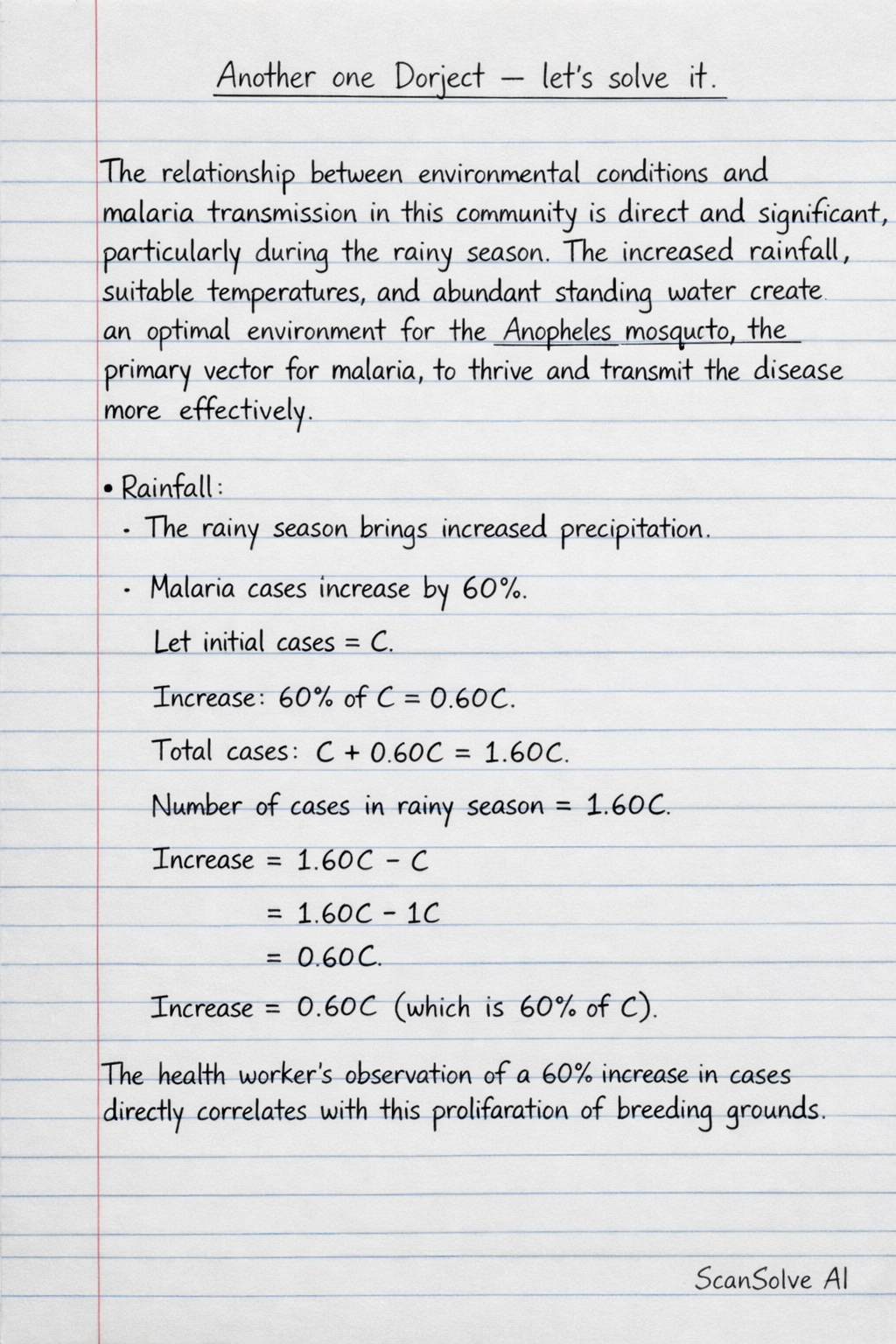
Handwritten Step-by-Step Solution
Get this as a handwritten image on WhatsApp — like a tutor wrote it for you.
Try on WhatsApp