This biology question covers important biological concepts and processes. The step-by-step explanation below helps you understand the underlying mechanisms and reasoning.
Describe the following different types of abnormal bleeding, their symptoms, cause and management: Amenorrhea, Dysmenorrhea, Menorrhagia, Metrorrhagia. Differentiate between primary dysmenorrhea and secondary dysmenorrhea. Differentiate between Menorrhagia and Metrorrhagia.
Biology

ScanSolve AI Answer
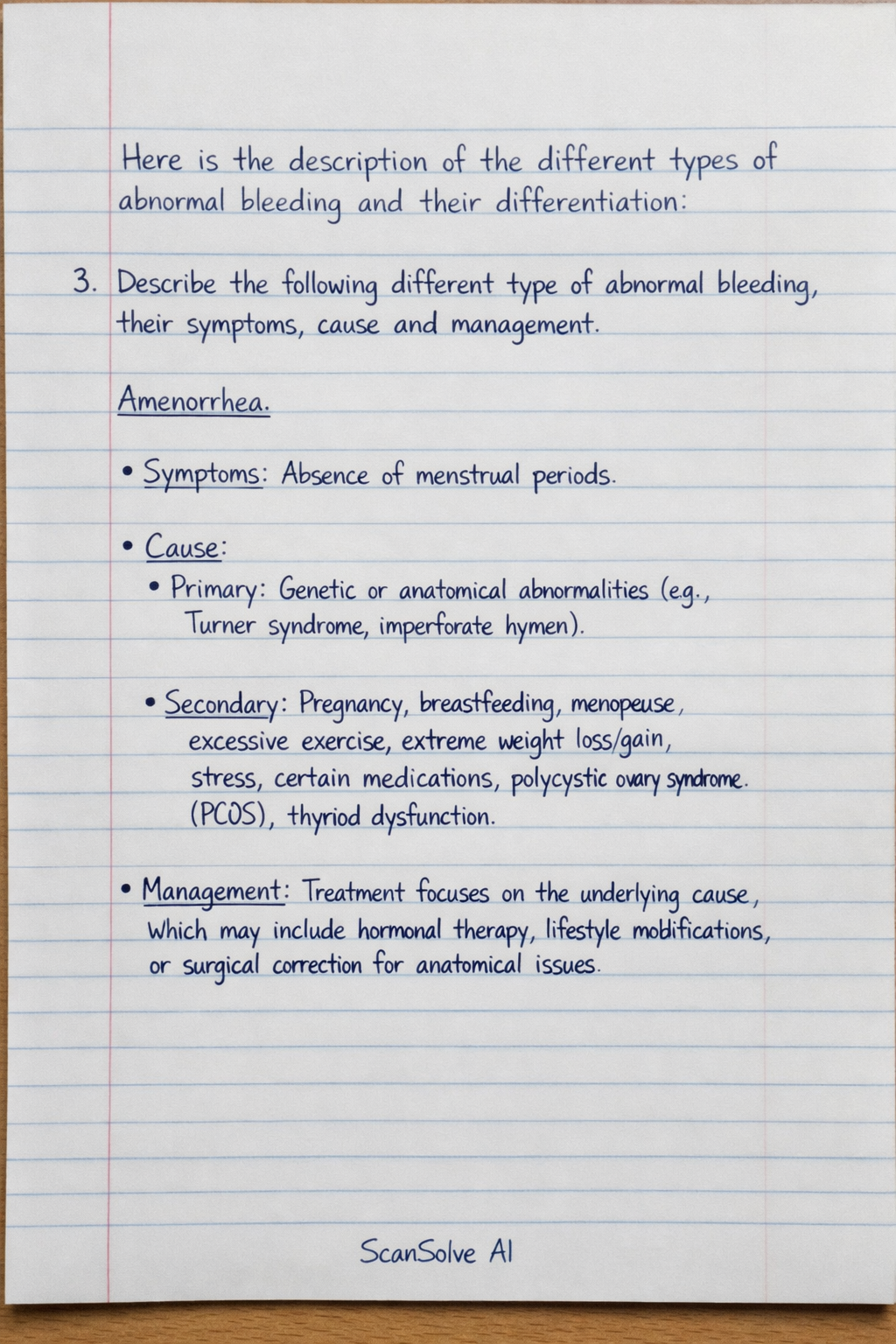
Here is the description of the different types of abnormal bleeding and their differentiation:
3. Describe the following different type of abnormal bleeding, their symptoms cause and management.
-
Amenorrhea
- Symptoms: Absence of menstrual periods.
- Cause:
- Primary: Genetic or anatomical abnormalities (e.g., Turner syndrome, imperforate hymen).
- Secondary: Pregnancy, breastfeeding, menopause, excessive exercise, extreme weight loss/gain, stress, certain medications, polycystic ovary syndrome (PCOS), thyroid dysfunction.
- Management: Treatment focuses on the underlying cause, which may include hormonal therapy, lifestyle modifications, or surgical correction for anatomical issues.
-
Dysmenorrhea
- Symptoms: Pelvic pain, cramping, backache, nausea, and fatigue during menstruation.
- Cause:
- Primary: Overproduction of prostaglandins in the uterus, leading to uterine contractions.
- Secondary: Underlying reproductive conditions such as endometriosis, uterine fibroids, adenomyosis, or pelvic inflammatory disease (PID).
- Management: Nonsteroidal anti-inflammatory drugs (NSAIDs), hormonal contraceptives, heat therapy, and lifestyle changes. For secondary dysmenorrhea, treating the underlying condition is key.
-
Menorrhagia
- Symptoms: Abnormally heavy or prolonged menstrual bleeding, often requiring frequent pad/tampon changes, passing large blood clots, bleeding for more than 7 days, and symptoms of anemia (fatigue, weakness).
- Cause: Hormonal imbalance, uterine fibroids, polyps, adenomyosis, intrauterine devices (IUDs), bleeding disorders, certain medications, or complications of pregnancy.
- Management: NSAIDs, hormonal therapy (e.g., oral contraceptives, progestin-releasing IUDs), tranexamic acid, dilation and curettage (D&C), endometrial ablation, or hysterectomy in severe cases.
-
Metrorrhagia
- Symptoms: Irregular uterine bleeding, particularly bleeding or spotting that occurs between regular menstrual periods.
- Cause: Hormonal imbalance, polyps, fibroids, infection, certain medications, cervical or uterine lesions, or perimenopause.
- Management: Addressing the underlying cause, which may involve hormonal therapy, removal of polyps or fibroids, or antibiotics for infections.
A. Differentiate between primary dysmenorrhea and secondary dysmenorrhea.
- Primary dysmenorrhea refers to painful menstruation without an identifiable underlying pelvic pathology. It typically begins shortly after menarche and is caused by an overproduction of prostaglandins.
- Secondary dysmenorrhea is painful menstruation caused by an underlying reproductive disorder, such as endometriosis, uterine fibroids, or adenomyosis. It usually develops later in life.
B. Differentiate between Menorrhagia and Metrorrhagia.
- Menorrhagia is characterized by abnormally heavy or prolonged menstrual bleeding that occurs during the regular menstrual period.
- Metrorrhagia refers to irregular uterine bleeding or spotting that occurs between menstrual periods, outside of the expected menstrual cycle.
Was this helpful?
Still stuck on this one?
Ask a follow-up, and the answer starts from this question.
Got a different question?Ask your own question
More Biology Questions
QDefine and differentiate between menorrhagia and metrorrhagia, detailing at least two characteristic…QWhat are the differences between primary and secondary amenorrhea Identify the causes ofamonorrhea I…QOutline the causes and management of bleeding in early pregnancy, and list causes of bleeding in lat…QPOSTPARTUM HEMORRHAGE Question Mrs. Bupe Phiri aged 38 para 9, has just delivered a baby boy with Ap…QDescribe the following disorders of the female reproductive organ and explain its causes, signs and…

Handwritten Step-by-Step Solution
Get this as a handwritten image on WhatsApp — like a tutor wrote it for you.
Try on WhatsAppScanSolve AI Answer
Here is the description of the different types of abnormal bleeding and their differentiation: 3. Describe the following different type of abnormal bleeding, their symptoms cause and management. Amenorrhea Symptoms: Absence of menstrual periods. Cause: Primary:* Genetic or anatomical abnormalities (e.g., Turner syndrome, imperforate hymen). Secondary:* Pregnancy, breastfeeding, menopause, excessive exercise, extreme weight loss/gain, stress, certain medications, polycystic ovary syndrome (PCOS), thyroid dysfunction. Management: Treatment focuses on the underlying cause, which may include hormonal therapy, lifestyle modifications, or surgical correction for anatomical issues. Dysmenorrhea Symptoms: Pelvic pain, cramping, backache, nausea, and fatigue during menstruation. Cause: Primary:* Overproduction of prostaglandins in the uterus, leading to uterine contractions. Secondary:* Underlying reproductive conditions such as endometriosis, uterine fibroids, adenomyosis, or pelvic inflammatory disease (PID). Management: Nonsteroidal anti-inflammatory drugs (NSAIDs), hormonal contraceptives, heat therapy, and lifestyle changes. For secondary dysmenorrhea, treating the underlying condition is key. Menorrhagia Symptoms: Abnormally heavy or prolonged menstrual bleeding, often requiring frequent pad/tampon changes, passing large blood clots, bleeding for more than 7 days, and symptoms of anemia (fatigue, weakness). Cause: Hormonal imbalance, uterine fibroids, polyps, adenomyosis, intrauterine devices (IUDs), bleeding disorders, certain medications, or complications of pregnancy. Management: NSAIDs, hormonal therapy (e.g., oral contraceptives, progestin-releasing IUDs), tranexamic acid, dilation and curettage (D&C), endometrial ablation, or hysterectomy in severe cases. Metrorrhagia Symptoms: Irregular uterine bleeding, particularly bleeding or spotting that occurs between regular menstrual periods. Cause: Hormonal imbalance, polyps, fibroids, infection, certain medications, cervical or uterine lesions, or perimenopause. Management: Addressing the underlying cause, which may involve hormonal therapy, removal of polyps or fibroids, or antibiotics for infections. A. Differentiate between primary dysmenorrhea and secondary dysmenorrhea. Primary dysmenorrhea refers to painful menstruation without an identifiable underlying pelvic pathology. It typically begins shortly after menarche and is caused by an overproduction of prostaglandins. Secondary dysmenorrhea is painful menstruation caused by an underlying reproductive disorder, such as endometriosis, uterine fibroids, or adenomyosis. It usually develops later in life. B. Differentiate between Menorrhagia and Metrorrhagia. Menorrhagia is characterized by abnormally heavy or prolonged menstrual bleeding that occurs during* the regular menstrual period. Metrorrhagia refers to irregular uterine bleeding or spotting that occurs between* menstrual periods, outside of the expected menstrual cycle.