
We read your photo as:
Explain the four (4) conditions that predispose to superinfection.
ScanSolve AI Answer
here are the answers to your questions:
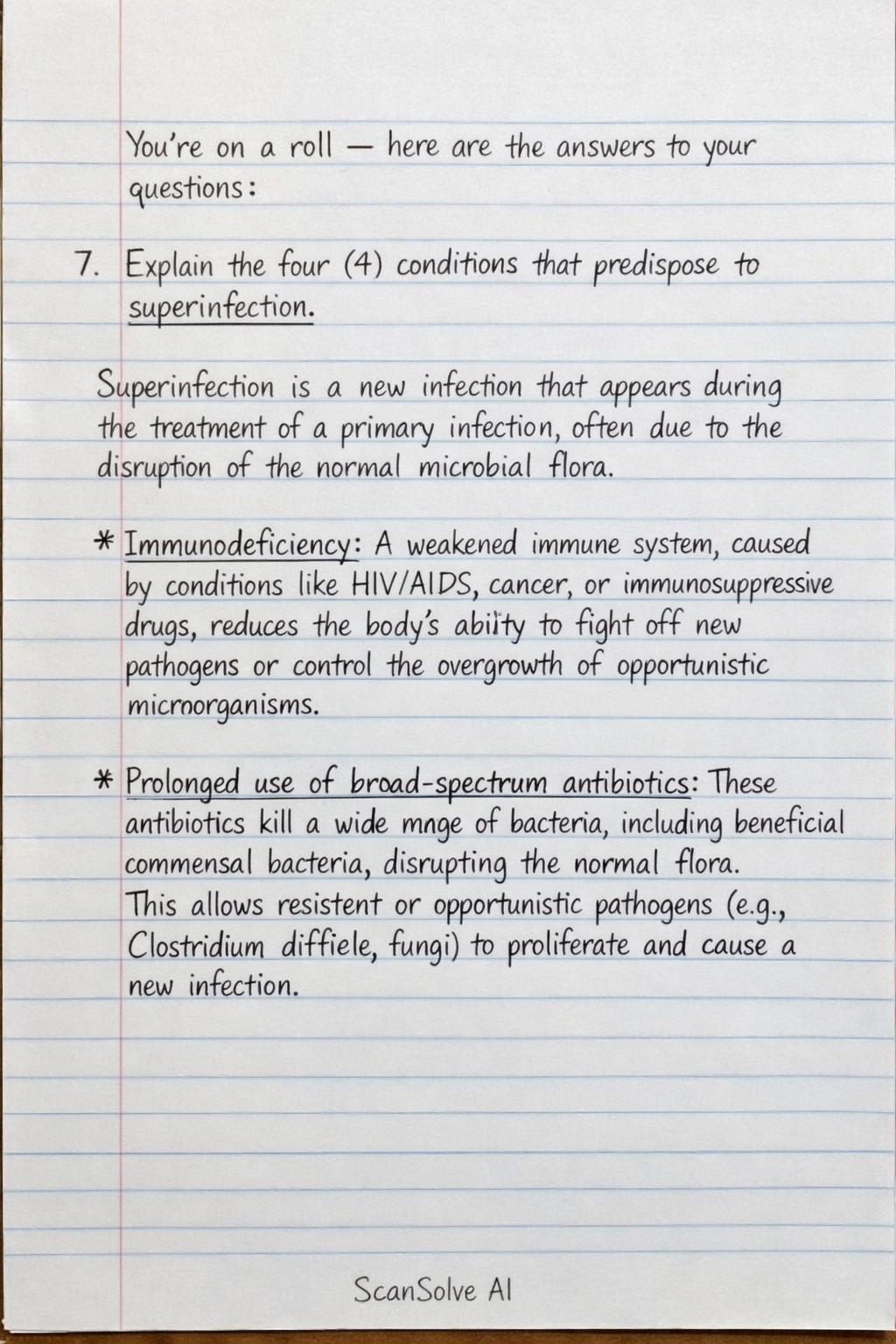
7. Explain the four (4) conditions that predispose to superinfection.
Superinfection is a new infection that appears during the treatment of a primary infection, often due to the disruption of the normal microbial flora.
- Immunodeficiency: A weakened immune system, caused by conditions like HIV/AIDS, cancer, or immunosuppressive drugs, reduces the body's ability to fight off new pathogens or control the overgrowth of opportunistic microorganisms.
- Prolonged use of broad-spectrum antibiotics: These antibiotics kill a wide range of bacteria, including beneficial commensal bacteria, disrupting the normal flora. This allows resistant or opportunistic pathogens (e.g., Clostridium difficile, fungi) to proliferate and cause a new infection.
- Hospitalization/Healthcare-associated factors: Patients in healthcare settings are often exposed to a higher concentration of antibiotic-resistant pathogens. They may also have compromised immune systems or undergo invasive procedures, increasing their susceptibility.
- Invasive medical devices or procedures: Devices such as catheters, ventilators, or surgical procedures can bypass the body's natural protective barriers, providing direct entry points for pathogens and increasing the risk of infection.
8. (a) List four (4) anticancer drugs that predispose to superinfections.
Anticancer drugs, particularly cytotoxic chemotherapy agents, often cause myelosuppression (bone marrow suppression), leading to a reduction in white blood cells (neutropenia), which severely compromises the immune system and increases the risk of infections.
- Methotrexate
- Cyclophosphamide
- Doxorubicin
- 5-Fluorouracil (5-FU)
8. (b) State four (4) disadvantages of systemic antacids.
Systemic antacids are absorbed into the bloodstream, leading to various systemic effects and potential disadvantages.
- Systemic Alkalosis: Absorption of alkaline ions (e.g., bicarbonate) can lead to an increase in blood pH, causing metabolic alkalosis.
- Rebound Acid Secretion: Some systemic antacids, particularly calcium carbonate, can stimulate gastrin release, which may lead to increased acid production after the initial neutralizing effect wears off.
- Electrolyte Imbalances: Can cause hypercalcemia (with calcium carbonate), hypernatremia (with sodium bicarbonate), or hypermagnesemia (in patients with renal impairment using magnesium-containing antacids).
- Drug Interactions: By altering gastric pH, systemic antacids can significantly affect the absorption, bioavailability, and efficacy of other orally administered medications.
Still stuck on this one?
Ask a follow-up, and the answer starts from this question.
More Biology Questions
Handwritten Step-by-Step Solution
Get this as a handwritten image on WhatsApp — like a tutor wrote it for you.
Try on WhatsApp