
We read your photo as:
State four (4) other types of bowel elimination difficulties patients may experience. State ten (10) causes and contributing factors to constipation.
ScanSolve AI Answer
Step-by-step solution
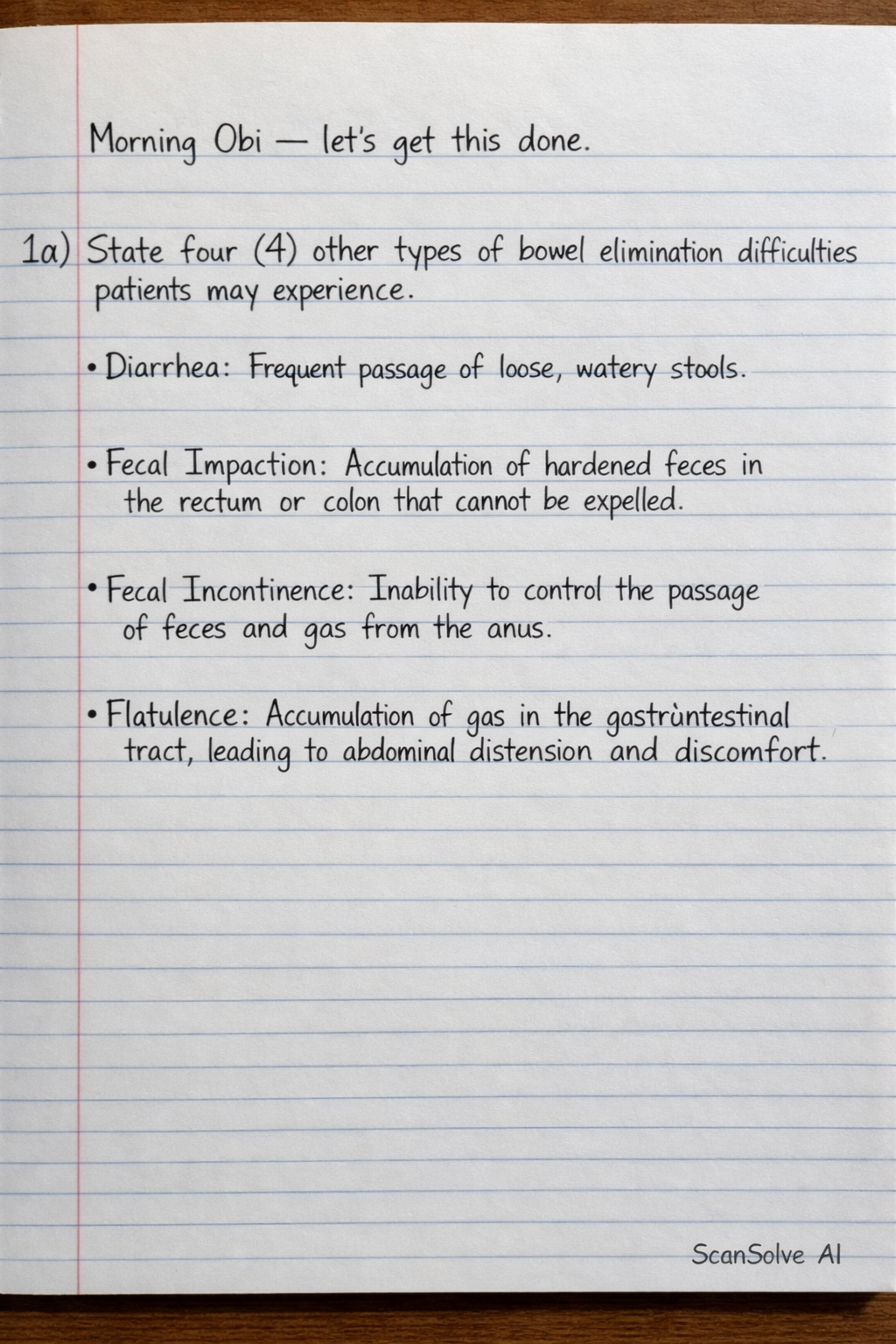
3 steps1a) State four (4) other types of bowel elimination difficulties patients may experience.
- Diarrhea: Frequent passage of loose, watery stools.
- Fecal Impaction: Accumulation of hardened feces in the rectum or colon that cannot be expelled.
- Fecal Incontinence: Inability to control the passage of feces and gas from the anus.
- Flatulence: Accumulation of gas in the gastrointestinal tract, leading to abdominal distension and discomfort.
1b) State ten (10) causes and contributing factors to constipation.
- Insufficient fiber intake: Lack of dietary fiber reduces stool bulk.
- Inadequate fluid intake: Dehydration makes stools harder and more difficult to pass.
- Lack of physical activity: Sedentary lifestyle slows bowel motility.
- Ignoring the urge to defecate: Suppressing the natural reflex can lead to stool retention.
- Medications: Opioids, anticholinergics, iron supplements, and some antidepressants can cause constipation.
- Changes in routine: Travel, pregnancy, or changes in diet can disrupt bowel habits.
- Neurological conditions: Spinal cord injury, Parkinson's disease, or stroke can impair bowel function.
- Metabolic and endocrine disorders: Hypothyroidism, diabetes, or hypercalcemia can affect bowel motility.
- Structural abnormalities: Tumors, strictures, or diverticular disease can obstruct the bowel.
- Psychological factors: Stress, anxiety, or depression can influence bowel function.
1c) Provide enema care to Mrs. Goje has been scheduled for the care in your shift.
Preparation*.
Gather equipment (enema solution, lubricant, gloves, waterproof pad, bedpan/commode), explain the procedure to Mrs. Goje, ensure privacy, and position her in a left-side lying (Sims') position with the right knee flexed.
Administration*.
Don gloves, lubricate the enema tip, gently insert the tip 3-4 inches into the rectum, and slowly instill the enema solution. Encourage Mrs. Goje to hold the solution for the recommended time (e.g., 5-15 minutes for cleansing enemas).
Post-procedure care*.
Assist Mrs. Goje to a bedpan, commode, or toilet. Provide pericare as needed, ensure comfort, and document the procedure, including the type of enema, amount, results, and Mrs. Goje's tolerance.
1d) Identify four (4) special considerations for patients undergoing bowel irrigations.
- Fluid and electrolyte balance: Monitor for signs of fluid imbalance or electrolyte disturbances, especially with repeated irrigations.
- Perforation risk: Exercise extreme caution during insertion and instillation to prevent bowel perforation, particularly in patients with compromised bowel integrity.
- Temperature of solution: Ensure the irrigation solution is at body temperature to prevent cramping, discomfort, or hypothermia.
- Patient comfort and privacy: Maintain patient dignity, provide adequate pain relief if needed, and ensure a comfortable, private environment throughout the procedure.
Still stuck on this one?
Ask a follow-up, and the answer starts from this question.
More Biology Questions
Handwritten Step-by-Step Solution
Get this as a handwritten image on WhatsApp — like a tutor wrote it for you.
Try on WhatsApp