
We read your photo as:
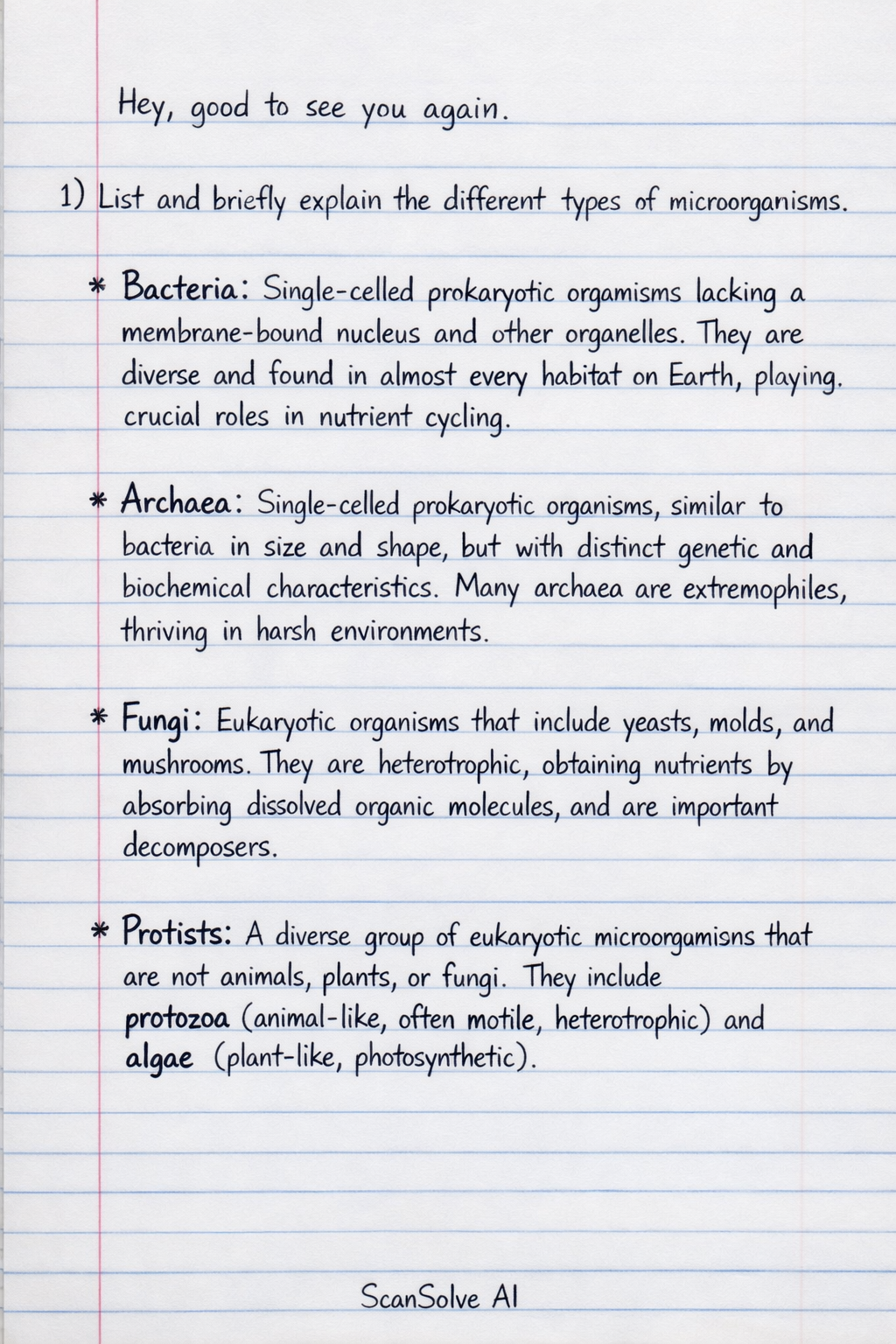
List and briefly explain the different types of microorganisms.
Biology
ScanSolve AI Answer
- List and briefly explain the different types of microorganisms.
- Bacteria: Single-celled prokaryotic organisms lacking a membrane-bound nucleus and other organelles. They are diverse and found in almost every habitat on Earth, playing crucial roles in nutrient cycling.
- Archaea: Single-celled prokaryotic organisms, similar to bacteria in size and shape, but with distinct genetic and biochemical characteristics. Many archaea are extremophiles, thriving in harsh environments.
- Fungi: Eukaryotic organisms that include yeasts, molds, and mushrooms. They are heterotrophic, obtaining nutrients by absorbing dissolved organic molecules, and are important decomposers.
- Protists: A diverse group of eukaryotic microorganisms that are not animals, plants, or fungi. They include protozoa (animal-like, often motile, heterotrophic) and algae (plant-like, photosynthetic).
- Viruses: Non-cellular infectious agents composed of genetic material (DNA or RNA) enclosed in a protein coat. They are obligate intracellular parasites, meaning they can only replicate inside living host cells.
Was this helpful?
Still stuck on this one?
Ask a follow-up, and the answer starts from this question.
Got a different question?Ask your own question
More Biology Questions
QState the places where microorganisms are found with their microbes for each of themQI want to know more about micro organismsQWhat are microorganisms and what is their economic importance? Include definitions and examples.QDefine Microbiology and list its five (5) main branches.QCreate a mind map about the uses of microorganisms.
Browse by topic:Microbiology
Handwritten Step-by-Step Solution
Get this as a handwritten image on WhatsApp — like a tutor wrote it for you.
Try on WhatsApp