
We read your photo as:
Malaria cases have been observed to increase during rain season in the tropics. Explain why this is so and suggest control spread.
Biology
ScanSolve AI Answer
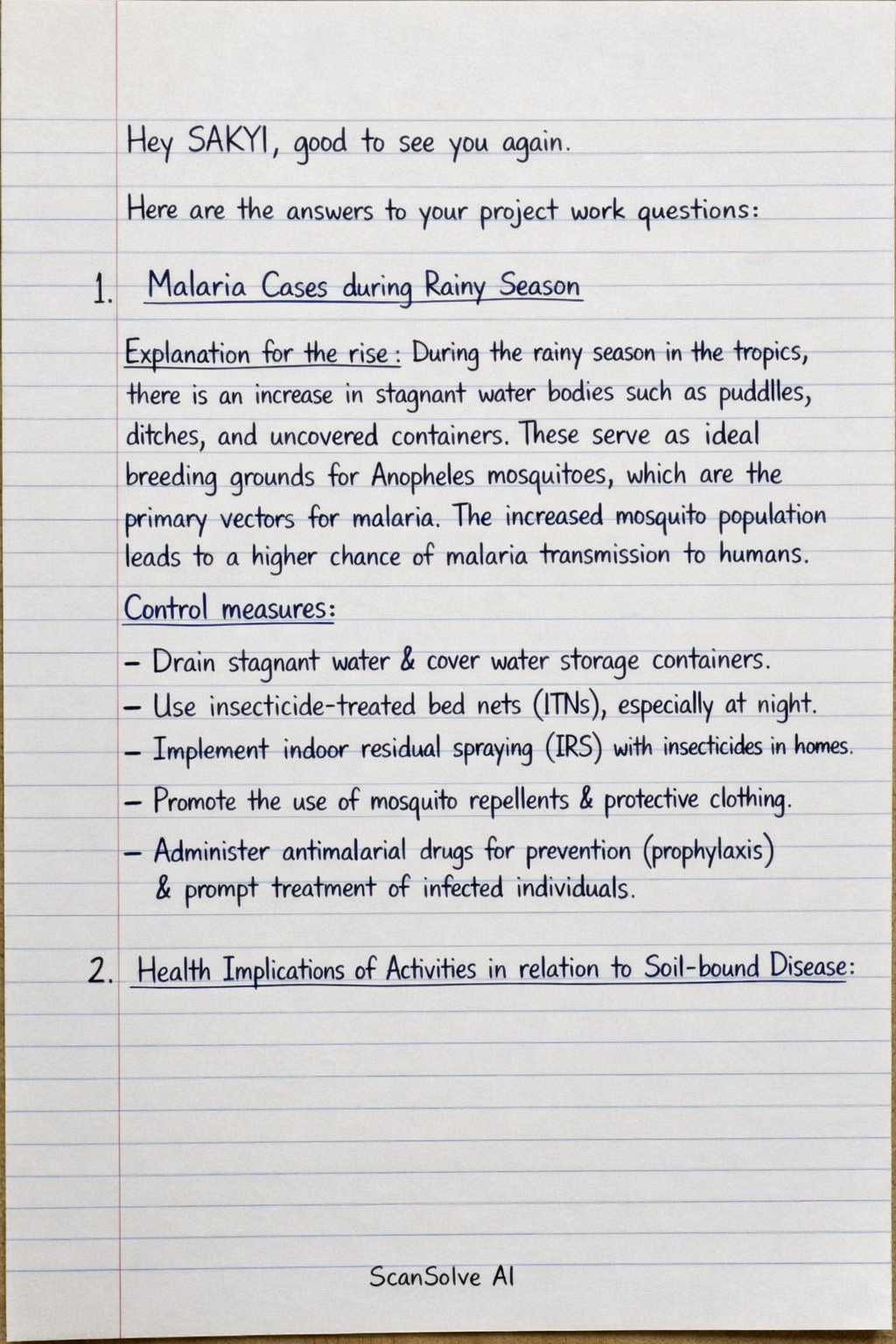
Here are the answers to your project work questions:
-
Malaria Cases during Rainy Season
- Explanation for the rise: During the rainy season in the tropics, there is an increase in stagnant water bodies such as puddles, ditches, and uncovered containers. These serve as ideal breeding grounds for Anopheles mosquitoes, which are the primary vectors for malaria. The increased mosquito population leads to a higher chance of malaria transmission to humans.
- Control measures:
- Eliminate mosquito breeding sites by draining stagnant water and covering water storage containers.
- Use insecticide-treated bed nets (ITNs), especially at night.
- Implement indoor residual spraying (IRS) with insecticides in homes.
- Promote the use of mosquito repellents and protective clothing.
- Administer antimalarial drugs for prevention (prophylaxis) and prompt treatment of infected individuals.
-
Health Implications of Activities in relation to Soil-bound Disease
-
a) Children eating their snacks with unwashed hands after playing in the ground/garden:
- Implication: When children play in soil, their hands can become contaminated with soil-transmitted helminth (STH) eggs (e.g., roundworms, hookworms, whipworms) or other microbial pathogens present in the soil. If they eat snacks without washing their hands, these pathogens are directly ingested.
- Diseases: This can lead to parasitic infections like ascariasis, hookworm infection, and trichuriasis, which can cause malnutrition, anemia, and impaired growth and cognitive development. It can also lead to bacterial or viral gastrointestinal infections.
-
b) Children playing with unvaccinated pets such as dogs and cats:
- Implication: Unvaccinated pets can carry various parasites (like Toxocara roundworms), bacteria, and viruses. These pathogens can be shed in their feces, contaminating the soil where children play. Direct contact with infected pets can also transfer pathogens.
- Diseases: Playing with pets whose feces contaminate the soil can lead to toxocariasis (visceral larva migrans or ocular larva migrans) from ingesting Toxocara eggs. Other risks include bacterial infections (e.g., Salmonella), fungal infections (e.g., ringworm), and in severe cases, diseases like rabies if the pet is unvaccinated and infected.
-
Was this helpful?
Still stuck on this one?
Ask a follow-up, and the answer starts from this question.
Got a different question?Ask your own question
More Biology Questions
QDuring the rainy season, a health worker notices that malaria cases in her district have by sixty…QSuggest three sustainable prevention strategies that could reduce malaria transmission during the…QState five measures that can be taken to control the spread of malaria in a community.QExplain the transmission and effects of malaria based on the provided text.QWrite briefly on malaria disease and describe its life cycle.
Handwritten Step-by-Step Solution
Get this as a handwritten image on WhatsApp — like a tutor wrote it for you.
Try on WhatsApp