
We read your photo as:
Provide a discussion on hemorrhoids and IBS, covering their definition, manifestations, management, and health education.
Biology
ScanSolve AI Answer
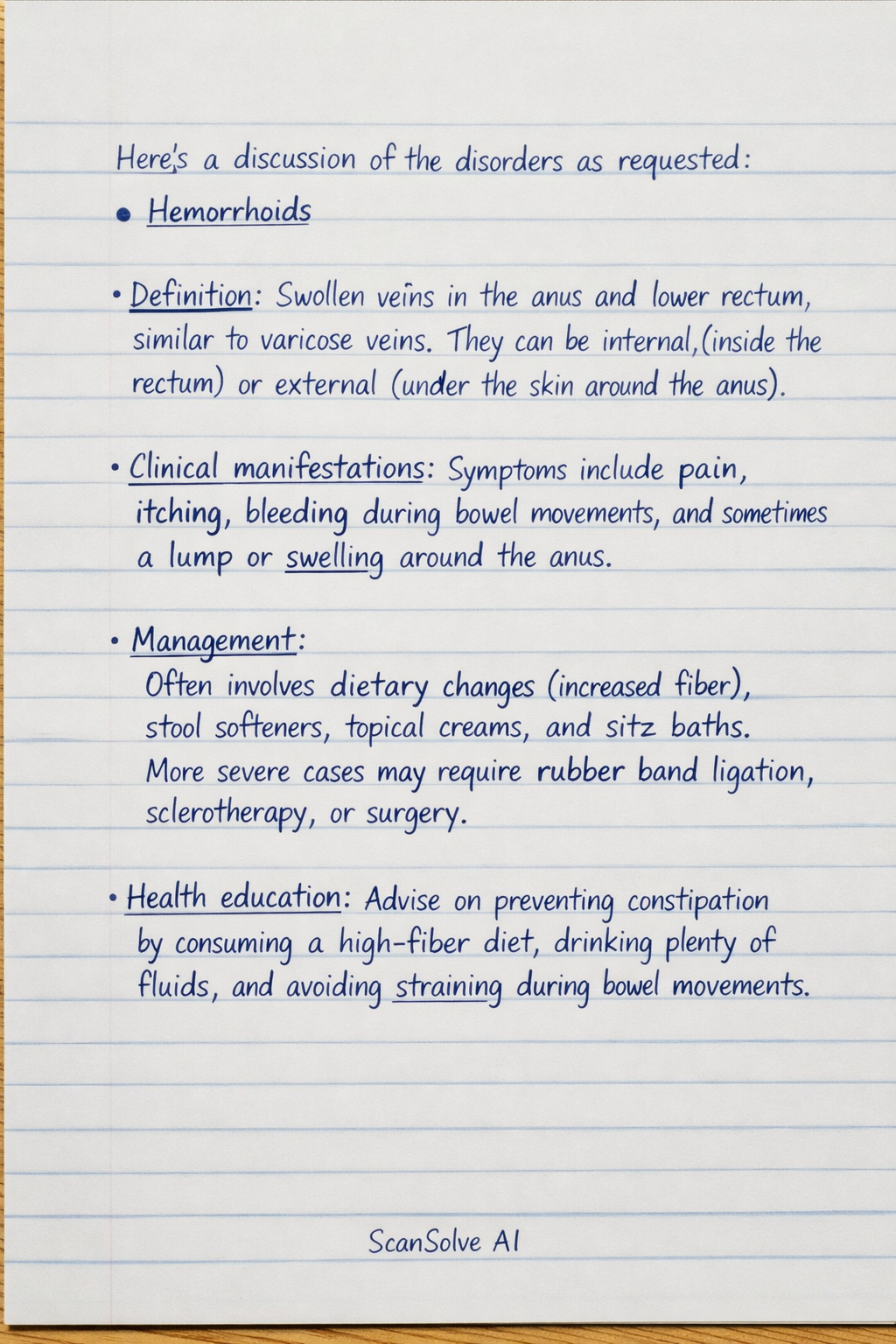
Here's a discussion of the disorders as requested:
-
Hemorrhoids
- Definition: Swollen veins in the anus and lower rectum, similar to varicose veins. They can be internal (inside the rectum) or external (under the skin around the anus).
- Clinical manifestations: Symptoms include pain, itching, bleeding during bowel movements, and sometimes a lump or swelling around the anus.
- Management: Often involves dietary changes (increased fiber), stool softeners, topical creams, and sitz baths. More severe cases may require rubber band ligation, sclerotherapy, or surgery.
- Health education: Advise on preventing constipation by consuming a high-fiber diet, drinking plenty of fluids, and avoiding straining during bowel movements.
-
Irritable bowel syndrome (IBS)
- Definition: A common chronic disorder affecting the large intestine. It is characterized by a group of symptoms that occur together, including abdominal pain and changes in bowel movements, without visible signs of damage or disease in the digestive tract.
- Clinical manifestations: Symptoms vary but commonly include abdominal pain or cramping, bloating, gas, and changes in bowel habits such as diarrhea, constipation, or alternating between both.
- Management: Focuses on symptom relief through dietary modifications (e.g., low FODMAP diet), stress management, and medications to control diarrhea, constipation, or pain.
- Health education: Encourage identifying and avoiding trigger foods, managing stress through relaxation techniques, maintaining a regular sleep schedule, and engaging in regular physical activity.
-
Constipation
- Definition: A condition characterized by infrequent bowel movements (typically fewer than three per week), difficulty passing stools, or hard, dry stools.
- Clinical manifestations: Symptoms include straining during bowel movements, feeling of incomplete evacuation, hard or lumpy stools, and a sensation of blockage in the rectum.
- Management: Often involves lifestyle changes such as increasing fiber intake, drinking more fluids, and engaging in regular exercise. Laxatives may be used for short-term relief.
- Health education: Emphasize the importance of a fiber-rich diet, adequate hydration, responding promptly to the urge to defecate, and establishing a regular bowel routine.
Was this helpful?
Still stuck on this one?
Ask a follow-up, and the answer starts from this question.
Got a different question?Ask your own question
More Biology Questions
QDiscuss the definition, clinical manifestations, management, and health education for hemorrhoids…QPresentation on inflammation bowel diseaseQState and explain the ailment i.e disorder or conditions associated with the alimentary canal…QIdentify the gastrointestinal disorders listed below.QState four (4) other types of bowel elimination difficulties patients may experience. State ten (10)…
Handwritten Step-by-Step Solution
Get this as a handwritten image on WhatsApp — like a tutor wrote it for you.
Try on WhatsApp