
We read your photo as:
Please provide the answers to the following biology questions: 18. A. Presence of a backbone B. Absence of a backbone. 19. A. Move slowly by increasing resistance. B. Swim efficiently by reducing resi
ScanSolve AI Answer
Here are the answers to the questions:
-
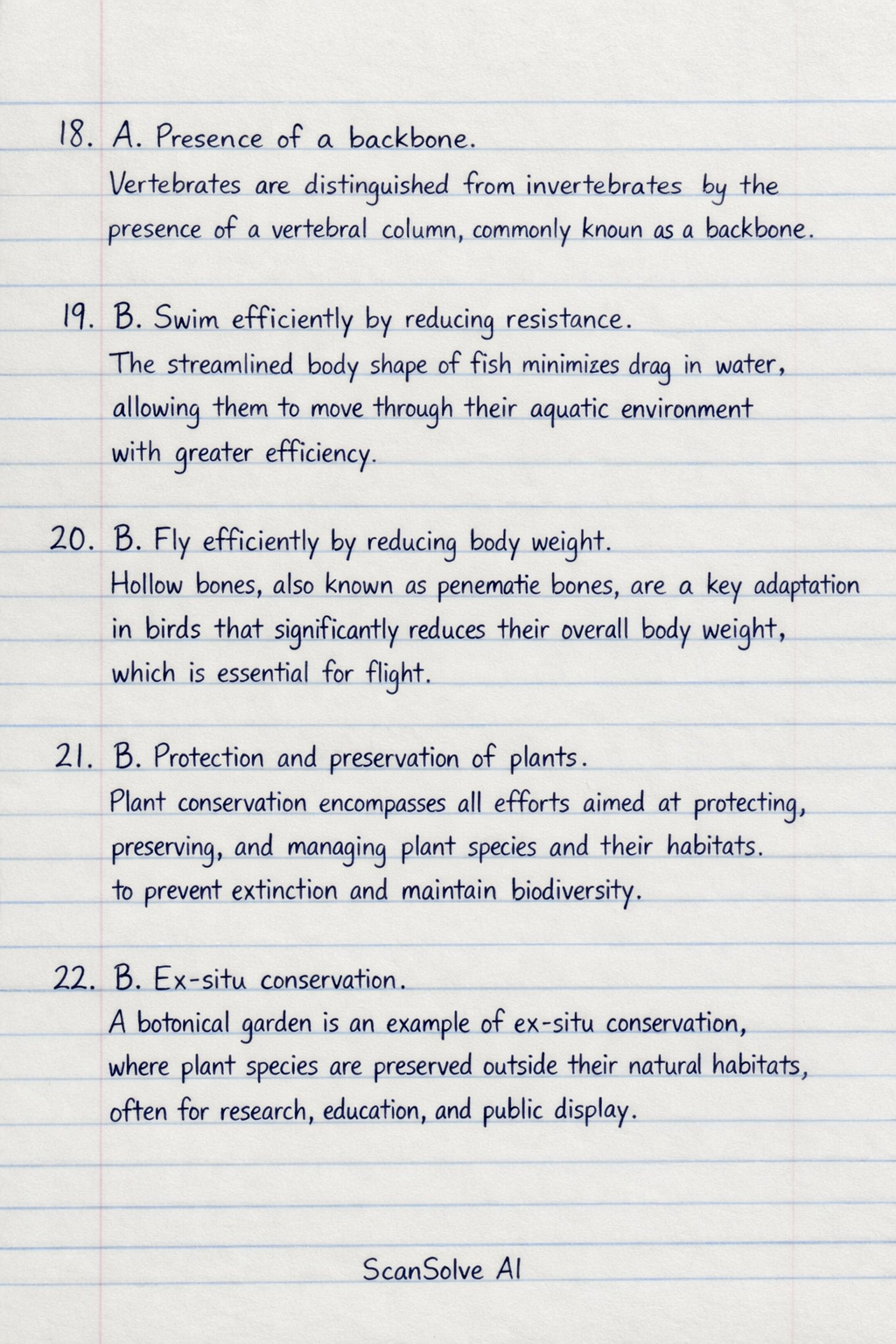
A. Presence of a backbone Vertebrates are distinguished from invertebrates by the presence of a vertebral column, commonly known as a backbone.
-
B. Swim efficiently by reducing resistance. The streamlined body shape of fish minimizes drag in water, allowing them to move through their aquatic environment with greater efficiency.
-
B. Fly efficiently by reducing body weight. Hollow bones, also known as pneumatic bones, are a key adaptation in birds that significantly reduces their overall body weight, which is essential for flight.
-
B. Protection and preservation of plants. Plant conservation encompasses all efforts aimed at protecting, preserving, and managing plant species and their habitats to prevent extinction and maintain biodiversity.
-
B. Ex-situ conservation. A botanical garden is an example of ex-situ conservation, where plant species are preserved outside their natural habitats, often for research, education, and public display.
-
C. Histology Histology is the branch of biology that studies the microscopic anatomy of biological tissues, including plant tissues.
-
B. Bark The cork cambium is a lateral meristem that produces cork (phellem) to the outside and phelloderm to the inside, which together form the periderm, a major component of bark.
-
A. Growing regions Plant hormones are primarily synthesized in actively growing regions of the plant, such as the apical meristems of shoots and roots, young leaves, and developing fruits and seeds.
-
B. Auxin Apical dominance, the phenomenon where the growth of lateral buds is inhibited by the apical bud, is primarily regulated by the plant hormone auxin, which is produced in the apical meristem.
-
C. Insect pests Bt toxin, derived from the bacterium Bacillus thuringiensis, is a natural insecticide used in genetically modified crops to provide resistance against specific insect pests.
-
A. Soybean Soybean is one of the most widely grown genetically modified crops, often engineered to be resistant to herbicides, allowing farmers to control weeds more effectively.
-
B. Meristematic tissues Permanent tissues are formed from meristematic tissues (apical and lateral meristems) through processes of cell division, growth, and differentiation, after which they lose their ability to divide.
-
A. Combining DNA from different organisms Recombinant DNA technology involves the laboratory process of joining DNA molecules from two different species and inserting them into a host organism to produce new genetic combinations.
Still stuck on this one?
Ask a follow-up, and the answer starts from this question.
More Biology Questions
Handwritten Step-by-Step Solution
Get this as a handwritten image on WhatsApp — like a tutor wrote it for you.
Try on WhatsApp