
We read your photo as:
Resting Heart Rate: 1) Measure your resting heart rate. Using...
Biology
ScanSolve AI Answer
here are the completed sections for your study guide:
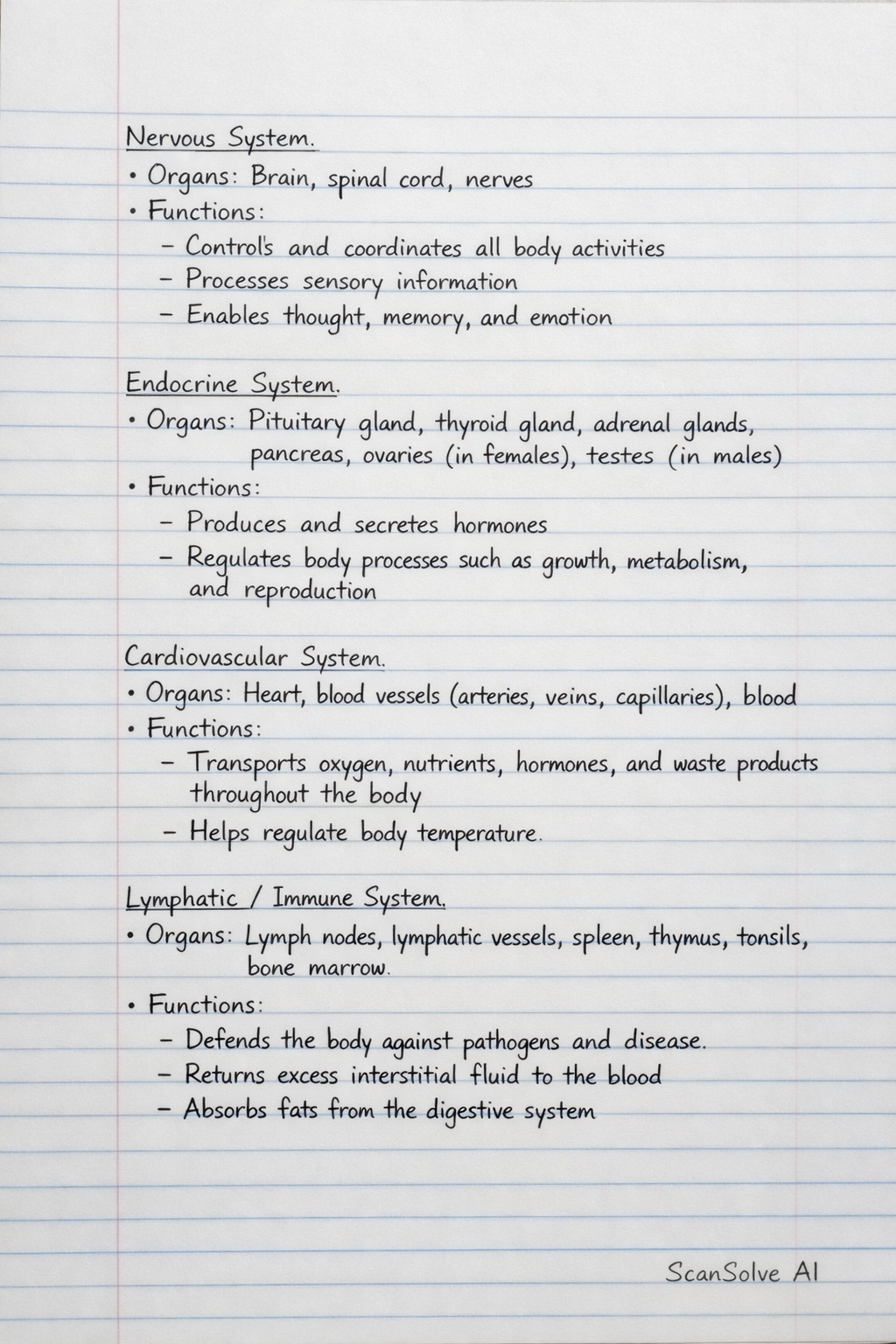
Nervous System
- Organs: Brain, spinal cord, nerves
- Functions:
- Controls and coordinates all body activities
- Processes sensory information
- Enables thought, memory, and emotion
Endocrine System
- Organs: Pituitary gland, thyroid gland, adrenal glands, pancreas, ovaries (in females), testes (in males)
- Functions:
- Produces and secretes hormones
- Regulates body processes such as growth, metabolism, and reproduction
Cardiovascular System
- Organs: Heart, blood vessels (arteries, veins, capillaries), blood
- Functions:
- Transports oxygen, nutrients, hormones, and waste products throughout the body
- Helps regulate body temperature
Lymphatic/Immune System
- Organs: Lymph nodes, lymphatic vessels, spleen, thymus, tonsils, bone marrow
- Functions:
- Defends the body against pathogens and disease
- Returns excess interstitial fluid to the blood
- Absorbs fats from the digestive system
Was this helpful?
Still stuck on this one?
Ask a follow-up, and the answer starts from this question.
Got a different question?Ask your own question
More Biology Questions
QCalculate your average resting pulse rate. Show your calculation.QConduct an investigation to determine the effect of exercise on the pulse rate of a person.QHuman Heart diagram easy methodQHow to measure blood pressureQCan investigate into the rate of breathing before and after exercise.
Browse by topic:Anatomy
Handwritten Step-by-Step Solution
Get this as a handwritten image on WhatsApp — like a tutor wrote it for you.
Try on WhatsApp