
We read your photo as:
Describe the structure and function of arteries, veins, and capillaries in the circulatory system.
ScanSolve AI Answer
Step-by-step solution
3 stepsDescribe arteries.
Arteries are blood vessels that carry blood away from the heart. They have thick, muscular, and elastic walls to withstand the high pressure of blood pumped from the heart. This elasticity allows them to expand and recoil, helping to propel blood.
Describe veins.
Veins are blood vessels that carry blood towards the heart. They have thinner and less muscular walls compared to arteries, as the blood pressure within them is much lower. Many veins, especially in the limbs, contain valves to prevent the backflow of blood, ensuring it flows in one direction towards the heart.
Describe capillaries.
Capillaries are the smallest blood vessels, forming a network between arterioles (small arteries) and venules (small veins). Their walls are extremely thin, typically only one cell thick, which facilitates the efficient exchange of oxygen, nutrients, and waste products between the blood and the surrounding tissues.
Still stuck on this one?
Ask a follow-up, and the answer starts from this question.
More Biology Questions
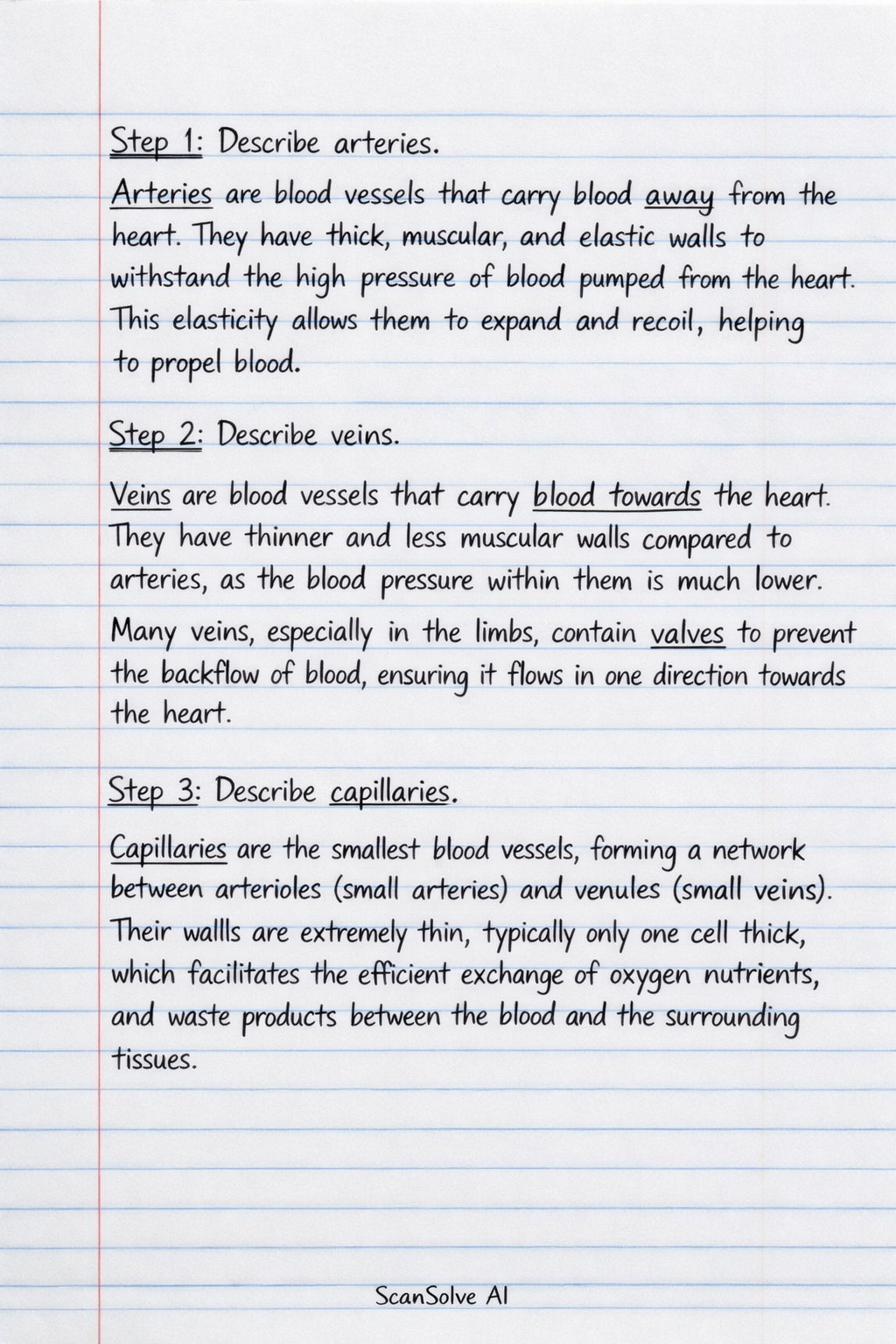
Handwritten Step-by-Step Solution
Get this as a handwritten image on WhatsApp — like a tutor wrote it for you.
Try on WhatsApp