
We read your photo as:
Explain how the brain, heart, kidneys, skeletal muscle, and skin autoregulate their blood flow.
Biology
ScanSolve AI Answer
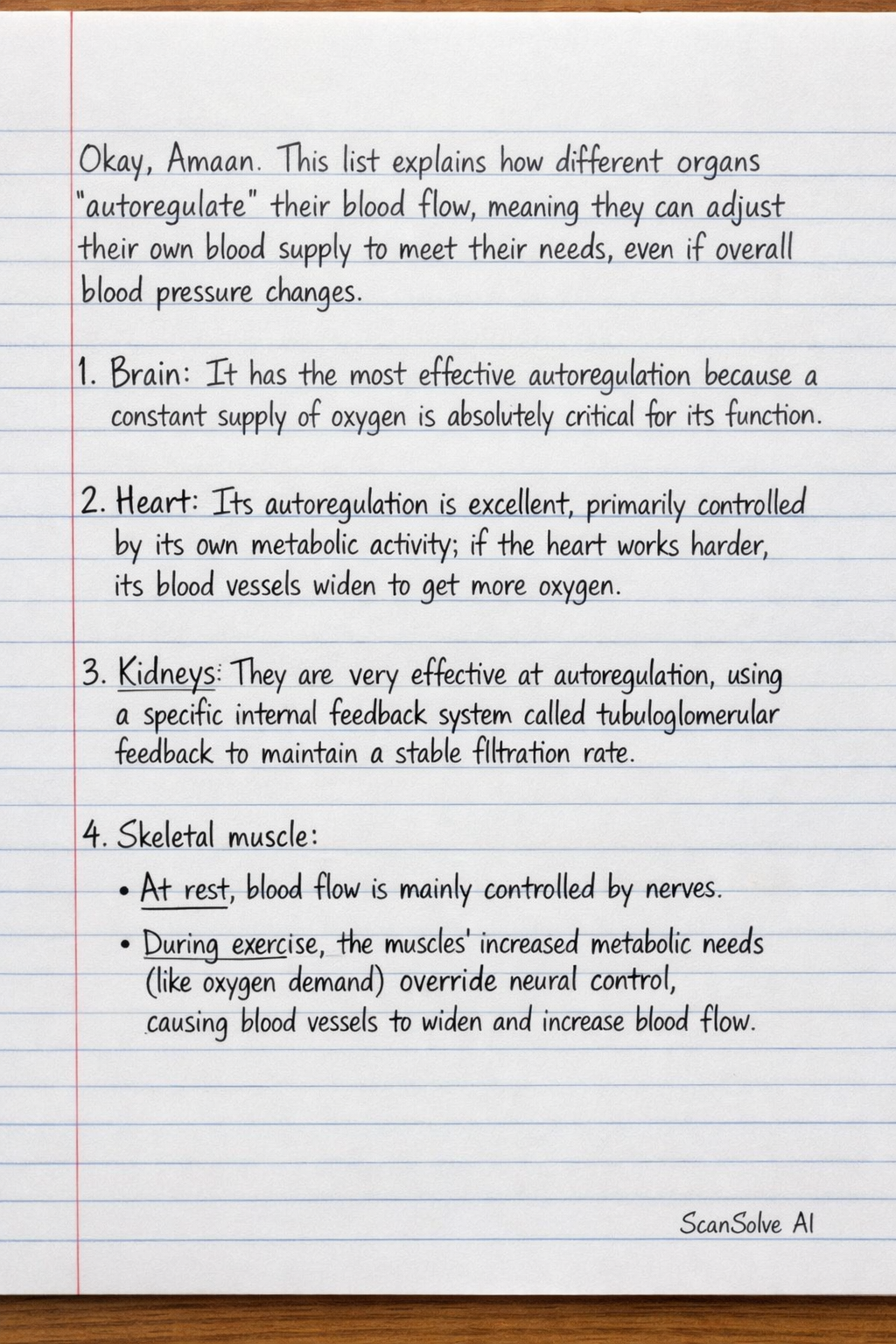
Okay, عبمان. This list explains how different organs autoregulate their blood flow, meaning they can adjust their own blood supply to meet their needs, even if overall blood pressure changes.
- Brain: It has the most effective autoregulation because a constant supply of oxygen is absolutely critical for its function.
- Heart: Its autoregulation is excellent, primarily controlled by its own metabolic activity; if the heart works harder, its blood vessels widen to get more oxygen.
- Kidneys: They are very effective at autoregulation, using a specific internal feedback system called tubuloglomerular feedback to maintain a stable filtration rate.
- Skeletal muscle:
- At rest, blood flow is mainly controlled by nerves.
- During exercise, the muscles' increased metabolic needs (like oxygen demand) override neural control, causing blood vessels to widen and increase blood flow.
- Skin: It has poor autoregulation for its own metabolic needs because its blood flow is primarily dedicated to regulating body temperature, not maintaining a constant supply for the skin tissue itself.
Was this helpful?
Still stuck on this one?
Ask a follow-up, and the answer starts from this question.
Got a different question?Ask your own question
More Biology Questions
QDiscuss in more details the autoregulation of brain,heart,kidney, skeletal muscle,and skin "pls it…QExplain the physiological mechanisms behind blood flow redistribution during exercise and stress.QExplain the roles of RAAS, ADH, and ANP in regulating blood pressure and blood volume.QWhich of the following statements about physiological regulation and processes are true? Provide…QIdentify and explain the functions of labeled parts of the mammalian heart, the reason for the left…
Browse by topic:Anatomy
Handwritten Step-by-Step Solution
Get this as a handwritten image on WhatsApp — like a tutor wrote it for you.
Try on WhatsApp