
We read your photo as:
What are the hypothesis and materials needed for a biotechnology project on milk to yogurt transformation?
Biology
ScanSolve AI Answer
Here are the answers to your questions regarding your biotechnology project on milk to yogurt transformation:
-
6. State your hypothesis
- Hypothesis: Optimizing the fermentation temperature and starter culture concentration will significantly enhance the viability of Lactobacillus bulgaricus and Streptococcus thermophilus, leading to improved physicochemical properties (pH, titratable acidity, viscosity) and desirable sensory attributes in yoghurt produced from local milk.
-
7. List the material required
- Ingredients:
- Fresh raw milk (e.g., cow's milk)
- Commercial starter culture containing Lactobacillus bulgaricus and Streptococcus thermophilus
- Optional: Skim milk powder (for increased solids), sugar, fruit purees for flavoring.
- Equipment:
- Beakers or stainless steel pots
- Stirring rods or spoons
- Thermometer (digital or mercury)
- Heating plate or stove
- Water bath or incubator (for controlled fermentation)
- pH meter
- Viscometer (e.g., Brookfield viscometer)
- Sterile containers or jars with lids
- Autoclave or pressure cooker (for sterilization)
- Microscope, slides, and cover slips
- Petri dishes and appropriate agar media (e.g., MRS agar) for bacterial enumeration
- Refrigerator
- Ingredients:
-
8. List the method or procedure
- Step 1: Milk Preparation
- Measure a specific volume of fresh raw milk.
- Heat the milk to pasteurization temperature () and hold for minutes to eliminate pathogenic bacteria and denature whey proteins, which improves yoghurt texture.
- Rapidly cool the milk to the desired inoculation temperature ().
- Step 2: Inoculation
- Add the starter culture (containing Lactobacillus bulgaricus and Streptococcus thermophilus) to the cooled milk at a predetermined concentration (e.g., w/v).
- Stir gently to ensure even distribution of the culture.
- Step 3: Fermentation
- Incubate the inoculated milk at a controlled temperature (e.g., , , for different experimental groups) in an incubator or water bath.
- Monitor the pH of the milk periodically using a pH meter.
- Allow fermentation to proceed until the pH reaches the desired endpoint (e.g., ), typically taking hours.
- Step 4: Cooling and Storage
- Once the desired pH is reached, rapidly cool the yoghurt to in a refrigerator to halt the fermentation process.
- Transfer the yoghurt into sterile containers and store under refrigeration.
- Step 5: Analysis and Evaluation
- Physicochemical Analysis: Measure the final pH, titratable acidity, and viscosity of the yoghurt.
- Microbiological Analysis: Perform plate counts on selective media (e.g., MRS agar) to determine the viable cell counts of Lactobacillus bulgaricus and Streptococcus thermophilus immediately after fermentation and during refrigerated storage to assess probiotic viability and shelf life.
- Sensory Evaluation: Conduct a sensory panel to evaluate attributes such as taste, texture, aroma, and overall acceptability.
- Nutritional Analysis: Analyze the protein, fat, and lactose content of the final yoghurt product.
- Step 1: Milk Preparation
Was this helpful?
Still stuck on this one?
Ask a follow-up, and the answer starts from this question.
Got a different question?Ask your own question
More Biology Questions
QOutline the typical content of the "Results obtained" section for a biotechnology project on milk to…QFor a research project on transforming milk into yogurt, identify scientific and environmental…QPlease complete the table for our biotechnological project on milk transformation into yogurt or…QResearch project on yogurt transformation: Propose a title and identify the social and economic…QExplain the economic value addition of transforming milk into yogurt.
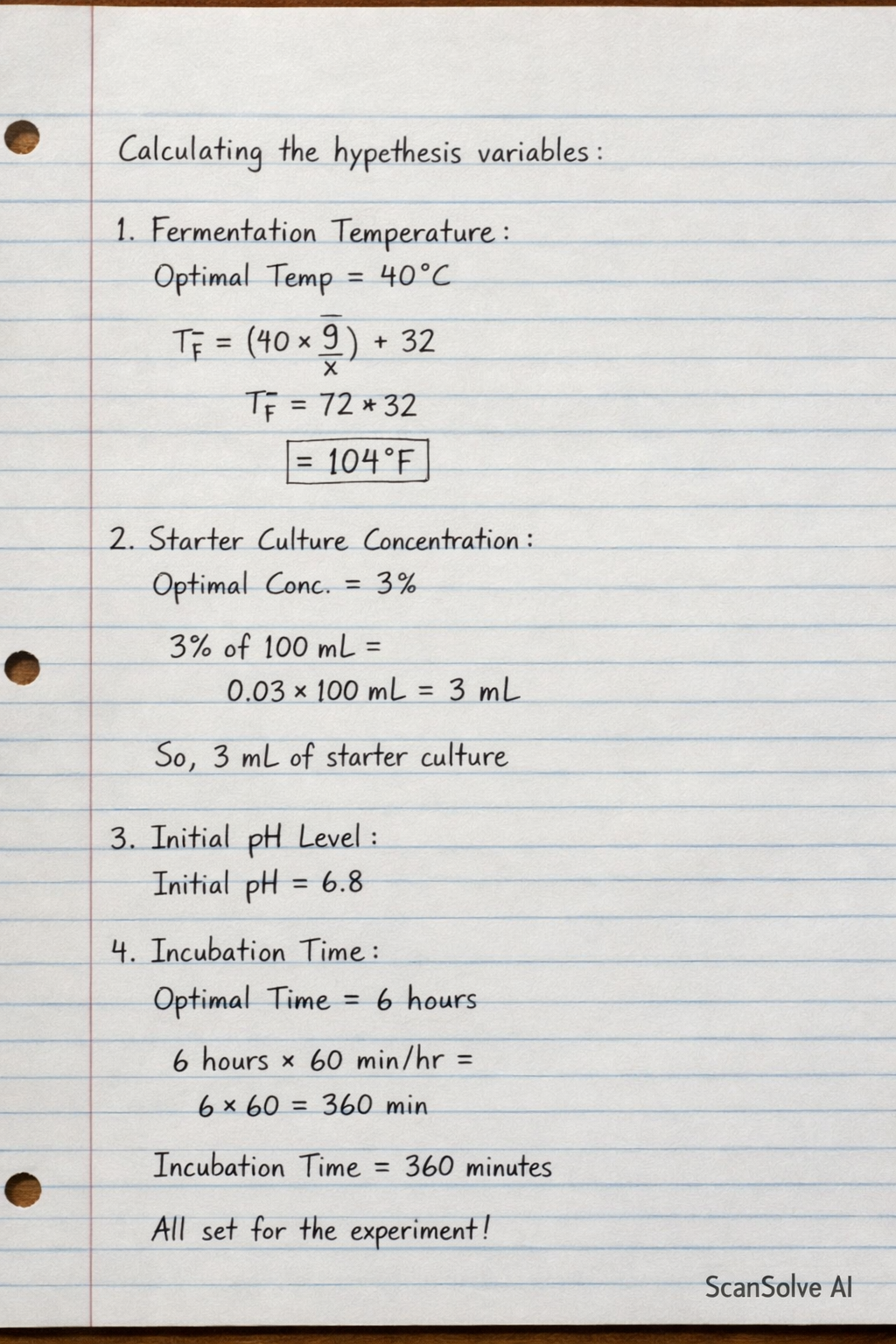
Handwritten Step-by-Step Solution
Get this as a handwritten image on WhatsApp — like a tutor wrote it for you.
Try on WhatsApp