
We read your photo as:
What are the key considerations for gene therapy, the advantages of E. coli in genetic engineering, the technology behind Bt crops, and the applications of microbial processes in waste management?
ScanSolve AI Answer
Here are the answers to your questions:
-
b) Efficient delivery and expression of corrective genes. Explanation: For gene therapy to be successful, the therapeutic genes must be effectively delivered to the target cells and then expressed to produce the desired protein, thereby correcting the genetic defect.
-
c) Allow rapid replication of inserted genes. Explanation: Escherichia coli are widely used in biotechnology due to their rapid growth rate and ease of genetic manipulation, which allows for quick and efficient replication of plasmids containing inserted genes.
-
b) Recombinant DNA technology. Explanation: Introducing the Bt gene from Bacillus thuringiensis into maize involves combining DNA from two different sources, which is the definition of recombinant DNA technology.
-
c) Bioremediation and anaerobic digestion. Explanation: Anaerobic digestion is a process that breaks down organic waste to produce biogas (a renewable energy source), directly contributing to waste-to-energy conversion. Bioremediation uses biological agents to remove pollutants, often from waste.
-
b) Allows precise, targeted modification of DNA sequences. Explanation: CRISPR-Cas9 is a powerful gene-editing tool that enables scientists to make highly specific and targeted changes to DNA sequences, offering unprecedented precision in genetic engineering.
-
c) Biodegradability and renewable origin. Explanation: The primary environmental advantages of bioplastics are their ability to break down naturally in the environment (biodegradability) and their production from renewable biomass resources, reducing reliance on fossil fuels.
-
b) They catalyze reactions at lower temperatures and energy costs. Explanation: Enzymes are highly efficient biological catalysts that can accelerate specific reactions under mild conditions (lower temperatures, atmospheric pressure, and neutral pH), which significantly reduces energy consumption and operational costs in industrial processes.
Still stuck on this one?
Ask a follow-up, and the answer starts from this question.
More Biology Questions
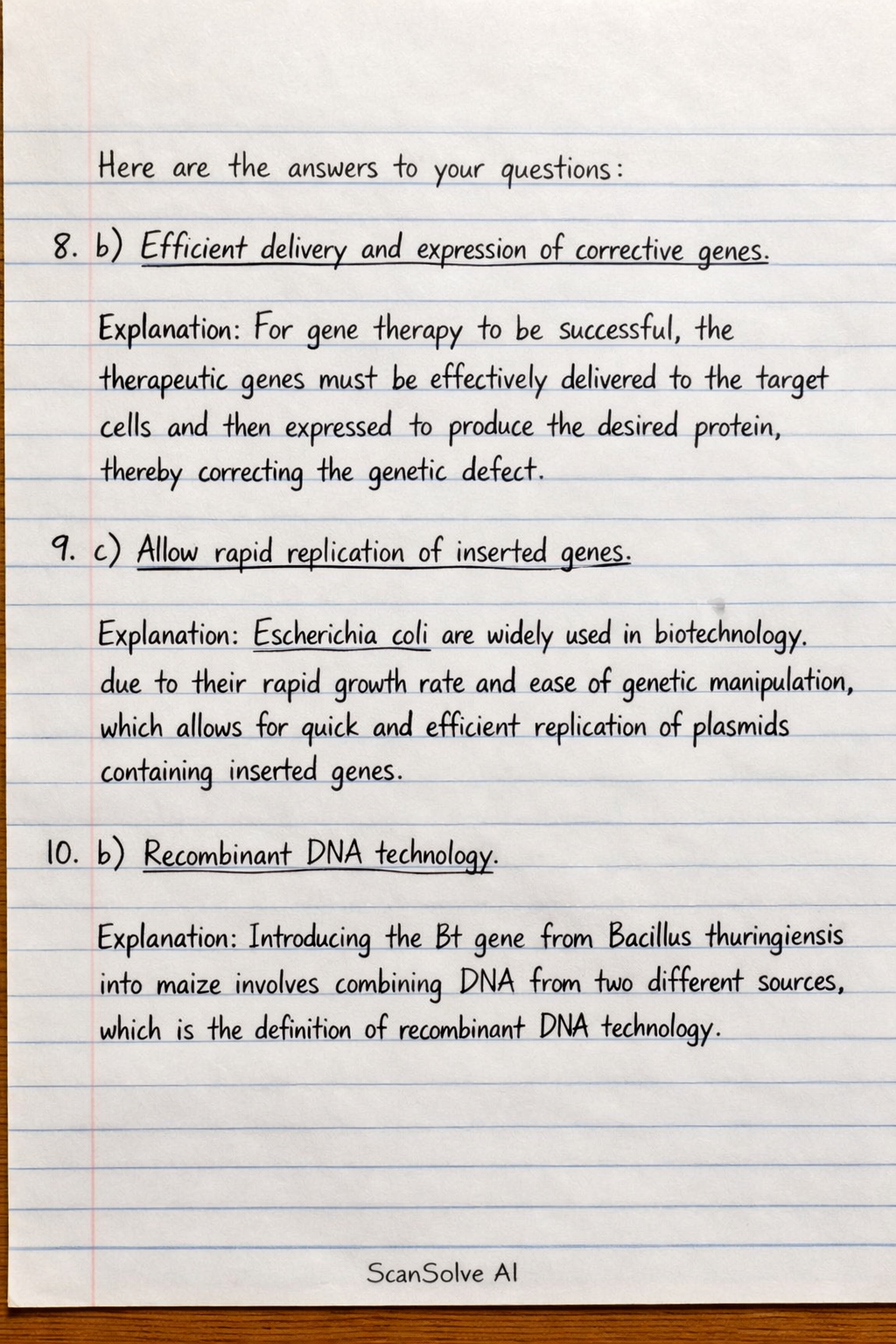
Handwritten Step-by-Step Solution
Get this as a handwritten image on WhatsApp — like a tutor wrote it for you.
Try on WhatsApp