
We read your photo as:
Explain the process of plant genetic engineering, its risks, and describe a genetically modified organism (Organism C) with its benefits in crop production.
Biology
ScanSolve AI Answer
Answer
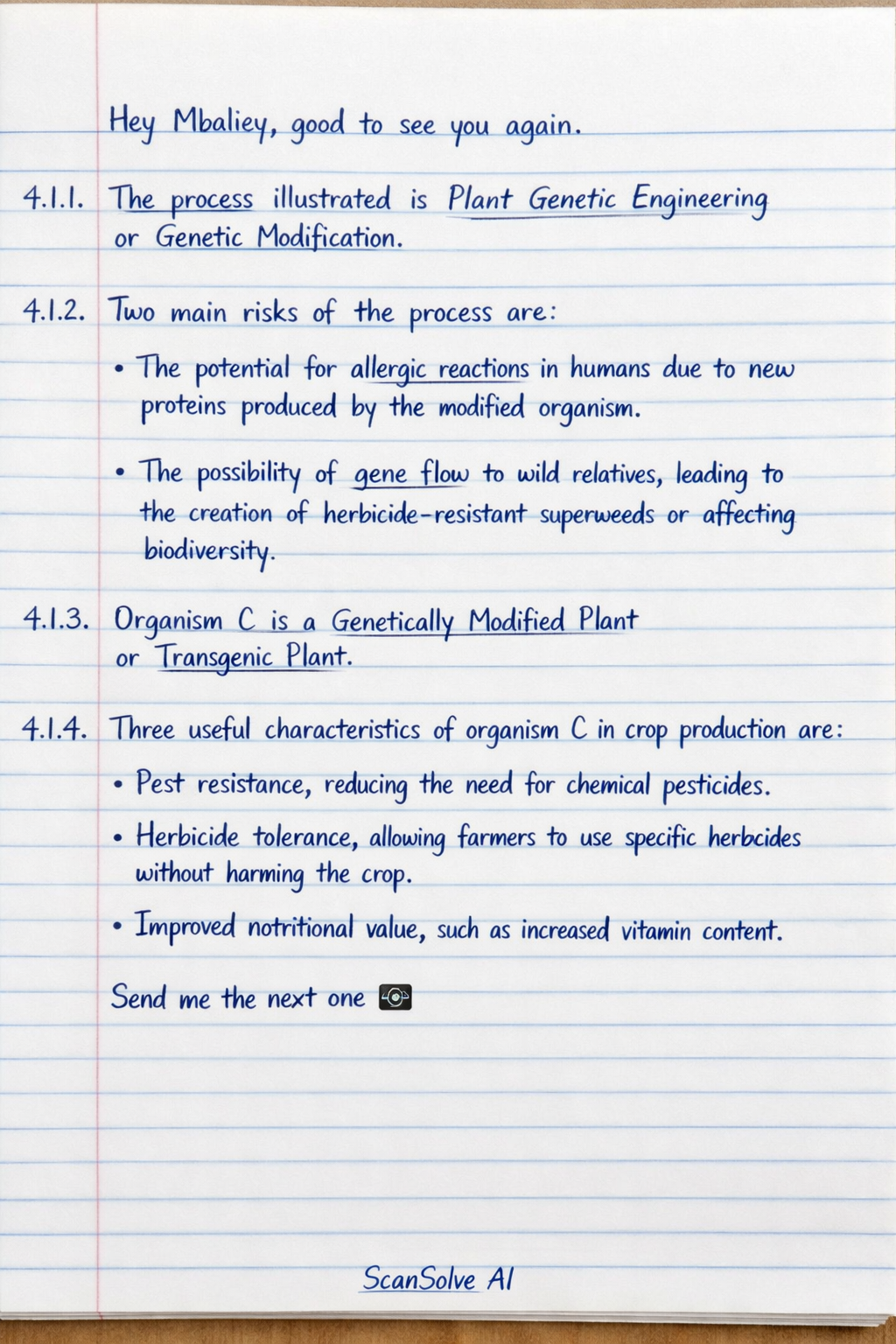
4.1.1. The process illustrated is Plant Genetic Engineering or Genetic Modification.
4.1.2. Two main risks of the process are:
- The potential for allergic reactions in humans due to new proteins produced by the modified organism.
- The possibility of gene flow to wild relatives, leading to the creation of herbicide-resistant superweeds or affecting biodiversity.
4.1.3. Organism C is a Genetically Modified Plant or Transgenic Plant.
4.1.4. Three useful characteristics of organism C in crop production are:
- Pest resistance, reducing the need for chemical pesticides.
- Herbicide tolerance, allowing farmers to use specific herbicides without harming the crop.
- Improved nutritional value, such as increased vitamin content.
Was this helpful?
Still stuck on this one?
Ask a follow-up, and the answer starts from this question.
Got a different question?Ask your own question
More Biology Questions
QExplain breeding systems and genetic modification, including advantages and disadvantages.QDiscuss the advantages and disadvantages of genetically modified crops, and explain the process of…QDiscuss the importance and applications of Genetically Modified Crops (GMC), citing specific…QOutline THREE social concerns regarding Genetically Modified Organisms (GMOs). Give TWO implications…QWhat are the key considerations for gene therapy, the advantages of E. coli in genetic engineering…
Browse by topic:Genetics
Handwritten Step-by-Step Solution
Get this as a handwritten image on WhatsApp — like a tutor wrote it for you.
Try on WhatsApp