
We read your photo as:
What are the male and female factors that might be the cause of infertility?
Biology
ScanSolve AI Answer
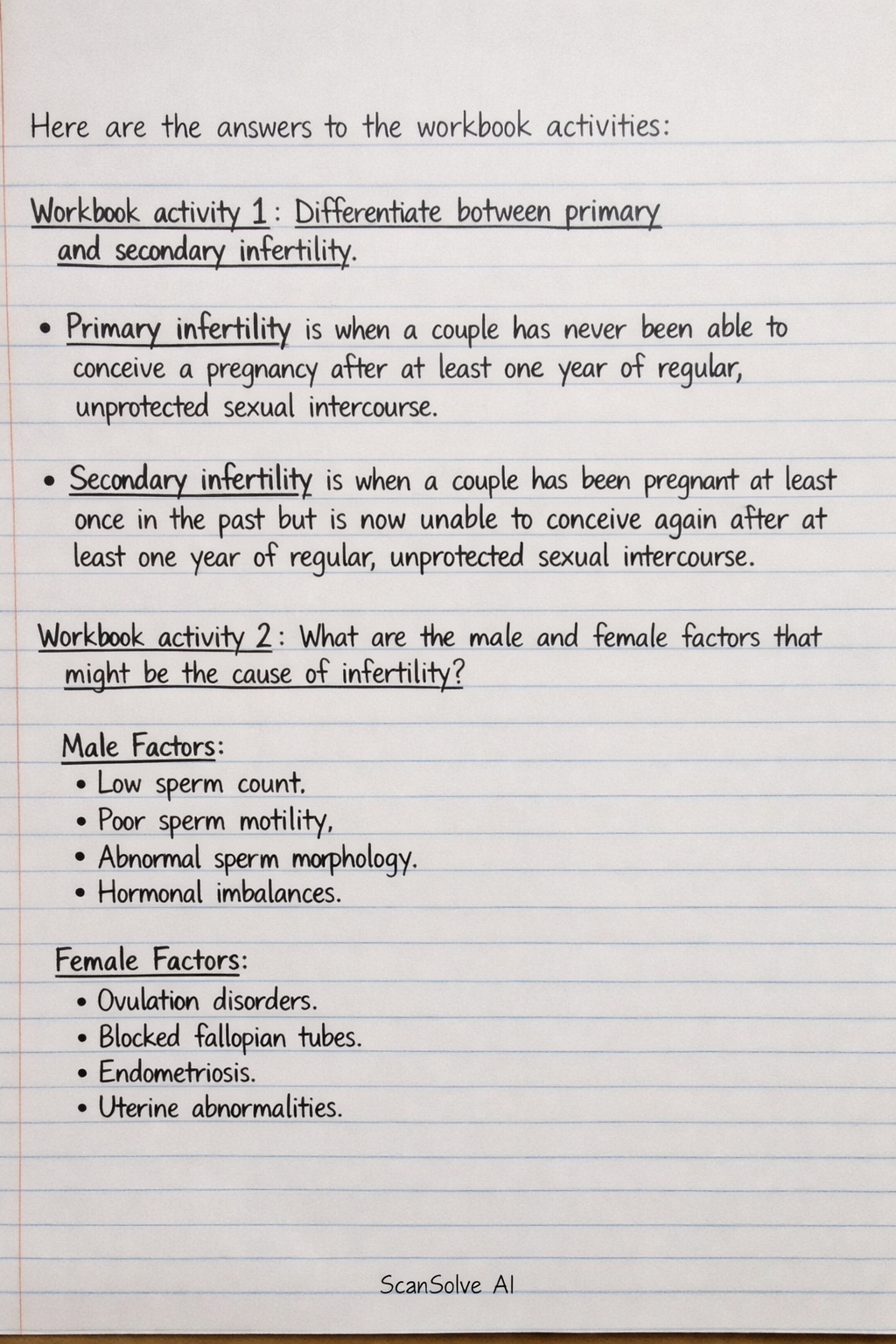
Here are the answers to the workbook activities:
Workbook activity 1: Differentiate between primary and secondary infertility.
- Primary infertility is when a couple has never been able to conceive a pregnancy after at least one year of regular, unprotected sexual intercourse.
- Secondary infertility is when a couple has been pregnant at least once in the past but is now unable to conceive again after at least one year of regular, unprotected sexual intercourse.
Workbook activity 2: What are the male and female factors that might be the cause of infertility?
Male Factors:
- Sperm disorders: Low sperm count, poor sperm motility, abnormally shaped sperm, or no sperm production.
- Varicocele: Enlargement of veins within the scrotum, which can affect sperm quality.
- Ejaculation problems: Such as retrograde ejaculation or inability to ejaculate.
- Hormonal imbalances: Issues with the pituitary gland or hypothalamus affecting testosterone and sperm production.
- Blockages: Obstructions in the tubes that transport sperm.
- Genetic defects: Certain genetic conditions can impair fertility.
- Lifestyle factors: Smoking, excessive alcohol consumption, drug use, obesity, exposure to toxins or high heat.
Female Factors:
- Ovulation disorders: Conditions like Polycystic Ovary Syndrome (PCOS), hypothalamic dysfunction, or premature ovarian insufficiency that prevent regular ovulation.
- Fallopian tube damage or blockage: Often caused by Pelvic Inflammatory Disease (PID), endometriosis, or previous abdominal surgery, preventing sperm from reaching the egg or the embryo from reaching the uterus.
- Endometriosis: A condition where uterine tissue grows outside the uterus, affecting the ovaries, fallopian tubes, and uterus.
- Uterine or cervical factors: Uterine fibroids, polyps, abnormal uterine shape, or cervical stenosis.
- Age: Female fertility naturally declines with age, particularly after 35.
- Hormonal imbalances: Thyroid disorders or other endocrine issues.
- Lifestyle factors: Smoking, excessive alcohol consumption, obesity, extreme weight loss, or high stress levels.
Was this helpful?
Still stuck on this one?
Ask a follow-up, and the answer starts from this question.
Got a different question?Ask your own question
More Biology Questions
QThe following is an associated factor of infertility in males Question 10Answer a. Cigarrettes…QIdentify and explain the functions of parts of the male and female reproductive systems, and the…QSummarize the variables and findings of a study investigating the effect of TU on male fertility…QExplain how to use the scientific method to investigate the cause of a couple's childlessness.QWhat are the roles of ovulation timing and the factors that affect it
Handwritten Step-by-Step Solution
Get this as a handwritten image on WhatsApp — like a tutor wrote it for you.
Try on WhatsApp