
We read your photo as:
Define veganism and explain how to make a vegan diet nutritionally complete.
ScanSolve AI Answer
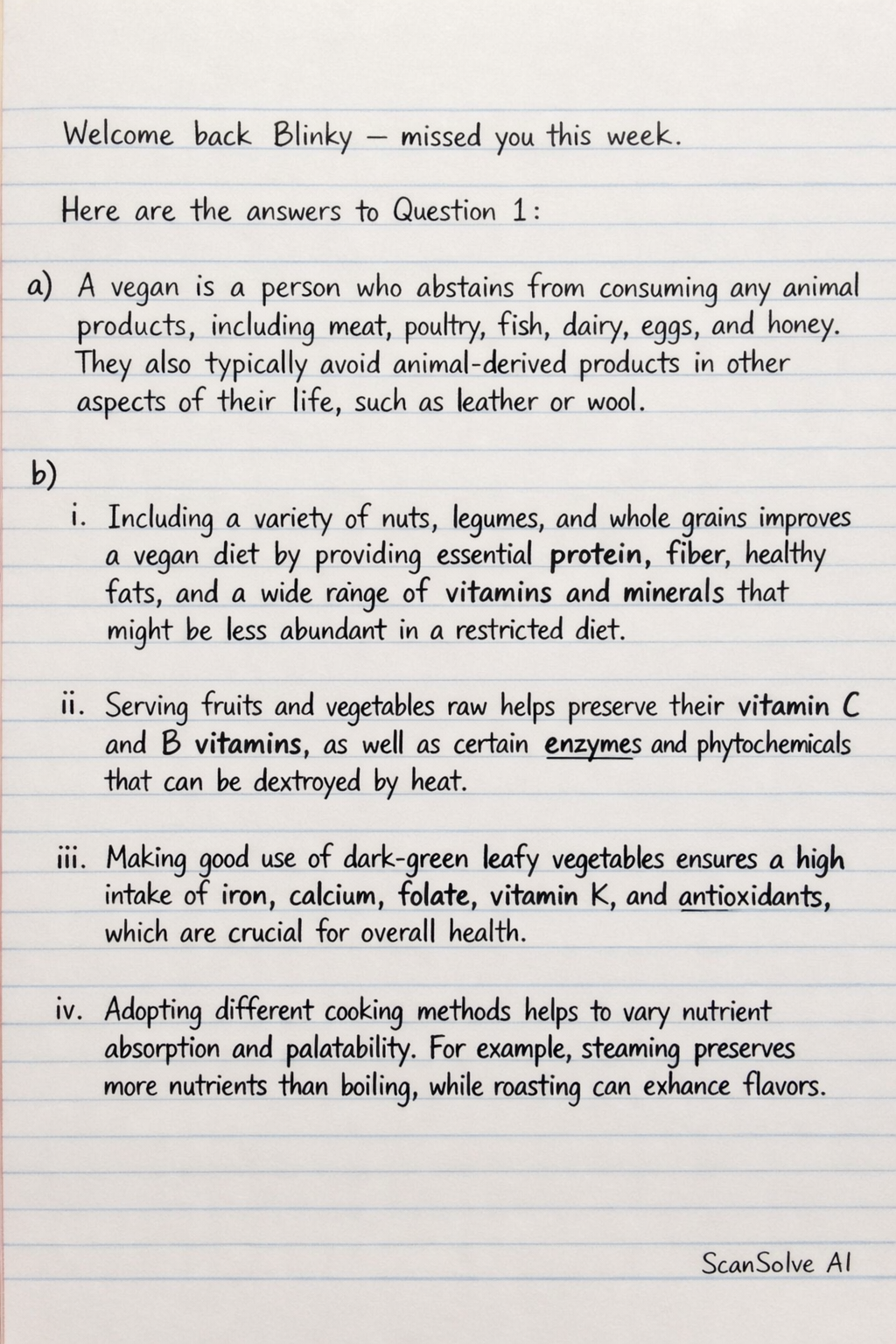
Here are the answers to Question 1:
a) A vegan is a person who abstains from consuming any animal products, including meat, poultry, fish, dairy, eggs, and honey. They also typically avoid animal-derived products in other aspects of their life, such as leather or wool.
b)
i. Including a variety of nuts, legumes, and whole grains improves a vegan diet by providing essential protein, fiber, healthy fats, and a wide range of vitamins and minerals that might be less abundant in a restricted diet.
ii. Serving fruits and vegetables raw helps preserve their vitamin C and B vitamins, as well as certain enzymes and phytochemicals that can be destroyed by heat.
iii. Making good use of dark-green leafy vegetables ensures a high intake of iron, calcium, folate, vitamin K, and antioxidants, which are crucial for overall health.
iv. Adopting different cooking methods helps to vary nutrient absorption and palatability. For example, steaming preserves more nutrients than boiling, while roasting can enhance flavors.
v. Using a variety of herbs and spices adds flavor without extra calories and provides additional antioxidants and anti-inflammatory compounds.
vi. Choosing soy-based beverages provides a good source of protein and often calcium and vitamin D (if fortified), which are important nutrients that can be challenging to obtain in a vegan diet.
c) Micronutrients present in a lacto-ovo vegetarian diet but not in a vegan diet include Vitamin B12, Vitamin D, calcium, and iodine. These are primarily found in dairy products and eggs.
Still stuck on this one?
Ask a follow-up, and the answer starts from this question.
More Biology Questions
Handwritten Step-by-Step Solution
Get this as a handwritten image on WhatsApp — like a tutor wrote it for you.
Try on WhatsApp