
We read your photo as:
What do you understand by: (i) Biotechnology (ii) Genetic engineering? (b) Describe how genetic engineering can be used to solve the problem of diabetes in the society.
ScanSolve AI Answer
Here's the solution to question 7:
7. (a) What do you understand by:
7. (a) (i) Biotechnology
Biotechnology is the application of biological organisms, systems, or processes to create or modify products or processes for specific uses. It involves using living systems and organisms to develop or make products, often for medical, agricultural, or industrial purposes.
7. (a) (ii) Genetic engineering
Genetic engineering is a specific branch of biotechnology that involves the direct manipulation of an organism's genes using recombinant DNA technology. This process typically involves isolating, copying, and inserting specific genes from one organism into another to introduce new traits or modify existing ones.
7. (b) Describe how genetic engineering can be used to solve the problem of diabetes in the society.
Genetic engineering has significantly addressed diabetes by enabling the production of human insulin. Historically, insulin was extracted from animals, which could cause allergic reactions. Through genetic engineering:
- The human gene responsible for producing insulin is isolated from human pancreatic cells.
- This gene is then inserted into a plasmid (a small, circular DNA molecule) of a bacterium, typically E. coli.
- The recombinant plasmid is introduced into the bacterial cells, making them genetically modified organisms (GMOs).
- These bacteria are then grown in large fermentation tanks, where they multiply rapidly and express the human insulin gene, producing large quantities of human insulin.
- The insulin is then purified and packaged for use by diabetic patients, providing a safe, effective, and abundant supply of insulin that is identical to the insulin produced by the human body.
7. (c) Discuss the application of biotechnology in the production of biogas as a source of energy.
Biotechnology plays a crucial role in the production of biogas through the process of anaerobic digestion. This process involves the breakdown of organic matter by microorganisms in the absence of oxygen.
- Substrate preparation: Various organic wastes, such as agricultural residues (manure, crop waste), municipal solid waste, and industrial wastewater, are collected and pre-treated.
- Anaerobic digester: The organic material is fed into an airtight reactor called an anaerobic digester.
- Microbial action: A diverse community of anaerobic bacteria and archaea (microorganisms) works in a series of stages:
- Hydrolysis: Complex organic polymers are broken down into simpler monomers.
- Acidogenesis: Monomers are converted into volatile fatty acids, alcohols, and hydrogen.
- Acetogenesis: These products are further converted into acetate, hydrogen, and carbon dioxide.
- Methanogenesis: Methanogenic archaea convert acetate, hydrogen, and carbon dioxide into methane () and carbon dioxide (), which constitute biogas.
- Biogas collection: The produced biogas, primarily methane, is collected and can be used directly for cooking, heating, or generating electricity.
- Digestate: The remaining solid and liquid material, known as digestate, is a nutrient-rich fertilizer. This biotechnological process provides a sustainable way to manage waste, reduce greenhouse gas emissions, and produce renewable energy.
Still stuck on this one?
Ask a follow-up, and the answer starts from this question.
More Biology Questions
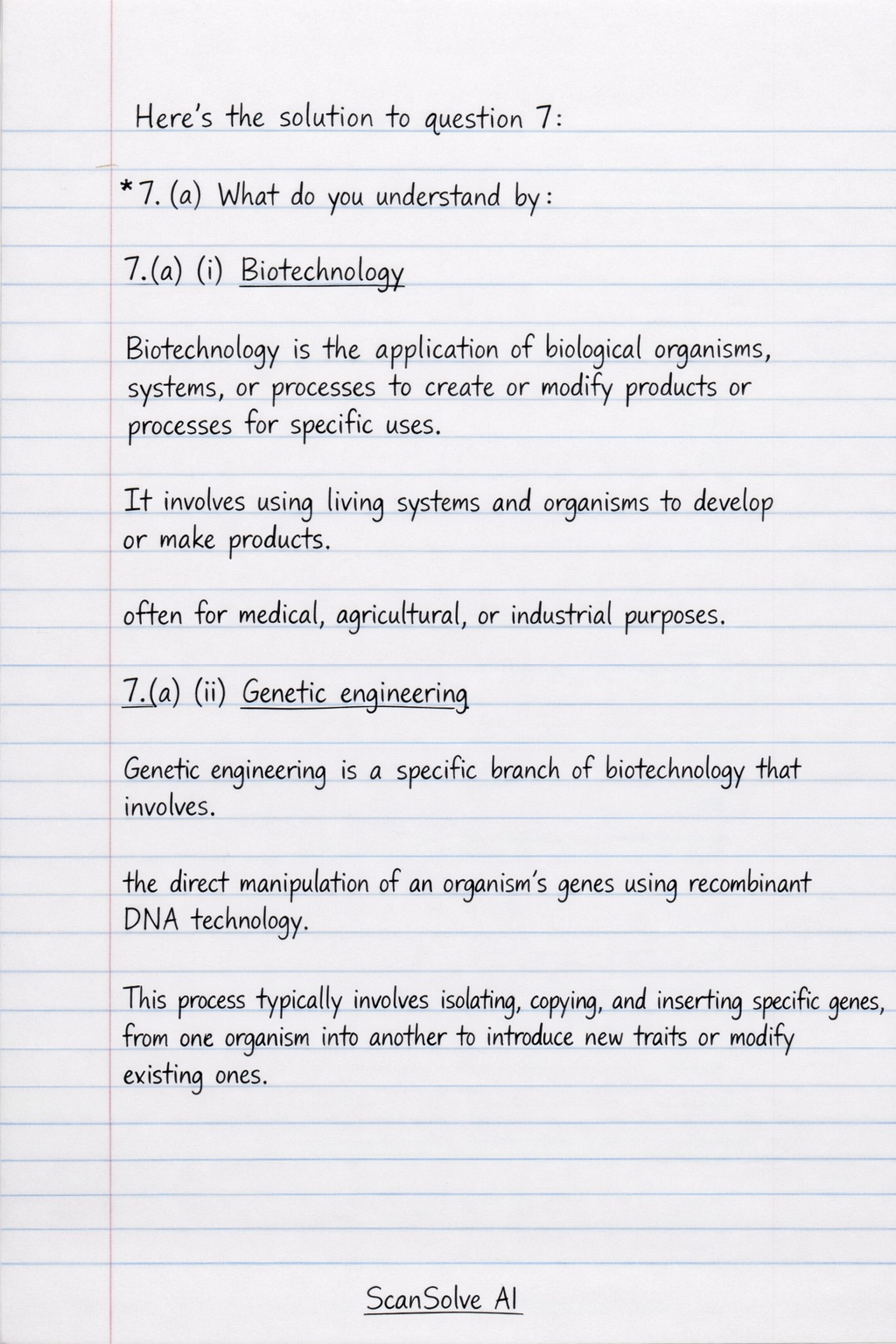
Handwritten Step-by-Step Solution
Get this as a handwritten image on WhatsApp — like a tutor wrote it for you.
Try on WhatsApp