
Zoonotic Diseases Give 4 examples each of: Bacterial zoonotic diseases Viral zoonotic diseases Fungi zoonotic diseases parasite zoonotic diseases Information Required by Veterinary Authorities Classes of Antibodies Write and explain them. Immunity Discuss the different types of immunity. Vaccines Explain how vaccines are produced, stored, and transported. When an Animal is Sick How do you know an animal is sick? What care should be given to the animal? As a veterinary expert Why do you need information about a sick animal before treatment?
ScanSolve AI Answer
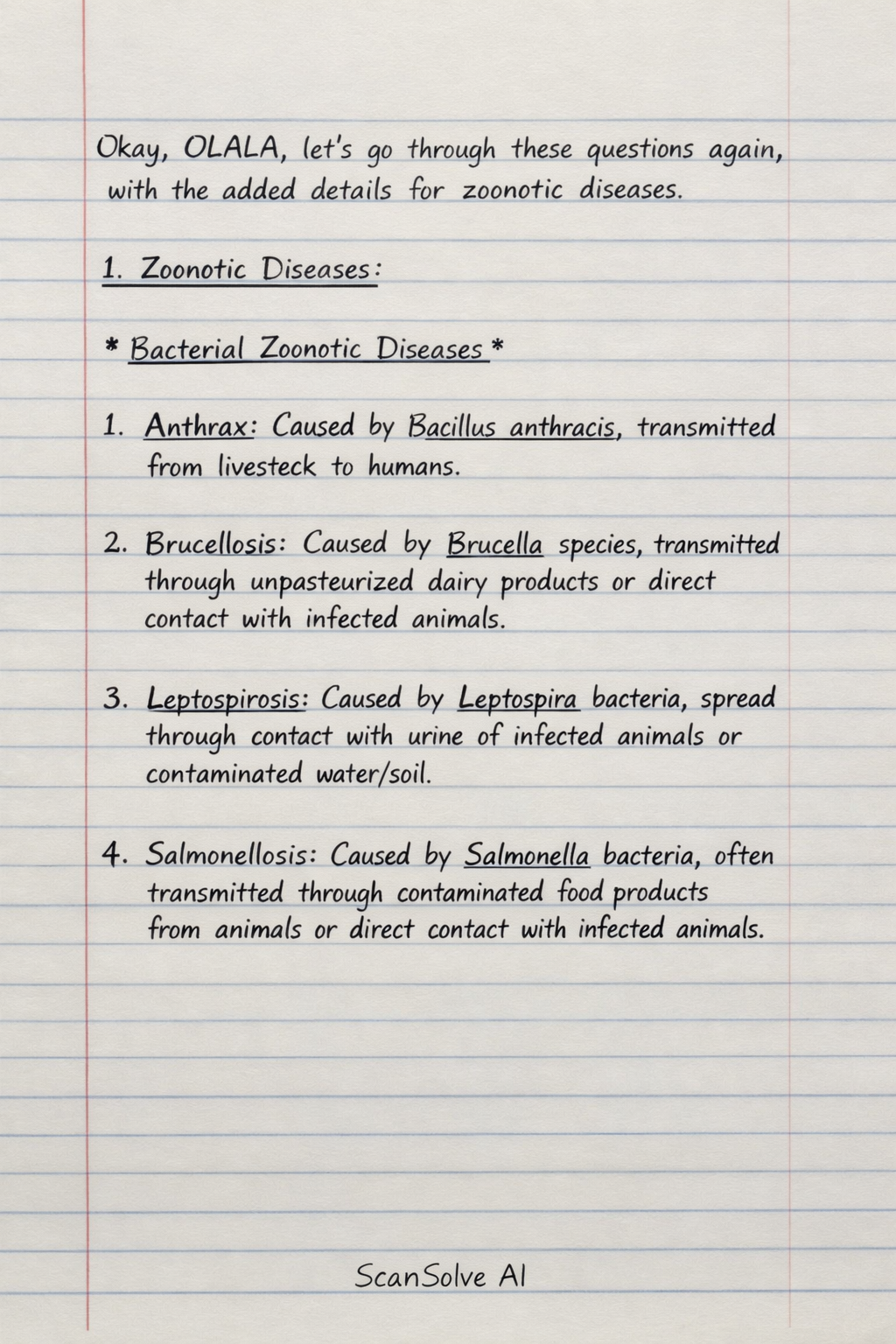
Okay, OLALA, let's go through these questions again, with the added details for zoonotic diseases.
1. Zoonotic Diseases:
-
Bacterial Zoonotic Diseases:
- Anthrax: Caused by Bacillus anthracis, transmitted from livestock to humans.
- Brucellosis: Caused by Brucella species, transmitted through unpasteurized dairy products or direct contact with infected animals.
- Leptospirosis: Caused by Leptospira bacteria, spread through contact with urine of infected animals or contaminated water/soil.
- Salmonellosis: Caused by Salmonella bacteria, often transmitted through contaminated food products from animals or direct contact with infected animals.
-
Viral Zoonotic Diseases:
- Rabies: Caused by the rabies virus, transmitted through the bite of an infected animal.
- Avian Influenza (Bird Flu): Caused by influenza A viruses, transmitted from birds to humans.
- Ebola Virus Disease: Caused by the Ebola virus, transmitted from wild animals (e.g., bats, monkeys) to humans.
- Nipah Virus Infection: Caused by the Nipah virus, transmitted from fruit bats or pigs to humans.
-
Fungal Zoonotic Diseases:
- Ringworm (Dermatophytosis): Caused by various fungi (e.g., Microsporum, Trichophyton species), transmitted through direct contact with infected animals or contaminated objects.
- Sporotrichosis: Caused by Sporothrix schenckii, often transmitted through contact with contaminated soil or plant matter, or through bites/scratches from infected animals (especially cats).
- Cryptococcosis: Caused by Cryptococcus neoformans or C. gattii, found in bird droppings or decaying wood, transmitted via inhalation of fungal spores.
- Histoplasmosis: Caused by Histoplasma capsulatum, found in soil contaminated with bird or bat droppings, transmitted via inhalation of spores.
-
Parasitic Zoonotic Diseases:
- Toxoplasmosis: Caused by Toxoplasma gondii, transmitted through contact with cat feces or consumption of undercooked meat from infected animals.
- Giardiasis: Caused by Giardia intestinalis, transmitted through contaminated water or food, often from infected animals.
- Echinococcosis (Hydatid Disease): Caused by tapeworms (Echinococcus species), transmitted through ingestion of eggs from dog feces or contaminated food.
- Trichinellosis: Caused by Trichinella roundworms, transmitted through consumption of undercooked meat (especially pork) from infected animals.
2. Information Required by Veterinary Authorities:
Veterinary authorities are responsible for animal health and public health protection. They provide and require information on:
- Disease Surveillance: Data on the occurrence, spread, and control of animal diseases, especially zoonoses.
- Animal Movement: Regulations and records for the transport of livestock and animal products to prevent disease transmission.
- Veterinary Public Health: Guidelines and oversight for food safety (meat, milk, eggs) and animal welfare standards.
- Emergency Response: Protocols and communication during disease outbreaks or natural disasters affecting animals.
3. Classes of Antibodies:
Antibodies, also known as immunoglobulins (Ig), are Y-shaped proteins produced by plasma cells that are used by the immune system to identify and neutralize foreign objects like bacteria and viruses. There are five main classes:
- IgG (Immunoglobulin G): The most abundant antibody, found in blood and extracellular fluid. It can cross the placenta to provide passive immunity to a fetus and is crucial for long-term immunity against pathogens.
- IgA (Immunoglobulin A): Found in mucous membranes, saliva, tears, and breast milk. It plays a critical role in mucosal immunity, protecting against pathogens entering the body through respiratory and gastrointestinal tracts.
- IgM (Immunoglobulin M): The largest antibody, found in blood and lymph fluid. It is the first antibody produced in response to an infection and is very effective at activating the complement system.
- IgE (Immunoglobulin E): Associated with allergic reactions and defense against parasites. It binds to mast cells and basophils, triggering the release of histamine and other inflammatory mediators.
- IgD (Immunoglobulin D): Found in small amounts in the blood and primarily acts as a B cell receptor, helping to activate B cells when they encounter an antigen.
4. Immunity:
Immunity is the ability of an organism to resist a particular infection or toxin by the action of specific antibodies or sensitized white blood cells. There are two main types:
- Innate Immunity (Non-specific Immunity): This is the body's first line of defense, present from birth. It provides immediate, general protection against a wide range of pathogens without prior exposure. Components include physical barriers (skin, mucous membranes), chemical barriers (stomach acid, tears), and cellular responses (phagocytes like macrophages and neutrophils, natural killer cells).
- Adaptive Immunity (Acquired or Specific Immunity): This immunity develops over time after exposure to specific pathogens. It is highly specific and remembers past encounters, leading to a faster and stronger response upon re-exposure. It involves lymphocytes (B cells and T cells) and antibodies. Adaptive immunity can be further divided into:
- Active Immunity: Developed when the immune system produces its own antibodies in response to an antigen (e.g., after natural infection or vaccination). It provides long-lasting protection.
- Passive Immunity: Acquired when an individual receives antibodies produced by another organism (e.g., maternal antibodies passed to a fetus, or antitoxins administered for snake venom). It provides immediate but temporary protection.
5. Vaccines:
-
Production (Transformation): Vaccines are biological preparations that provide active acquired immunity to a particular infectious disease. They are "transformed" or developed by:
- Weakening (attenuating) a live pathogen: Creating a live-attenuated vaccine (e.g., measles, mumps, rubella).
- Inactivating or killing the pathogen: Creating an inactivated vaccine (e.g., polio, influenza).
- Using parts of the pathogen (subunits, toxoids): Creating subunit vaccines (e.g., hepatitis B) or toxoid vaccines (e.g., tetanus, diphtheria).
- Using genetic material (mRNA, viral vectors): Newer technologies that instruct the body's cells to produce antigens (e.g., some COVID-19 vaccines). These processes involve growing the pathogen in controlled environments, then modifying or extracting components to make them safe but still immunogenic.
-
Storage and Transport: Vaccines require careful storage and transportation to maintain their efficacy, often needing a "cold chain" system.
- Temperature Control: Most vaccines must be kept within a specific temperature range (typically to ) from the manufacturing site to the point of administration. This is achieved using insulated containers, ice packs, refrigerators, and freezers.
- Monitoring: Temperature monitoring devices (e.g., data loggers, vaccine vial monitors) are used to ensure the cold chain is maintained throughout transit.
- Logistics: Efficient logistics networks, including specialized vehicles and storage facilities, are essential to deliver vaccines globally, especially to remote areas.
6. When an Animal is Sick:
-
How to know an animal is sick:
- Behavioral Changes: Lethargy, loss of appetite, withdrawal from the group, unusual aggression or vocalization, reluctance to move.
- Physical Signs: Changes in coat/feather condition (dull, ruffled), discharge from eyes/nose, coughing, sneezing, vomiting, diarrhea, lameness, swelling, difficulty breathing, changes in urination/defecation.
- Vital Signs: Fever (elevated body temperature), increased heart rate, rapid or shallow breathing.
- Weight Loss: Noticeable decrease in body condition over time.
-
What care should be given to the animal:
- Isolation: Separate the sick animal from healthy ones to prevent disease spread.
- Comfort and Environment: Provide a clean, dry, warm, and quiet environment. Ensure easy access to fresh water and palatable feed.
- Observation: Continuously monitor symptoms, appetite, water intake, and overall condition.
- Veterinary Consultation: Crucially, contact a veterinary expert immediately. They can diagnose the illness, prescribe appropriate medication, and provide specific treatment plans.
- Supportive Care: Administer prescribed medications, assist with feeding or hydration if necessary, and maintain hygiene.
7. As a veterinary expert:
As a veterinary expert, information about sick animals is vital for several reasons:
- Accurate Diagnosis: Detailed history of symptoms, onset, progression, and any previous treatments helps in pinpointing the correct disease.
- Effective Treatment Planning: Knowing the specific illness, its severity, and the animal's overall health status allows for tailored and effective treatment protocols.
- Disease Surveillance and Control: Information on sick animals, especially those with infectious or zoonotic diseases, is critical for tracking outbreaks, implementing control measures, and protecting both animal and public health.
- Prognosis and Client Communication: Understanding the disease helps in predicting the outcome and communicating realistic expectations to the animal owner.
- Research and Education: Data from sick animals contributes to veterinary research, improving understanding of diseases, developing new treatments, and educating future veterinarians.
Still stuck on this one?
Ask a follow-up, and the answer starts from this question.
More Biology Questions
Handwritten Step-by-Step Solution
Get this as a handwritten image on WhatsApp — like a tutor wrote it for you.
Try on WhatsApp