
We read your photo as:
1a) Conservation is the protection, preservation, management, or restoration of natural environments and wildlife. It aims to maintain biodiversity and natural resources for present and future gener
ScanSolve AI Answer
Here are the answers to the questions:
1a) Conservation is the protection, preservation, management, or restoration of natural environments and wildlife. It aims to maintain biodiversity and natural resources for present and future generations.
1b) The two major forms of conservation are in-situ and ex-situ conservation.
- In-situ conservation: Protecting species in their natural habitat. For example, establishing national parks or wildlife sanctuaries to protect specific ecosystems and the species within them.
- Ex-situ conservation: Protecting species outside their natural habitat. For example, maintaining species in zoos, botanical gardens, or seed banks.
1c) The major classes of an aquatic ecosystem are freshwater ecosystems and marine ecosystems.
- Freshwater ecosystems: Include environments like ponds, lakes, rivers, streams, and wetlands.
- Marine ecosystems: Include environments like oceans, coral reefs, estuaries, and intertidal zones.
2a) Symbiotic relationships describe close and long-term interactions between different biological species. Three forms are:
- Mutualism: Both species benefit from the interaction. For example, bees pollinating flowers receive nectar, while the flowers are fertilized.
- Commensalism: One species benefits, and the other is neither helped nor harmed. For example, barnacles attaching to whales gain a place to live and filter feed, while the whale is unaffected.
- Parasitism: One species (the parasite) benefits at the expense of the other (the host). For example, ticks feeding on the blood of mammals harm the host while benefiting themselves.
2b) Wildlife management is the application of ecological knowledge to wild animal populations and their habitats to achieve specific human goals, such as conservation or sustainable use.
Conservation techniques of wildlife population include:
- Habitat preservation and restoration: Protecting and improving the natural areas where wildlife lives. For example, establishing protected areas or reforesting degraded lands.
- Population management: Regulating animal numbers through methods like hunting quotas, reintroduction programs for endangered species, or controlling invasive species.
- Legislation and enforcement: Implementing and enforcing laws to protect endangered species, prevent poaching, and regulate wildlife trade. For example, the CITES agreement regulates international trade in endangered species.
2c) Agroforestry is a land-use system that integrates trees and shrubs with crops and/or livestock on the same land. Three major categories are:
- Agrisilvicultural systems: Combine crops and trees. For example, alley cropping, where food crops are grown between rows of trees.
- Silvopastoral systems: Combine trees and livestock. For example, pastures with scattered trees that provide shade for animals and fodder.
- Agrosilvopastoral systems: Combine crops, trees, and livestock. For example, home gardens that integrate fruit trees, vegetables, and small animals.
3) Benefits of protected areas:
- Biodiversity conservation: They safeguard habitats and species from extinction, preserving genetic diversity.
- Ecosystem services: They provide essential services like clean water, air purification, soil fertility, and climate regulation.
- Research and education: They offer sites for scientific study, ecological monitoring, and environmental education.
- Recreation and tourism: They support ecotourism, generating revenue and local employment while promoting appreciation for nature.
- Cultural and spiritual values: They preserve sites of cultural significance, traditional practices, and spiritual connection to nature.
Still stuck on this one?
Ask a follow-up, and the answer starts from this question.
More Business/Management Questions
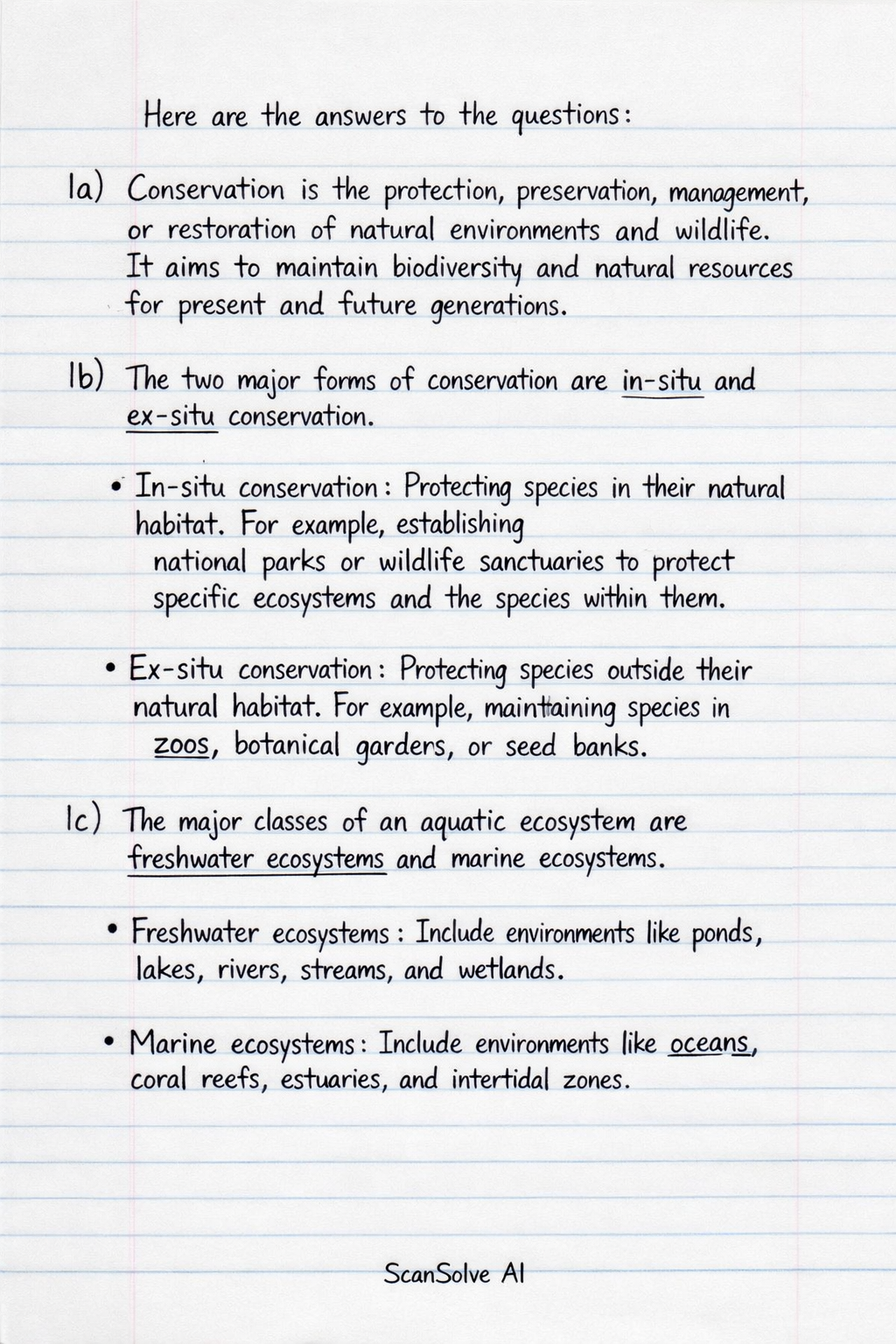
Handwritten Step-by-Step Solution
Get this as a handwritten image on WhatsApp — like a tutor wrote it for you.
Try on WhatsApp