
This business/management problem is solved step by step below, with detailed explanations to help you understand the method and arrive at the correct answer.
ScanSolve AI Answer
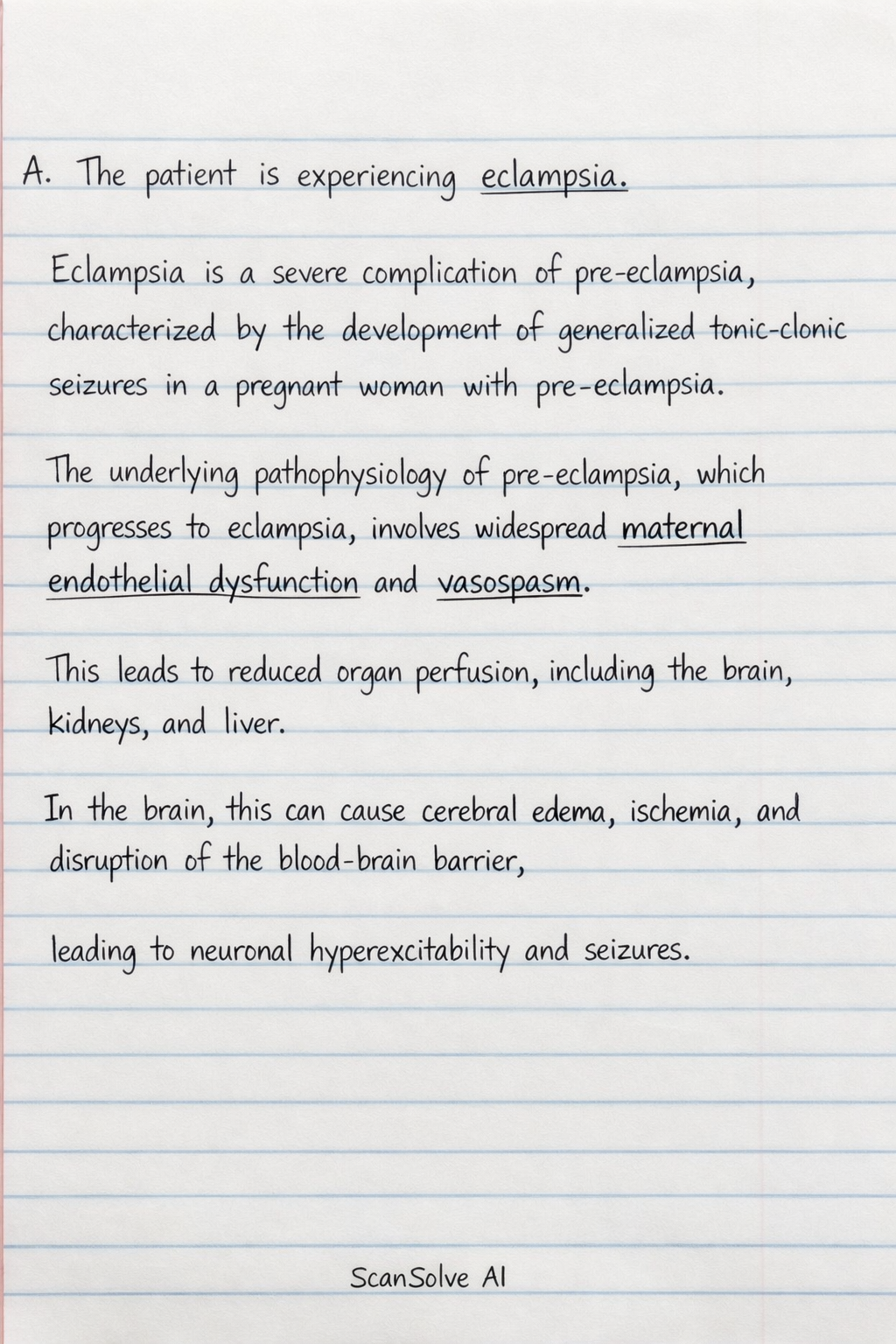
A. The patient is experiencing eclampsia. Eclampsia is a severe complication of pre-eclampsia, characterized by the development of generalized tonic-clonic seizures in a pregnant woman with pre-eclampsia. The underlying pathophysiology of pre-eclampsia, which progresses to eclampsia, involves widespread maternal endothelial dysfunction and vasospasm. This leads to reduced organ perfusion, including the brain, kidneys, and liver. In the brain, this can cause cerebral edema, ischemia, and disruption of the blood-brain barrier, leading to neuronal hyperexcitability and seizures. B. Five immediate nursing/midwifery interventions during and immediately after the seizure: • Ensure patient safety by protecting her from injury (e.g., padding side rails, removing nearby objects). Do not restrain her. • Maintain a patent airway by turning the patient to her left side to prevent aspiration and improve placental perfusion. • Administer high-flow oxygen via a face mask to improve maternal and fetal oxygenation. • Administer anticonvulsant medication, typically an intravenous loading dose of magnesium sulfate, as prescribed. • Monitor vital signs frequently, including blood pressure, pulse, respiratory rate, and oxygen saturation, and assess fetal heart rate. C. Five complications that may occur if this condition is not properly managed: • Cerebral hemorrhage/stroke: Due to severe uncontrolled hypertension leading to rupture of cerebral blood vessels. • Pulmonary edema: Caused by fluid overload, increased capillary permeability, and cardiac dysfunction. • HELLP syndrome: A severe form of pre-eclampsia characterized by Hemolysis, Elevated Liver enzymes, and Low Platelets. • Placental abruption: Premature separation of the placenta from the uterine wall, leading to severe bleeding and fetal distress. • Preterm birth/Fetal distress: Often necessitated by the need for urgent delivery, or due to chronic uteroplacental insufficiency and maternal seizures causing fetal hypoxia. D. Magnesium sulfate is the drug of choice for the prevention and treatment of eclamptic seizures. Its role is primarily as a central nervous system depressant, reducing neuromuscular irritability and stabilizing neuronal membranes, thereby preventing seizure activity. It also has a mild vasodilatory effect, which can contribute to a slight reduction in blood pressure, but it is not primarily an antihypertensive agent. Four nursing responsibilities when administering magnesium sulfate: • Monitor for signs of magnesium toxicity, including decreased deep tendon reflexes (DTRs), respiratory depression (respiratory rate less than 12 breaths/minute), and decreased level of consciousness. • Monitor vital signs frequently, especially blood pressure, pulse, and respiratory rate, and assess oxygen saturation. • Maintain strict intake and output, monitoring urine output closely (aim for at least 30 mL/hour) to ensure adequate renal excretion of magnesium. • Ensure that calcium gluconate (the antidote for magnesium toxicity) is readily available at the bedside.