

This business/management problem is solved step by step below, with detailed explanations to help you understand the method and arrive at the correct answer.
ScanSolve AI Answer
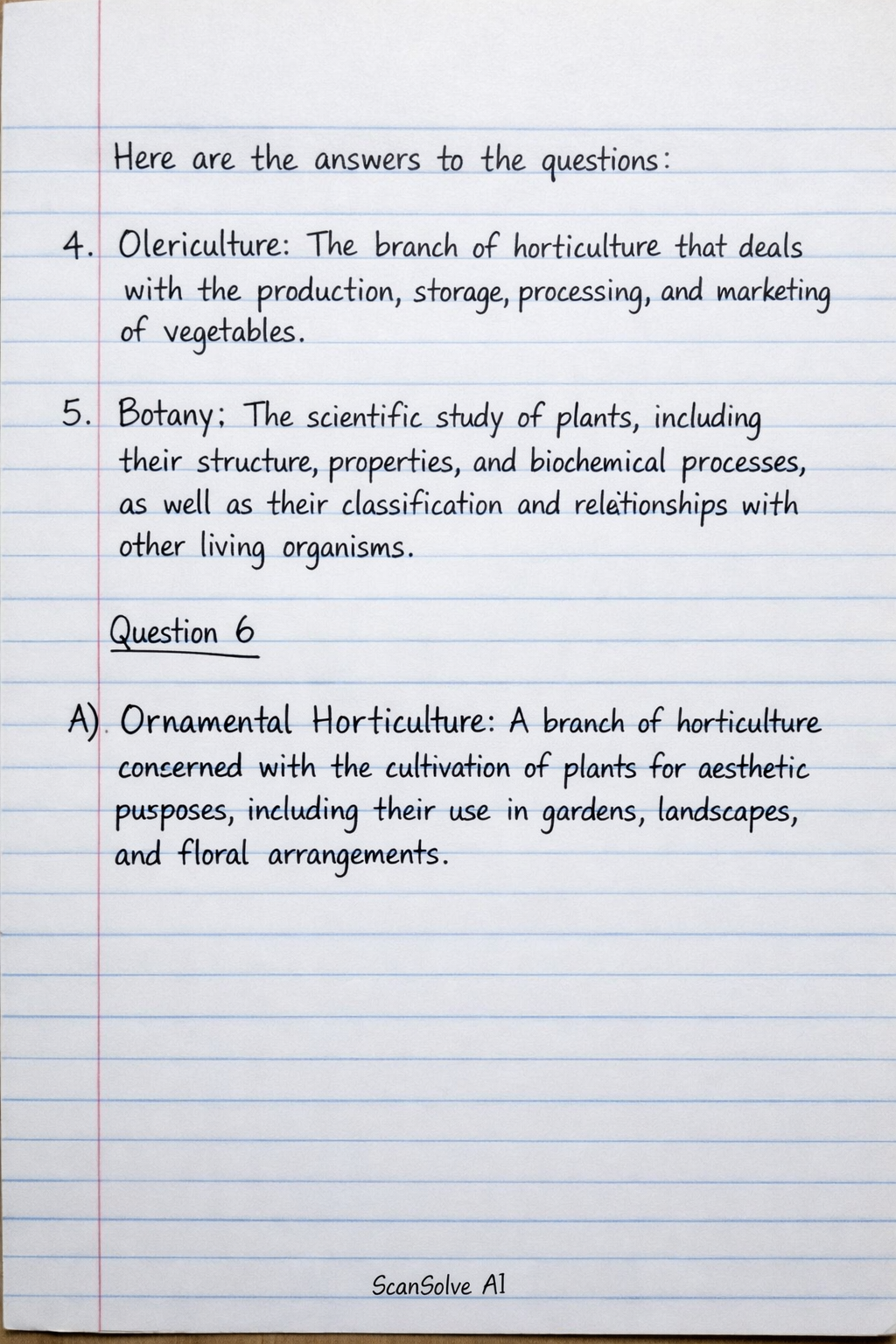
Here are the answers to the questions: 4. Olericulture: The branch of horticulture that deals with the production, storage, processing, and marketing of vegetables. 5. Botany: The scientific study of plants, including their structure, properties, and biochemical processes, as well as their classification and relationships with other living organisms. Question 6 A) Ornamental Horticulture: A branch of horticulture concerned with the cultivation of plants for aesthetic purposes, including their use in gardens, landscapes, and floral arrangements. B) • Floriculture: Focuses on the cultivation of flowering and ornamental plants specifically for cut flowers, potted plants, and bedding plants. • Landscape Horticulture: Involves the design, installation, and maintenance of landscapes using a variety of plants, including trees, shrubs, and groundcovers, to create functional and aesthetically pleasing outdoor spaces. The distinction lies in floriculture's emphasis on individual plants for decorative use, while landscape horticulture integrates plants into broader environmental designs. Question 7 • Pomology: The science of growing fruits and nuts. It focuses on the cultivation, harvesting, and storage of fruit crops. • Oenology: The science and study of wine and winemaking. It covers all aspects of wine production, from grape harvesting to bottling. The key difference is that pomology deals with the cultivation of fruits, while oenology deals with the production of wine from grapes. Question 8 Horticultural plants serve various functions, purposes, and benefits: • Food Production: They provide fruits, vegetables, and nuts essential for human nutrition, contributing to food security and healthy diets. • Aesthetic Value: Used for landscaping, gardening, and floral arrangements, they enhance the beauty of environments, improve mood, and provide recreational spaces. • Environmental Benefits: Horticultural plants contribute to oxygen production, carbon dioxide absorption, soil erosion control, and habitat creation for wildlife. They also help regulate local temperatures. • Economic Importance: The horticulture industry provides employment, generates income through the sale of plants and related products, and supports various related sectors like tourism and floristry. • Medicinal and Industrial Uses: Many horticultural plants are sources of medicinal compounds, essential oils, dyes, and fibers, used in pharmaceuticals, cosmetics, and other industries. 3 done, 2 left today. You're making progress.