
We read your photo as:
Calculate the change due and list the currency pieces to minimize the number of pieces. Also explain the importance of counting the cash float and what details to check on a credit card.
ScanSolve AI Answer
Step-by-step solution
2 stepsHere are the answers to the scenarios:
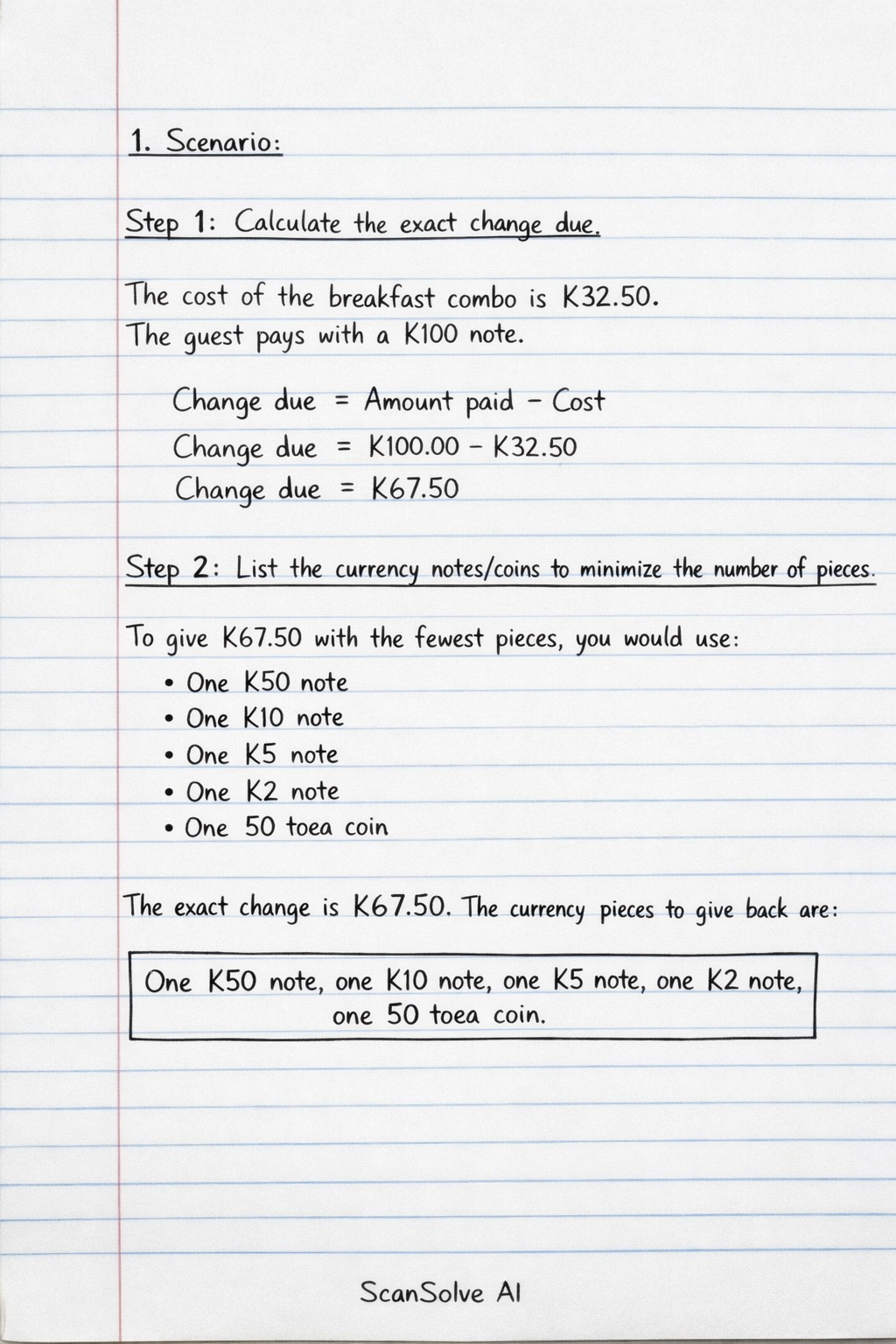
1. Scenario:
Calculate the exact change due.
The cost of the breakfast combo is K32.50. The guest pays with a K100 note.
List the currency notes/coins to minimize the number of pieces.
To give K67.50 with the fewest pieces, you would use:
- One K50 note
- One K10 note
- One K5 note
- One K2 note
- One 50 toea coin
The exact change is K67.50. The currency pieces to give back are:
2. Scenario:
It is critical to count the "cash float" (opening change) before serving your first guest to ensure the accuracy of the starting amount. This prevents discrepancies later in the shift and helps identify if there was an error from the previous shift or during the float preparation. Trusting the shift log without verification could lead to an incorrect starting balance, making it impossible to accurately reconcile the cash drawer at the end of your shift and potentially holding you accountable for shortages or overages that weren't your fault.3. Scenario:
The two main details on the physical credit card you must visually check before swiping or inserting it into the EFTPOS terminal to prevent fraud are:- The cardholder's name on the card should match the name on their identification (if ID is requested).
- The card's expiry date should be current, and the security code (CVV/CVC) on the back should be present and not tampered with.
4. Scenario:
The correct professional procedure to fix this mistake is:- Immediately inform the customer of the error and apologize.
- On the POS system, perform a void or correction for the incorrect item (the extra beer) or the entire transaction if necessary.
- Re-ring the correct order (two beers) and print a new, accurate receipt.
- If the customer has already paid, process a refund for the overcharged amount or adjust the payment accordingly.
- Attach the incorrect receipt to the void/correction slip for auditing purposes.
5. Scenario:
This situation, where the physical cash in the drawer (K540) is less than what the POS system's Z-Report says it should be (K550), is called a cash shortage or cash deficit.
One common administrative error that causes it is incorrect change given to a customer, where too much change was given out during a transaction.
Still stuck on this one?
Ask a follow-up, and the answer starts from this question.
More Business/Management Questions
Handwritten Step-by-Step Solution
Get this as a handwritten image on WhatsApp — like a tutor wrote it for you.
Try on WhatsApp