
We read your photo as:
Differentiate between labour law, labour contract, remuneration, recruitment, and on the job training.
ScanSolve AI Answer
Step-by-step solution
5 stepsHere are the answers to the questions.
4. b) Differentiate between the following:
-
i. Labour law: Labour law is a body of legal rules and regulations that govern the rights, responsibilities, and working conditions of employees and employers. It sets the minimum standards for employment, such as minimum wage, working hours, and safety regulations, and provides a framework for industrial relations.
-
ii. Labour contract: A labour contract is a legally binding agreement between an employer and an individual employee that specifies the terms and conditions of employment. It outlines specific details like job duties, salary, benefits, duration of employment, and termination clauses, all within the boundaries set by labour law.
-
iii. Remuneration: Remuneration refers to the total compensation an employee receives for their work. This includes not only direct financial payments like wages and salaries but also indirect benefits such as health insurance, retirement plans, paid leave, and other perks.
-
iv. Recruitment: Recruitment is the process of identifying, attracting, screening, interviewing, and selecting suitable candidates for job vacancies within an organization. Its primary goal is to find and hire qualified individuals to fill open positions.
-
v. On the job training: On-the-job training is a method of employee training where new or existing employees learn job-specific skills and knowledge while actively performing their work duties. It typically involves learning from experienced colleagues, supervisors, or through practical application in the actual work environment.
-
vi. State and explain four (4) types of remunerations offered by an employer to the employees:
- Wages: These are payments made to employees, typically calculated on an hourly or daily basis, often for manual or blue-collar work. Wages can vary based on the number of hours worked.
- Salary: A salary is a fixed regular payment, usually paid on a monthly or bi-weekly basis, often for professional, administrative, or white-collar positions. It is generally not dependent on the exact number of hours worked.
- Commission: This is a payment based on a percentage of sales or revenue generated by an employee. It is commonly used in sales roles to incentivize performance and directly link compensation to results.
- Benefits (Fringe Benefits): These are non-cash forms of compensation provided to employees in addition to their wages or salary. Examples include health insurance, retirement plans, paid time off, company vehicles, and housing allowances.
5. KANOCO business problem (for Branch A)
To calculate the profit or loss for Branch A, we will follow these steps:
Calculate Total Revenue for Branch A.
Calculate Total Variable Costs for Branch A.
Calculate Contribution Margin for Branch A.
Identify and sum Branch A's specific fixed costs/direct expenses.
- Cost of material = 20,000 FRS
- Salary of sales agent = 30,000 FRS
- Transport expenses = 10,000 FRS
(Note: The enterprise-wide fixed cost of 5000 FRS is not allocated to Branch A for this calculation, as the question focuses on Branch A's direct performance.)
Calculate Profit/Loss for Branch A.
The profit for Branch A is .
Still stuck on this one?
Ask a follow-up, and the answer starts from this question.
More Business/Management Questions
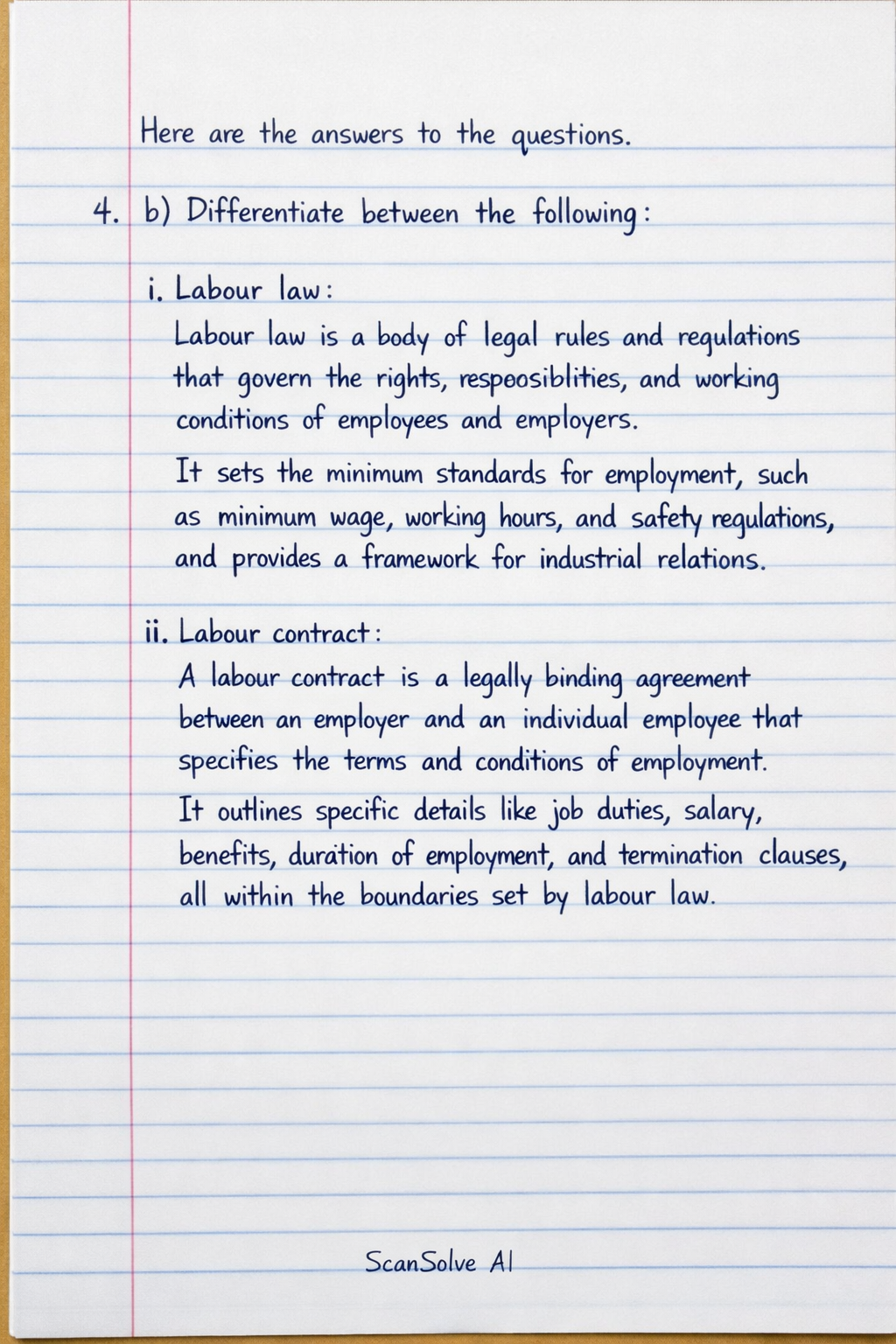
Handwritten Step-by-Step Solution
Get this as a handwritten image on WhatsApp — like a tutor wrote it for you.
Try on WhatsApp