
We read your photo as:
Describe the features and applications of five different types of ships.
Business/Management
ScanSolve AI Answer
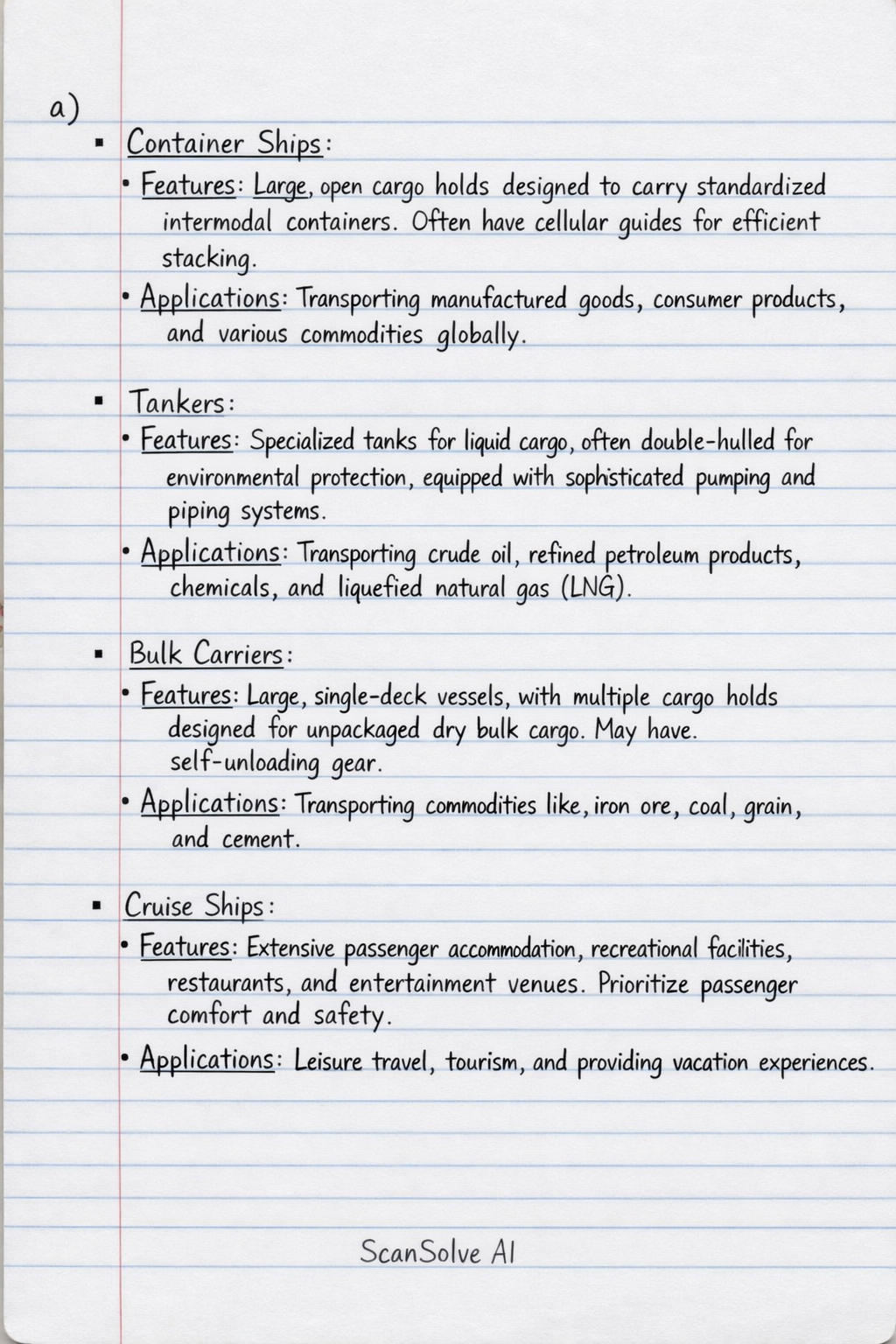
a)
- Container Ships:
- Features: Large, open cargo holds designed to carry standardized intermodal containers. Often have cellular guides for efficient stacking.
- Applications: Transporting manufactured goods, consumer products, and various commodities globally.
- Tankers:
- Features: Specialized tanks for liquid cargo, often double-hulled for environmental protection, equipped with sophisticated pumping and piping systems.
- Applications: Transporting crude oil, refined petroleum products, chemicals, and liquefied natural gas (LNG).
- Bulk Carriers:
- Features: Large, single-deck vessels with multiple cargo holds designed for unpackaged dry bulk cargo. May have self-unloading gear.
- Applications: Transporting commodities like iron ore, coal, grain, and cement.
- Cruise Ships:
- Features: Extensive passenger accommodation, recreational facilities, restaurants, and entertainment venues. Prioritize passenger comfort and safety.
- Applications: Leisure travel, tourism, and providing vacation experiences.
- Tugs:
- Features: Relatively small but powerful vessels with high maneuverability and strong towing capabilities, often equipped with specialized towing gear.
- Applications: Assisting larger vessels with docking and undocking, towing barges, and providing salvage services.
Was this helpful?
Still stuck on this one?
Ask a follow-up, and the answer starts from this question.
Got a different question?Ask your own question
More Business/Management Questions
QList the various types of vessels, their features and specific applications.QClassify different types of vessels based on their design, features, and applications.QA) What are the functions of a ship's clearance? b) Discuss the use of any five deck covering…QList any 5 types of poems and its features next to each. Choose one poem from the types you've…QState and explain five factors that determine freight rate in sea transport.
Handwritten Step-by-Step Solution
Get this as a handwritten image on WhatsApp — like a tutor wrote it for you.
Try on WhatsApp