
We read your photo as:
Explain five functions performed by an Entrepreneur.
ScanSolve AI Answer
Step-by-step solution
10 stepsHere are the solutions to the first few questions:
Question 3: Explain five functions performed by an Entrepreneur.
Risk-bearing
Entrepreneurs undertake financial and personal risks associated with starting and running a business, as there is no guarantee of success or profit.
Innovation
Entrepreneurs introduce new products, services, production methods, or open new markets, driving economic growth and improving efficiency.
Organization and Coordination
Entrepreneurs bring together and efficiently combine the factors of production—land, labor, and capital—to produce goods and services.
Decision-making
Entrepreneurs make crucial strategic and operational decisions regarding resource allocation, production, marketing, and expansion of the business.
Resource Mobilization
Entrepreneurs identify and secure the necessary financial, human, and physical resources required to establish and operate their ventures.
Question 4(a): What is Effective Demand?
Effective demand refers to the desire for a commodity backed by the ability and willingness to pay for it. It represents the actual demand in the market, where consumers are not only willing but also financially capable of purchasing goods and services at a given price.
Question 4(b): Explain five factors that affect the demand for a commodity.
Price of the Commodity
The price of the commodity itself is a primary determinant. Generally, as the price of a commodity increases, its quantity demanded decreases, and vice versa, assuming all other factors remain constant (Law of Demand).
Income of the Consumer
For most goods (normal goods), an increase in consumer income leads to an increase in demand. For inferior goods, an increase in income may lead to a decrease in demand as consumers switch to higher-quality alternatives.
Price of Related Goods
The demand for a commodity is affected by the prices of its substitutes and complements. If the price of a substitute good increases, the demand for the original commodity will likely increase. If the price of a complementary good increases, the demand for the original commodity will likely decrease.
Tastes and Preferences
Consumer tastes and preferences play a significant role. If a commodity becomes more fashionable or desirable, its demand will increase. Conversely, if it falls out of favor, demand will decrease.
Expectations of Future Prices
If consumers expect the price of a commodity to rise in the future, they may increase their current demand to purchase it before the price goes up. Conversely, an expectation of falling prices may lead to a decrease in current demand.
Still stuck on this one?
Ask a follow-up, and the answer starts from this question.
More Business/Management Questions
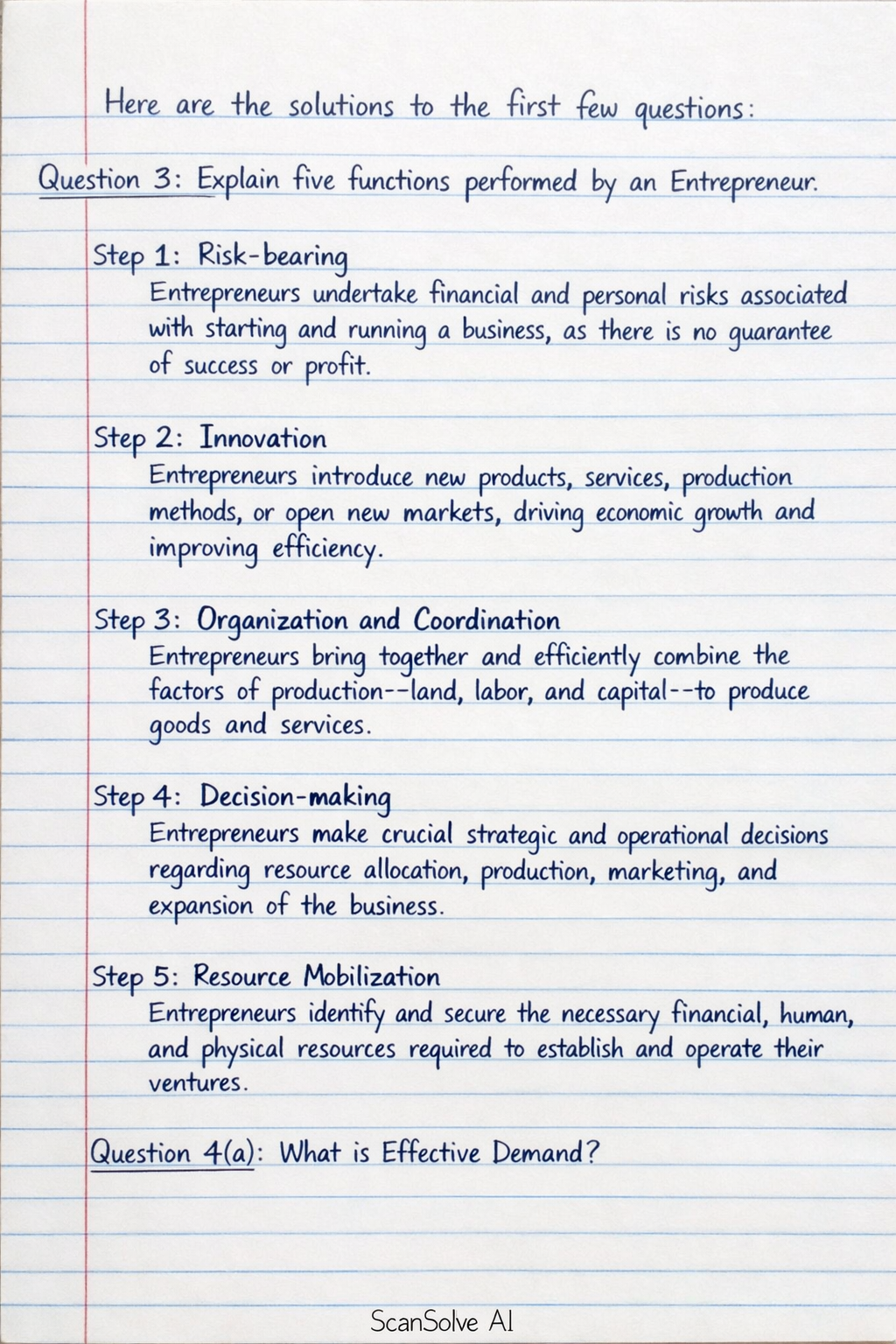
Handwritten Step-by-Step Solution
Get this as a handwritten image on WhatsApp — like a tutor wrote it for you.
Try on WhatsApp