

This business/management problem is solved step by step below, with detailed explanations to help you understand the method and arrive at the correct answer.
ScanSolve AI Answer
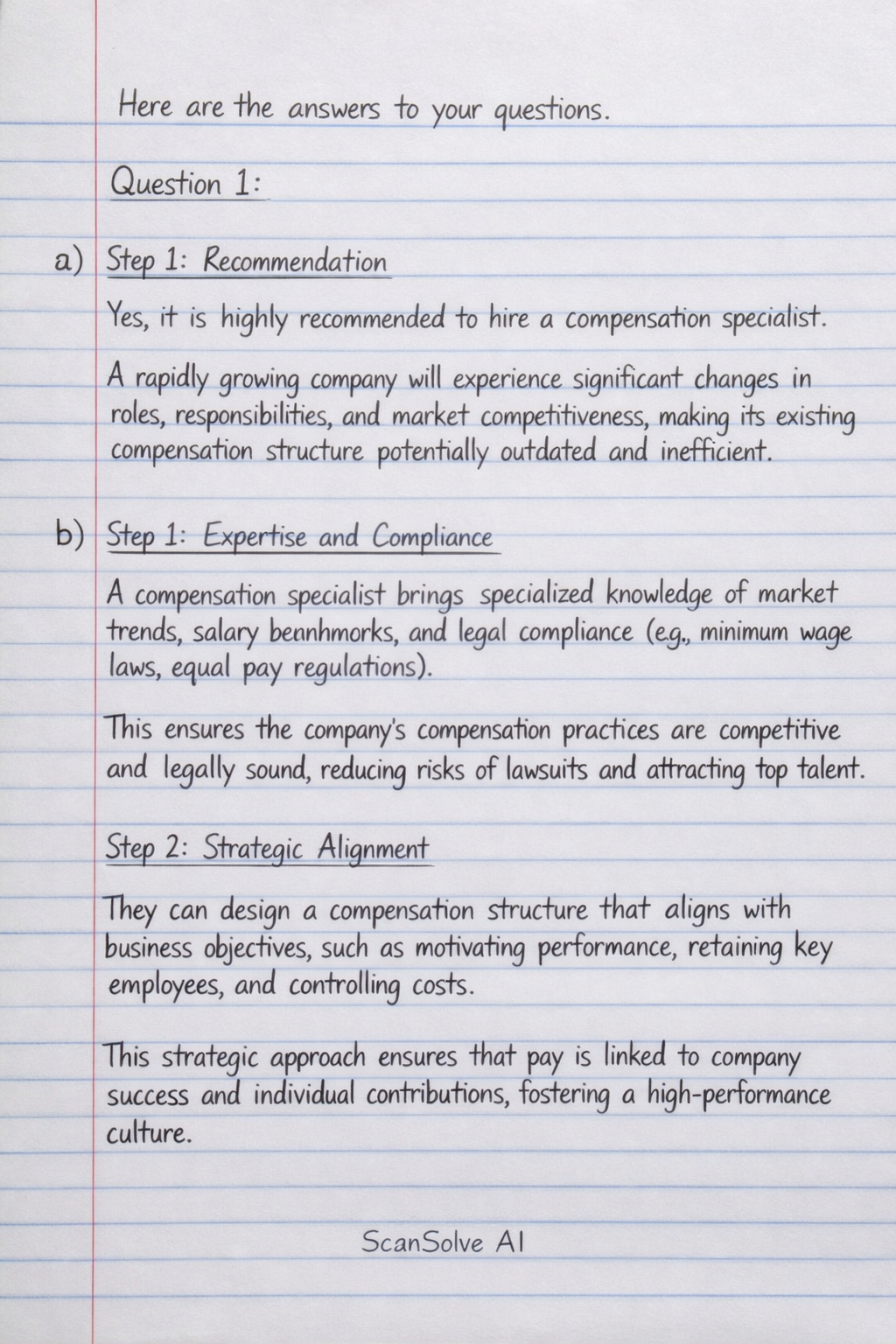
Here are the answers to your questions. Question 1: a) Step 1: Recommendation Yes, it is highly recommended to hire a compensation specialist. A rapidly growing company will experience significant changes in roles, responsibilities, and market competitiveness, making its existing compensation structure potentially outdated and inefficient. b) Step 1: Expertise and Compliance A compensation specialist brings specialized knowledge of market trends, salary benchmarks, and legal compliance (e.g., minimum wage laws, equal pay regulations). This ensures the company's compensation practices are competitive and legally sound, reducing risks of lawsuits and attracting top talent. Step 2: Strategic Alignment They can design a compensation structure that aligns with business objectives, such as motivating performance, retaining key employees, and controlling costs. This strategic approach ensures that pay is linked to company success and individual contributions, fostering a high-performance culture. Step 3: Fairness and Equity The specialist can establish internal equity by ensuring employees are paid fairly relative to their roles, skills, and performance within the company. This reduces employee dissatisfaction, improves morale, and prevents high turnover due to perceived unfairness. Step 4: Cost Management By analyzing compensation data and designing efficient pay structures, a specialist can help optimize compensation costs. This prevents overpaying for certain roles while ensuring competitive pay for critical positions, leading to better resource allocation and financial health for the growing company. Question 2: Step 1: Attraction and Retention One primary objective is to attract and retain top talent. A well-designed reward policy, including competitive salaries and benefits, makes the startup an appealing employer, crucial for building a strong team in a competitive market. Step 2: Motivation and Performance Another objective is to motivate employees and drive performance. A reward policy should link compensation to individual and company performance, encouraging employees to achieve goals and contribute to the startup's success. Step 3: Fairness and Equity Ensuring internal and external equity is key. The policy must ensure fair pay relative to similar roles in the market (external) and within the company (internal), fostering a sense of fairness and reducing potential dissatisfaction. Step 4: Cost Management Finally, the policy must be fiscally responsible and sustainable. For a startup, managing costs is critical, so the reward policy needs to be competitive enough to attract talent but also affordable within the company's budget, allowing for future growth. Question 3: Step 1: Market Competitiveness The company must consider market rates for similar roles in the distilleries industry and the broader Ghanaian labor market. This ensures the company can attract qualified employees by offering wages and benefits comparable to or better than competitors. Step 2: Internal Equity Establishing fairness across different roles and levels within the Dombo Distilleries company is crucial. This involves evaluating job responsibilities, skills required, and contribution to the company to ensure employees perceive their pay as equitable relative to their colleagues. Step 3: Company's Financial Capacity The financial health and budget of the new distillery must be a key consideration. The wage and compensation structure must be sustainable and align with the company's ability to pay, ensuring long-term viability without overstretching resources. Step 4: Legal and Regulatory Compliance Adherence to Ghanaian labor laws and regulations regarding minimum wage, overtime, and benefits is essential. This ensures the company operates legally, avoids penalties, and maintains a positive reputation as an employer. Question 4: Step 1: Company Size and Financial Health Larger, more financially stable companies often offer a wider range and more generous fringe benefits. For example, a multinational corporation might offer comprehensive health insurance, retirement plans, and tuition reimbursement, while a small startup might only provide basic health coverage due to budget constraints. Step 2: Industry and Market Practices The industry in which an organization operates significantly influences its fringe benefits. For instance, tech companies often provide perks like free meals, gym memberships, and flexible work arrangements to attract talent, whereas a manufacturing company might focus more on safety equipment and production bonuses. Step 3: Employee Demographics and Needs The age, family status, and preferences of the workforce impact the types of benefits offered. A company with many young employees might offer student loan repayment assistance, while one with older employees might prioritize robust retirement plans and elder care support. Step 4: Legal and Regulatory Requirements Government mandates and labor laws dictate certain minimum fringe benefits. For example, in many countries, employers are legally required to provide social security contributions, workers' compensation, and sometimes paid sick leave, regardless of company size or industry. Drop the next question 📸