
We read your photo as:
List and explain the 5 components of the logistics cycle
Business/Management
ScanSolve AI Answer
here are the answers for Question 3:
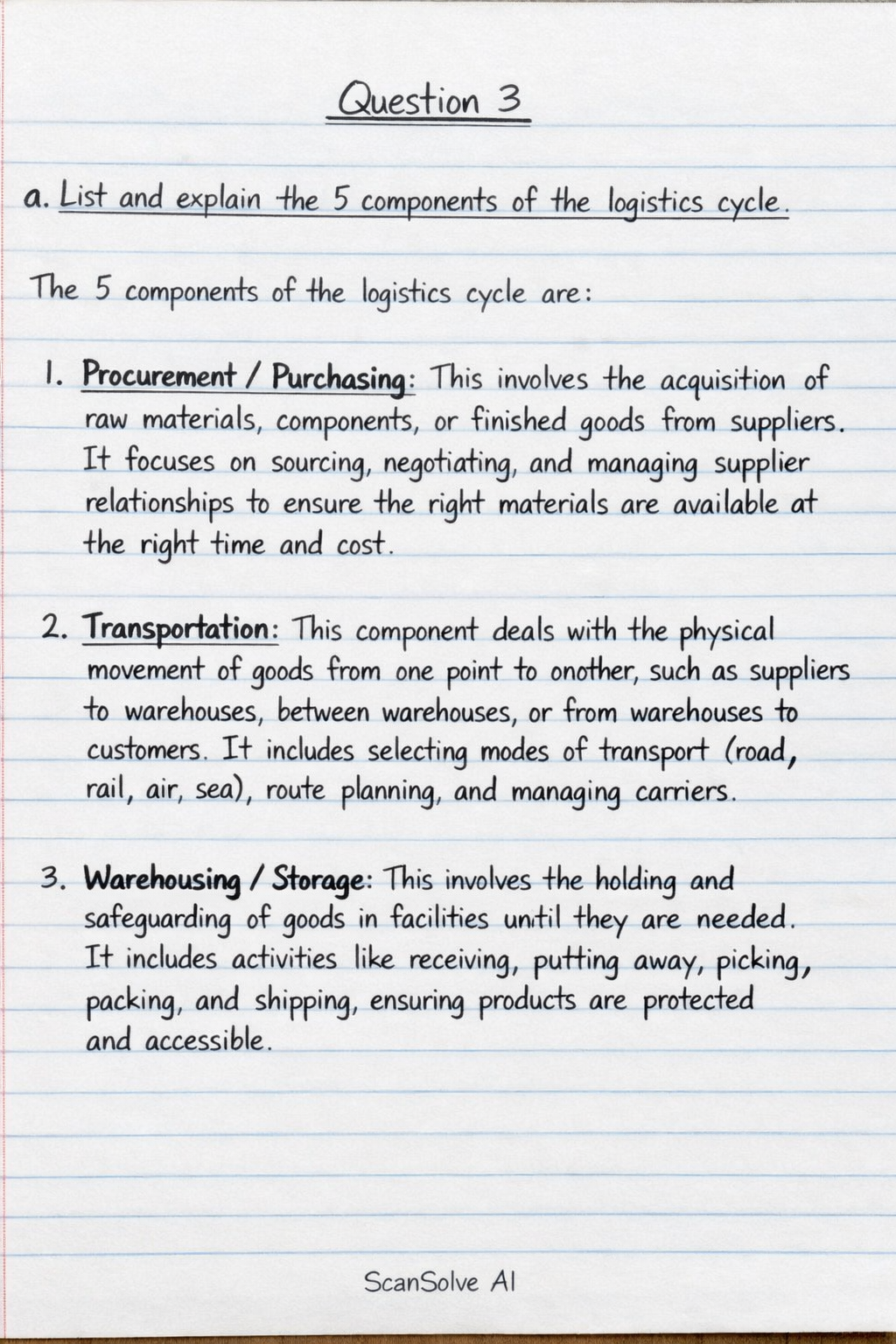
Question 3
a. List and explain the 5 components of the logistics cycle
The 5 components of the logistics cycle are:
- 1. Procurement/Purchasing: This involves the acquisition of raw materials, components, or finished goods from suppliers. It focuses on sourcing, negotiating, and managing supplier relationships to ensure the right materials are available at the right time and cost.
- 2. Transportation: This component deals with the physical movement of goods from one point to another, such as from suppliers to warehouses, between warehouses, or from warehouses to customers. It includes selecting modes of transport (road, rail, air, sea), route planning, and managing carriers.
- 3. Warehousing/Storage: This involves the holding and safeguarding of goods in facilities until they are needed. It includes activities like receiving, putting away, picking, packing, and shipping, ensuring products are protected and accessible.
- 4. Inventory Management: This is the process of overseeing the ordering, storage, and use of a company's inventory. Its goal is to minimize the costs of holding inventory while ensuring that there are enough goods to meet customer demand without stockouts.
- 5. Information Flow/Order Processing: This component manages the flow of data and communication throughout the logistics system. It includes receiving customer orders, processing them, tracking inventory levels, and communicating with suppliers and customers to ensure smooth operations.
b. Explain the importance of Storage in logistics
Storage, or warehousing, is crucial in logistics for several reasons:
- It balances supply and demand by holding inventory, allowing companies to meet fluctuating customer needs and seasonal variations.
- It enables consolidation of goods from various sources, making onward transportation more efficient and cost-effective.
- Warehouses provide space for value-added services like packaging, labeling, and kitting, customizing products before shipment.
- It offers protection for goods from damage, theft, and obsolescence, maintaining product quality and integrity.
- Effective storage contributes to cost reduction by facilitating bulk purchasing and optimizing transportation schedules.
Was this helpful?
Still stuck on this one?
Ask a follow-up, and the answer starts from this question.
Got a different question?Ask your own question
More Business/Management Questions
QUnits in supply chain management level 5QFive types of warehouseQWhat are the five elements of the communication mix?QExplain the process of sending an email and identify the 5 components of data communication in this…QList FIVE requirements of the process layout. Give a brief description and list TWO advantages of…
Handwritten Step-by-Step Solution
Get this as a handwritten image on WhatsApp — like a tutor wrote it for you.
Try on WhatsApp