

This business/management problem is solved step by step below, with detailed explanations to help you understand the method and arrive at the correct answer.
ScanSolve AI Answer
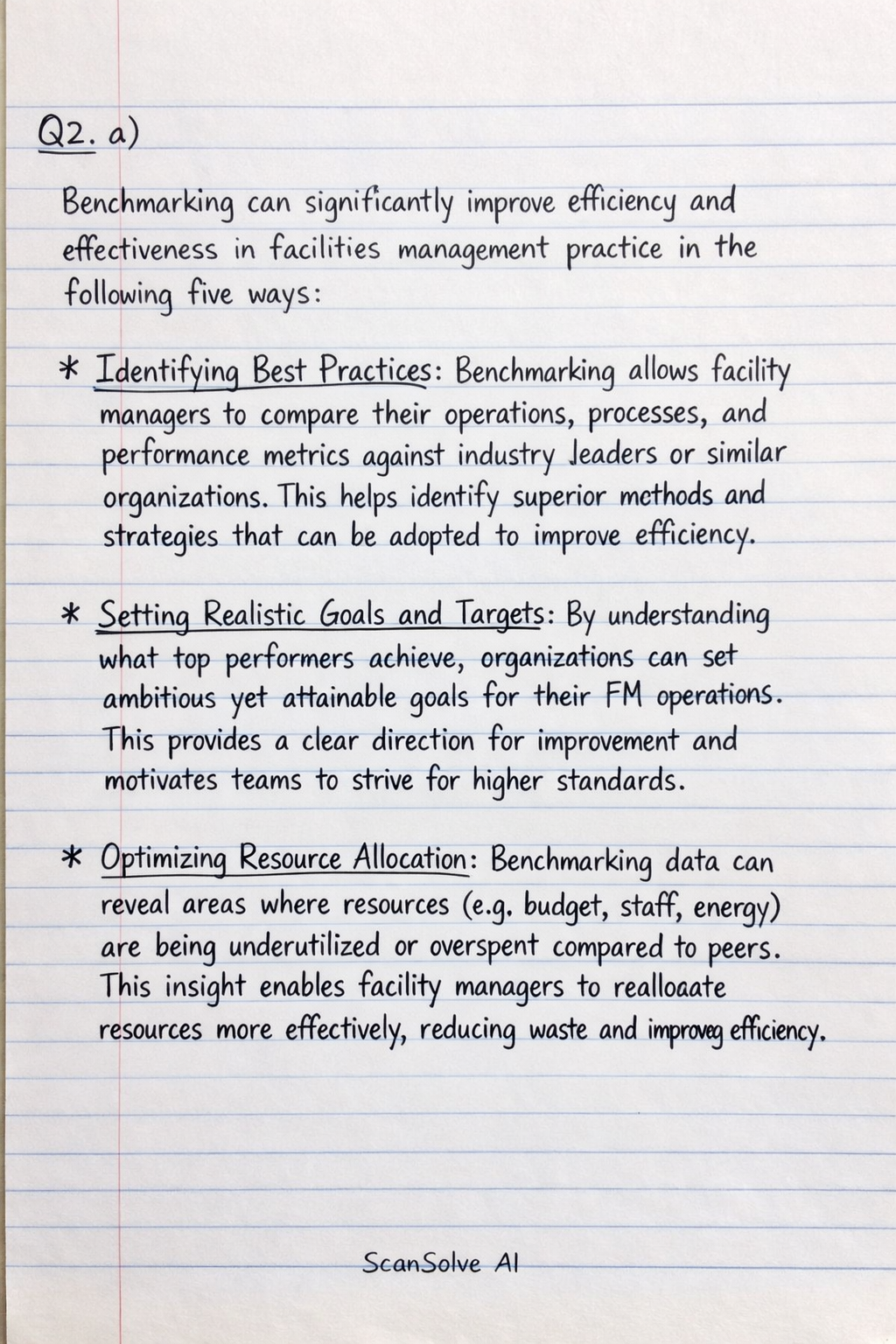
Q2. a) Benchmarking can significantly improve efficiency and effectiveness in facilities management practice in the following five ways: Identifying Best Practices: Benchmarking allows facility managers to compare their operations, processes, and performance metrics against industry leaders or similar organizations. This helps identify superior methods and strategies that can be adopted to improve efficiency. Setting Realistic Goals and Targets: By understanding what top performers achieve, organizations can set ambitious yet attainable goals for their FM operations. This provides a clear direction for improvement and motivates teams to strive for higher standards. Optimizing Resource Allocation: Benchmarking data can reveal areas where resources (e.g., budget, staff, energy) are being underutilized or overspent compared to peers. This insight enables facility managers to reallocate resources more effectively, reducing waste and improving cost-efficiency. Enhancing Performance Measurement: It provides a standardized framework for measuring performance against external benchmarks, not just internal historical data. This offers a more objective assessment of efficiency and effectiveness, highlighting strengths and weaknesses. Driving Continuous Improvement: Benchmarking is not a one-time activity but an ongoing process. Regular comparisons foster a culture of continuous improvement, encouraging facility managers to constantly seek innovative ways to enhance service delivery, reduce costs, and improve occupant satisfaction. Q2. b) A Facility Manager (FM) plays a multifaceted role within an organization, acting as a strategic partner who ensures the optimal functioning of the physical environment to support core business activities. Their major roles and responsibilities include: Strategic Planning and Management: FMs are involved in long-term planning for facility needs, including space utilization, capital projects, and technology integration. They align facility strategies with the organization's overall business objectives, ensuring that the physical assets contribute to strategic goals. Operations and Maintenance: This is a core responsibility, encompassing the day-to-day management of building systems (HVAC, electrical, plumbing), preventive and corrective maintenance, repairs, and ensuring the continuous operation of all facility infrastructure. They manage service contracts and oversee maintenance staff. Health, Safety, and Security: FMs are responsible for creating and maintaining a safe and secure environment for all occupants. This includes developing and implementing safety protocols, managing emergency preparedness plans, ensuring compliance with health and safety regulations, and overseeing security systems and personnel. Space Management and Planning: They optimize the use of physical space within the organization, managing office layouts, reconfigurations, moves, and expansions. This involves ensuring that space is utilized efficiently to support productivity and accommodate growth, often using tools like Computer-Aided Facility Management (CAFM) systems. Financial Management: FMs manage significant budgets related to facility operations, maintenance, utilities, and capital projects. They are responsible for cost control, budgeting, forecasting, and ensuring that facility expenditures provide value for money, often engaging in procurement activities for services and supplies. Q2. c) Facilities Management (FM) is crucial in enhancing organizational performance because it directly impacts the productivity, cost-efficiency, risk management, and overall strategic alignment of an organization. Optimizing Productivity and Employee Well-being: Well-managed facilities provide a comfortable, safe, and functional environment that directly supports employee productivity and morale. Optimal lighting, temperature, air quality, and ergonomic workspaces reduce distractions and health issues, allowing employees to focus on their core tasks and perform better. Cost Control and Efficiency: Effective FM minimizes operational costs through efficient energy management, proactive maintenance that prevents costly breakdowns, and optimized space utilization. By reducing utility bills, extending asset lifespans, and streamlining service delivery, FM contributes directly to the organization's financial health and bottom line. Risk Management and Compliance: FMs ensure that facilities comply with all relevant health, safety, environmental, and building regulations. This proactive approach mitigates legal and financial risks, prevents accidents, and protects the organization's reputation, ensuring business continuity. Strategic Alignment and Business Support: FM aligns the physical infrastructure with the organization's strategic goals. Whether it's supporting technological advancements, facilitating growth through flexible space solutions, or enhancing brand image through well-maintained premises, FM ensures that the physical assets actively enable and support the organization's mission and objectives. That's 2 down. 3 left today — send the next one.