
We read your photo as:
Provide examples of grape varieties for wine and guidelines for wine service and cocktail preparation.
ScanSolve AI Answer
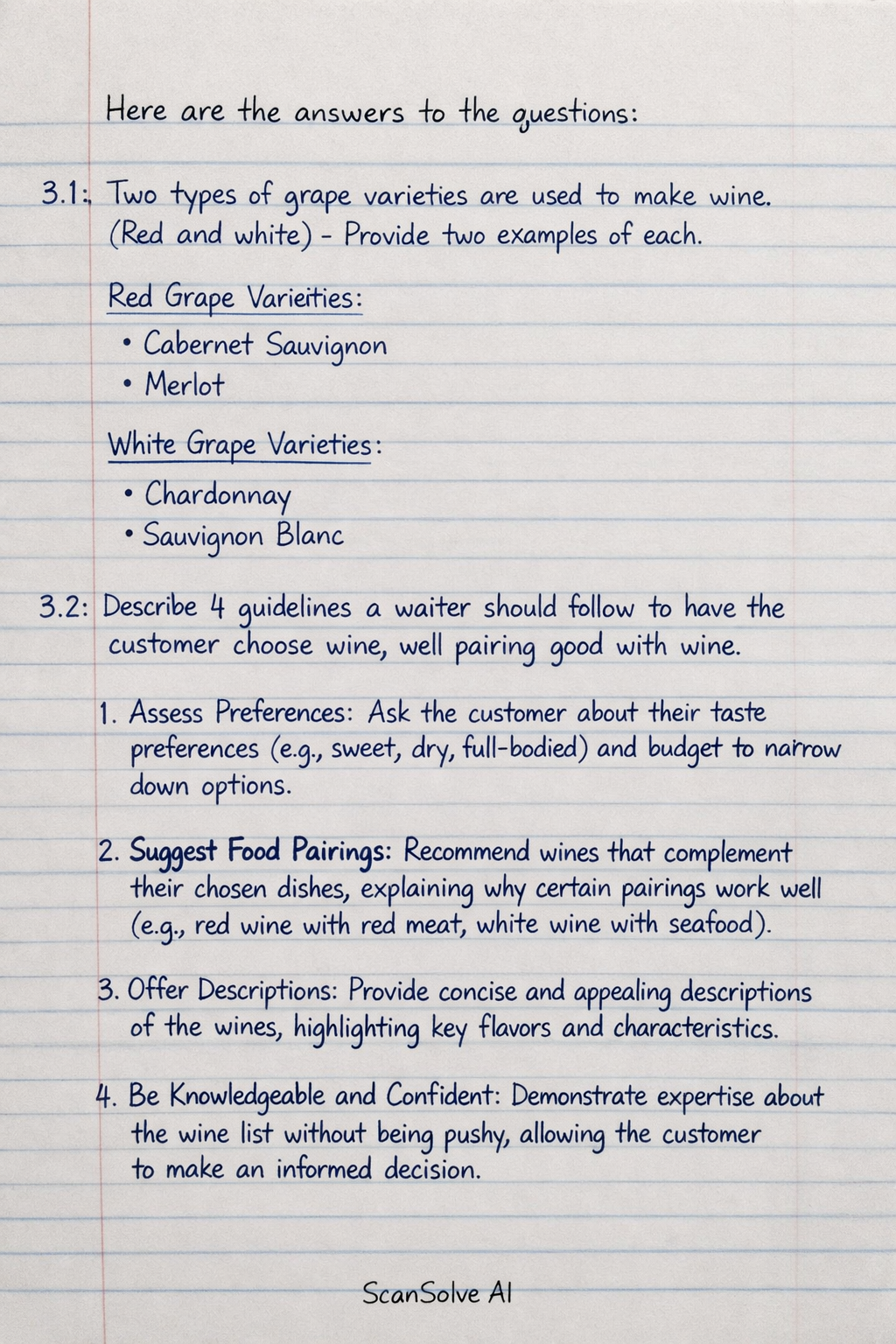
Here are the answers to the questions:
3.1: Two types of grapes varieties are used to make wine (Red and white) - Provide two examples of each.
- Red Grape Varieties:
- Cabernet Sauvignon
- Merlot
- White Grape Varieties:
- Chardonnay
- Sauvignon Blanc
3.2: Describe 4 guidelines a waiter should follow to have the customer choose wine, well pairing good with wine.
- Assess Preferences: Ask the customer about their taste preferences (e.g., sweet, dry, full-bodied) and budget to narrow down options.
- Suggest Food Pairings: Recommend wines that complement their chosen dishes, explaining why certain pairings work well (e.g., red wine with red meat, white wine with seafood).
- Offer Descriptions: Provide concise and appealing descriptions of the wines, highlighting key flavors and characteristics.
- Be Knowledgeable and Confident: Demonstrate expertise about the wine list without being pushy, allowing the customer to make an informed decision.
3.3: Name 3 tips/guidelines when preparing a Cocktail.
- Use Fresh Ingredients: Always opt for fresh juices, herbs, and garnishes to ensure the best flavor and quality.
- Measure Accurately: Follow recipes precisely using jiggers or measuring tools to maintain consistent taste and balance.
- Chill Ingredients and Glassware: Use plenty of ice to chill the shaker, ingredients, and serving glass to ensure the cocktail is served refreshingly cold.
3.4: Discuss how Cocktail bar-man deal with a polite and friendly manner.
A cocktail barman should always greet customers warmly with a smile and maintain eye contact to show attentiveness. They should listen actively to orders and preferences, offering knowledgeable recommendations when asked. Throughout service, maintaining a positive and approachable demeanor, even during busy periods, is crucial. If any issues arise, they should be handled professionally and politely, ensuring the customer feels valued and respected.
3.5: Define Silver-Service (3 marks)
Silver service is a formal method of food service where dishes are presented to the guest on platters, and the waiter serves the food onto the guest's plate using a spoon and fork (often referred to as service irons or tongs). This technique requires skill, precision, and coordination from the serving staff.
3.6: Unexpected Situations
3.6.1: Power-Failer. (4)
- Ensure Safety: Immediately prioritize guest and staff safety by providing emergency lighting and guiding guests to safe areas if necessary.
- Communicate: Inform guests about the power outage, apologize for the inconvenience, and provide an estimated time for restoration if known.
- Secure Perishables: Move temperature-sensitive food and beverage items to alternative cold storage or dispose of them if they cannot be kept safe.
- Adapt Service: Adjust service offerings to what is feasible without power, such as serving cold dishes, offering a limited menu, or processing payments manually.
3.6.2: Equipment Failar. (4)
- Identify and Assess: Quickly determine which equipment has failed and the extent of its impact on operations.
- Troubleshoot/Repair: Attempt basic troubleshooting steps or immediately contact maintenance/technical support for repair.
- Implement Contingency: Utilize backup equipment, manual alternatives, or modify the menu and service procedures to work around the failure.
- Communicate: Inform affected guests and staff about any changes, delays, or limitations in service due to the equipment malfunction.
3.6.3: Problem with drink Service Item.
- Assess and Apologize: Immediately identify the nature of the problem (e.g., incorrect drink, broken glass, spill, quality issue) and offer a sincere apology to the guest.
- Rectify Promptly: Offer to replace the drink or item immediately, ensuring the new one meets the guest's expectations.
- Clean Up Discreetly: If there's a spill or broken item, clean it up quickly and discreetly to minimize disruption.
- Report and Learn: Inform management about the incident for tracking and to identify any recurring issues or training needs.
Still stuck on this one?
Ask a follow-up, and the answer starts from this question.
More Business/Management Questions
Handwritten Step-by-Step Solution
Get this as a handwritten image on WhatsApp — like a tutor wrote it for you.
Try on WhatsApp