

This business/management problem is solved step by step below, with detailed explanations to help you understand the method and arrive at the correct answer.
ScanSolve AI Answer
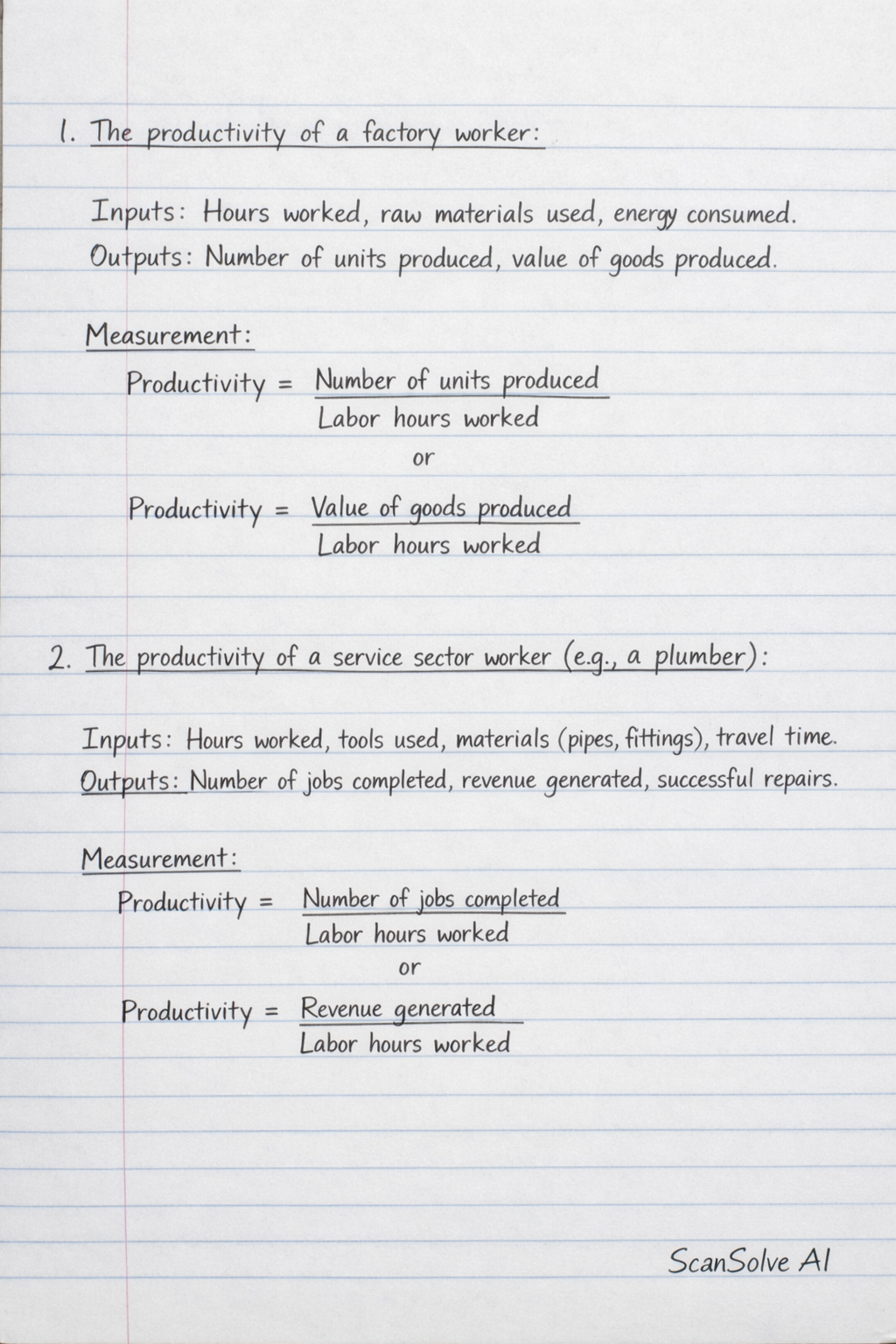
Here are examples of inputs, outputs, and how productivity could be measured in the given contexts: 1. The productivity of a factory worker: Inputs: Labor hours worked, raw materials used by the worker, energy consumed by the worker's tools. Outputs: Number of units assembled or manufactured, value of goods produced. Measurement: Productivity = Number of units producedLabor hours worked or Productivity = Value of goods producedLabor hours worked 2. The productivity of a service sector worker, such as a plumber: Inputs: Labor hours worked, tools used, materials (e.g., pipes, fittings), travel time. Outputs: Number of jobs completed, revenue generated, number of successful repairs. Measurement: Productivity = Number of jobs completedLabor hours worked or Productivity = Revenue generatedLabor hours worked 3. The productivity of a machine: Inputs: Machine operating hours, energy consumed, raw materials processed, maintenance costs. Outputs: Number of units produced, volume of material processed, value of output. Measurement: Productivity = Number of units producedMachine operating hours or Productivity = Volume of material processedEnergy consumed 4. The productivity of the South African Economy: Inputs: Total labor force (total hours worked), capital stock (e.g., infrastructure, machinery), natural resources. Outputs: Gross Domestic Product (GDP), total value of goods and services produced. Measurement: Labor Productivity = GDPTotal labor force or Capital Productivity = GDPTotal capital stock That's 2 down. 3 left today — send the next one.