
We read your photo as:
Explain stock assessment, six ways to avoid product expiry in warehouse, and three purposes of supply chain management.
ScanSolve AI Answer
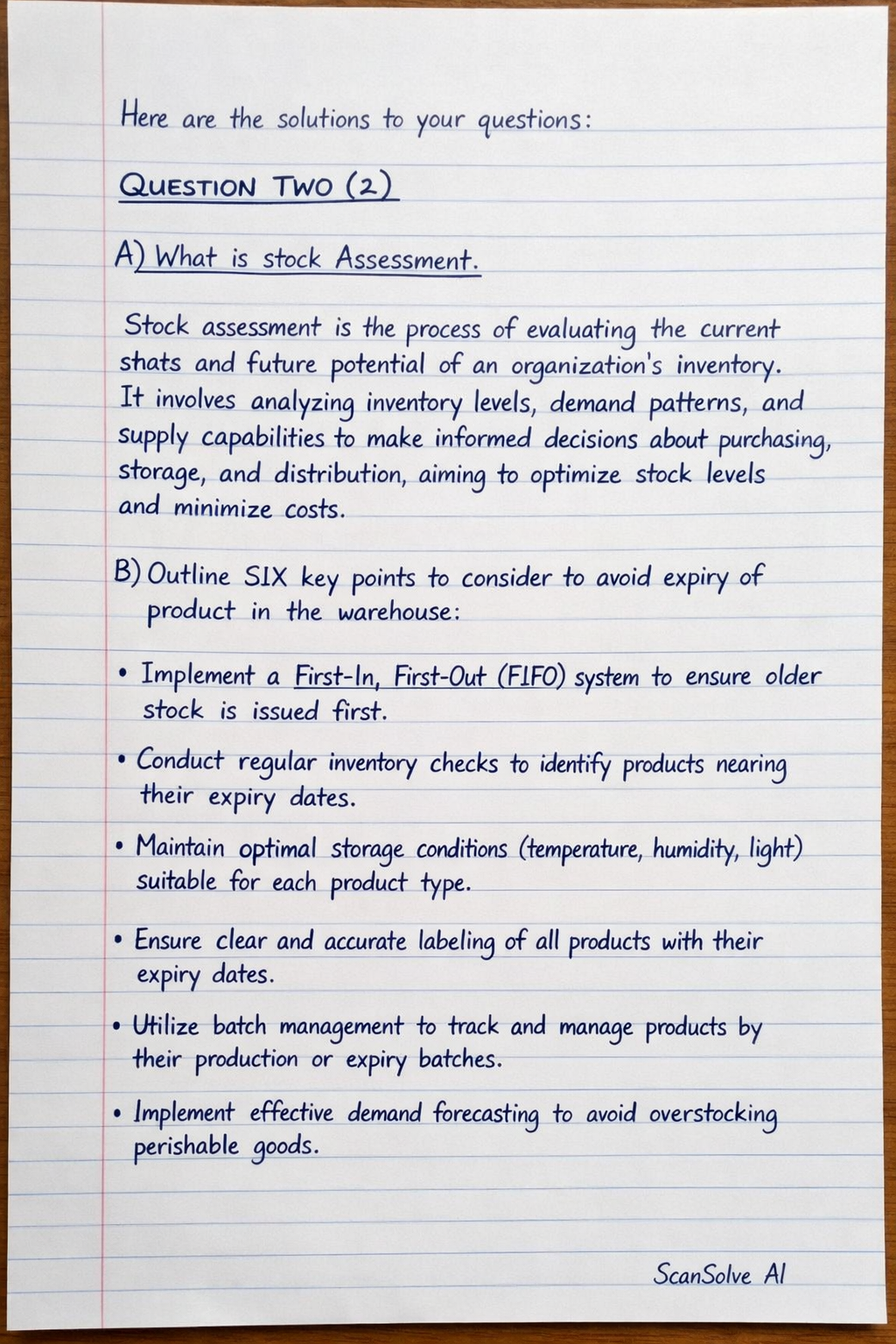
Here are the solutions to your questions:
QUESTION TWO (2)
A) What is stock Assessment
Stock assessment is the process of evaluating the current state and future potential of an organization's inventory. It involves analyzing inventory levels, demand patterns, and supply capabilities to make informed decisions about purchasing, storage, and distribution, aiming to optimize stock levels and minimize costs.
B) Outline SIX key points to consider to avoid expiry of product in the warehouse.
- Implement a First-In, First-Out (FIFO) system to ensure older stock is issued first.
- Conduct regular inventory checks to identify products nearing their expiry dates.
- Maintain optimal storage conditions (temperature, humidity, light) suitable for each product type.
- Ensure clear and accurate labeling of all products with their expiry dates.
- Utilize batch management to track and manage products by their production or expiry batches.
- Implement effective demand forecasting to avoid overstocking perishable goods.
C) Explain THREE purpose of supply chain management
- Enhance Customer Satisfaction: Supply chain management ensures products are delivered to customers efficiently, at the right time, place, and quality, leading to higher customer satisfaction.
- Improve Operational Efficiency: It streamlines processes from procurement to delivery, reducing waste, optimizing resource utilization, and improving overall productivity.
- Reduce Costs: By optimizing inventory levels, logistics, and supplier relationships, supply chain management helps minimize purchasing, storage, and transportation expenses.
D) As a store manager outline SIX things you will look out for during a routine visual inspection of product.
- Expiry Dates: Check if products are nearing or have passed their expiration dates.
- Packaging Integrity: Inspect for any damage, tears, or signs of tampering on product packaging.
- Product Condition: Look for signs of spoilage, discoloration, mold, leaks, or physical damage to the product itself.
- Labeling Accuracy: Verify that product labels are correct, legible, and match the contents.
- Storage Compliance: Ensure products are stored according to specified conditions, such as proper stacking and temperature.
- Pest Infestation: Check for any signs of pests like rodents or insects around the products or storage area.
QUESTION THREE (3)
A) What is supportive supervision
Supportive supervision is a management approach focused on guiding and encouraging staff to improve their performance and develop their skills. It emphasizes problem-solving, mentorship, and creating a positive work environment rather than solely focusing on fault-finding.
B) Outline SIX (6) features in supportive supervision
- Regular Feedback: Providing constructive and timely feedback to staff on their performance.
- Mentorship and Coaching: Guiding staff in skill development and helping them solve work-related challenges.
- Collaborative Approach: Working with staff to identify problems, set goals, and develop solutions together.
- Performance Monitoring: Systematically tracking staff progress and identifying areas for improvement.
- Resource Provision: Ensuring staff have the necessary tools, equipment, and training to perform their duties effectively.
- Recognition and Motivation: Acknowledging good performance and efforts to motivate staff.
C) Explain SIX (6) benefits of physical inventory count
- Accuracy of Records: Corrects discrepancies between physical stock and inventory records, ensuring data reliability.
- Identification of Losses: Helps detect unrecorded losses due to theft, damage, spoilage, or obsolescence.
- Improved Planning: Provides accurate inventory data for better purchasing, demand forecasting, and production planning.
- Financial Reporting Accuracy: Ensures that financial statements reflect the true value of inventory assets.
- Compliance: Helps meet regulatory requirements and audit standards for inventory valuation and control.
- Operational Efficiency: Identifies slow-moving or obsolete stock, allowing for better space utilization and reduced carrying costs.
D) State SIX supply chain management forms used in Ghana Health Service
- Waybill/Delivery Note: Documents the movement of goods between locations.
- Bin Card: A record kept for each item in a storage bin, showing receipts, issues, and current balance.
- Store Ledger Card: A detailed accounting record for each item in the store, tracking all transactions.
- Requisition Form: Used by departments to request items from the central store or warehouse.
- Goods Received Note (GRN): Confirms the receipt of goods from a supplier, detailing quantity and condition.
- Issue Voucher/Note: Authorizes the release of specific items from the store to a requesting department.
Still stuck on this one?
Ask a follow-up, and the answer starts from this question.
More Business/Management Questions
Handwritten Step-by-Step Solution
Get this as a handwritten image on WhatsApp — like a tutor wrote it for you.
Try on WhatsApp