
We read your photo as:
The belief is that a "Shopper service" will help detect and deter bartender theft. Provide a discussion on this matter.
ScanSolve AI Answer
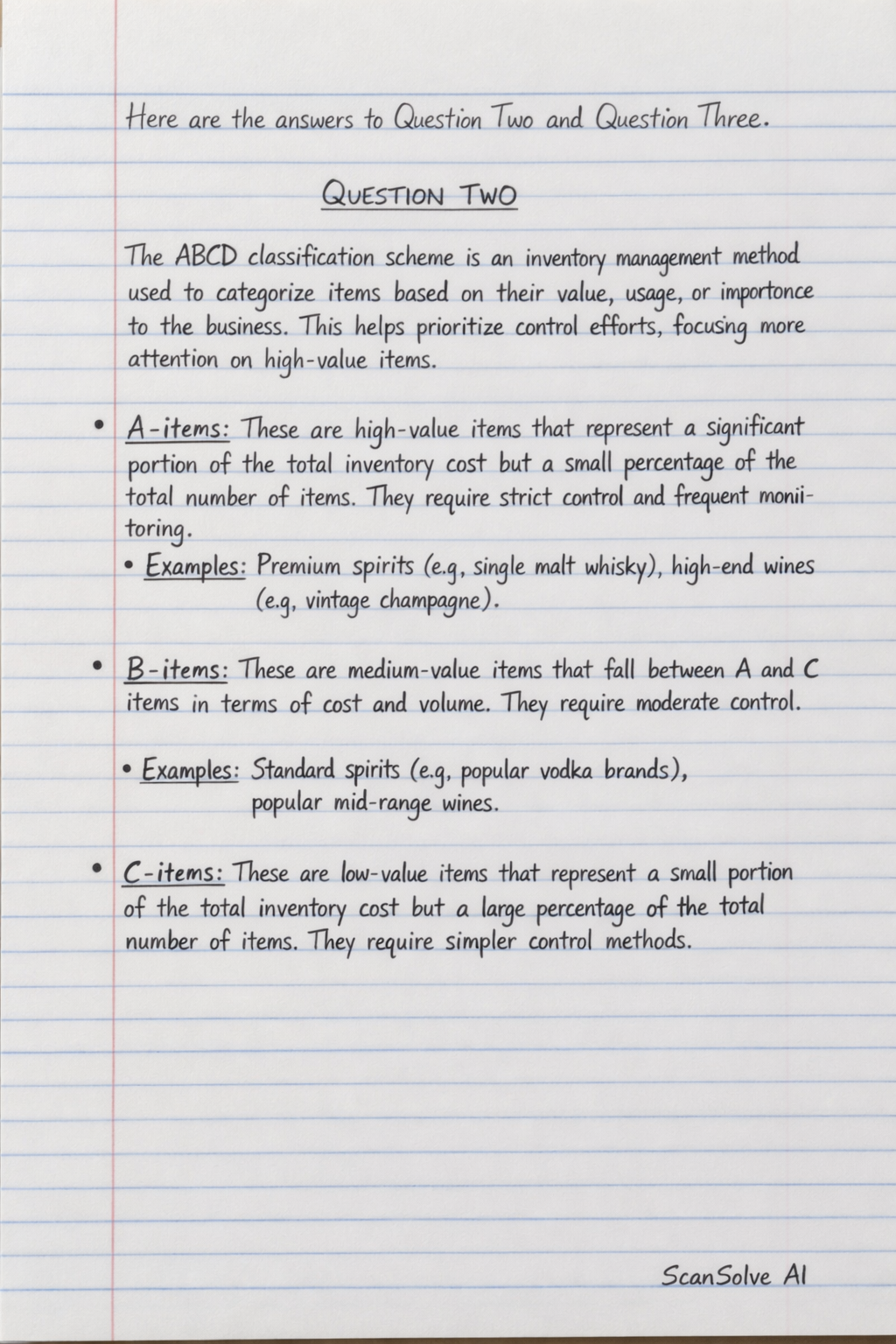
Here are the answers to Question Two and Question Three.
QUESTION TWO
The ABCD classification scheme is an inventory management method used to categorize items based on their value, usage, or importance to the business. This helps prioritize control efforts, focusing more attention on high-value items.
- A-items: These are high-value items that represent a significant portion of the total inventory cost but a small percentage of the total number of items. They require strict control and frequent monitoring.
- Examples: Premium spirits (e.g., single malt whisky), high-end wines (e.g., vintage champagne).
- B-items: These are medium-value items that fall between A and C items in terms of cost and volume. They require moderate control.
- Examples: Standard spirits (e.g., popular vodka brands), popular mid-range wines.
- C-items: These are low-value items that represent a small portion of the total inventory cost but a large percentage of the total number of items. They require simpler control methods.
- Examples: Mixers (e.g., soda, tonic water), garnishes (e.g., lemons, limes).
- D-items: These are typically obsolete, very slow-moving, or discontinued items that have little to no value or demand. They often require disposal or special clearance.
- Examples: A discontinued specialty liqueur, a very niche wine that failed to sell.
QUESTION THREE
A "Shopper service," also known as a mystery shopper program, involves hiring individuals to pose as regular customers to evaluate the service quality, operational procedures, and honesty of staff, including bartenders. The belief that such a service can help detect and deter bartender theft is well-founded due to several reasons:
- Detection of Theft: Mystery shoppers are trained to observe specific behaviors indicative of theft. They can identify instances where bartenders might:
- Fail to ring up sales and pocket the cash.
- Overpour drinks or give away free drinks to friends without authorization.
- Manipulate portion sizes or substitute cheaper ingredients.
- Engage in "short ringing" where a cheaper item is rung up than what was served. By documenting these observations, the service provides concrete evidence of misconduct.
- Deterrence of Theft: The mere knowledge that a mystery shopper could be present at any time acts as a significant deterrent. Bartenders are less likely to engage in dishonest practices if they believe they are being observed and evaluated. This creates an environment of accountability and encourages adherence to established procedures and cash handling policies.
However, while effective, a shopper service has limitations. It is not a constant surveillance method, meaning theft can still occur when shoppers are not present. It also requires a financial investment. For maximum effectiveness, a shopper service should be integrated into a broader control system that includes robust point-of-sale (POS) systems, regular inventory audits, and visible surveillance.
Still stuck on this one?
Ask a follow-up, and the answer starts from this question.
More Business/Management Questions
Handwritten Step-by-Step Solution
Get this as a handwritten image on WhatsApp — like a tutor wrote it for you.
Try on WhatsApp