
We read your photo as:
As a chemistry learner, write a presentation to the people of the area to sensitize them.
ScanSolve AI Answer
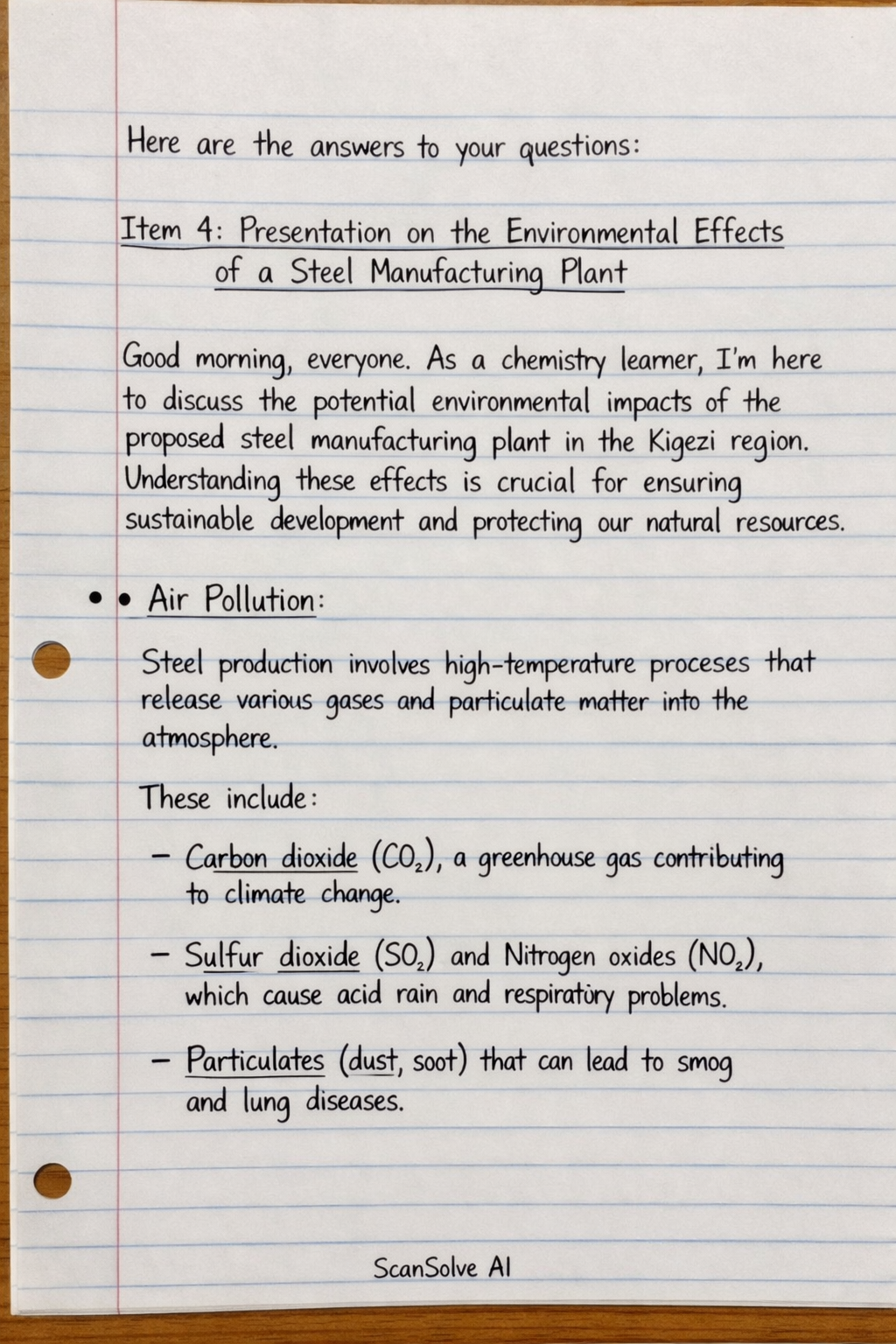
Here are the answers to your questions:
Item 4: Presentation on the Environmental Effects of a Steel Manufacturing Plant
Good morning, everyone. As a chemistry learner, I'm here to discuss the potential environmental impacts of the proposed steel manufacturing plant in the Kigezi region. Understanding these effects is crucial for ensuring sustainable development and protecting our natural resources.
-
Air Pollution: Steel production involves high-temperature processes that release various gases and particulate matter into the atmosphere. These include carbon dioxide (), a greenhouse gas contributing to climate change; sulfur dioxide () and nitrogen oxides (), which cause acid rain and respiratory problems; and particulates (dust, soot) that can lead to smog and lung diseases.
-
Water Pollution: The plant will use significant amounts of water for cooling and processing. Wastewater can contain heavy metals (like iron, lead, cadmium), oils, greases, and other chemical contaminants. If not properly treated, this discharge can pollute rivers and lakes, harming aquatic life and making water unsafe for human consumption and agriculture.
-
Soil Contamination and Land Degradation: Mining for iron ore and disposing of solid waste (like slag) can lead to soil contamination with heavy metals and other toxic substances. Large-scale mining operations also cause habitat destruction, deforestation, and soil erosion, altering the landscape and reducing biodiversity.
-
Noise Pollution: Industrial operations, including heavy machinery, transportation, and processing units, generate significant noise. This can disturb local communities and wildlife, affecting their well-being and natural behaviors.
-
Resource Depletion: Iron ore is a finite resource. Extensive extraction contributes to the depletion of natural resources and requires careful management to ensure long-term sustainability.
It is vital that the company implements advanced pollution control technologies, adheres to strict environmental regulations, and invests in responsible waste management practices to mitigate these impacts. Community engagement and monitoring will also be key to protecting our environment.
PART II: Answer one item from this part.
Item 5: Write-up on Waste Disposal in Namanve Industrial Park
To the Workers and Locals of Namanve Industrial Park,
I am here today as a chemistry learner to discuss a critical issue affecting our community and environment: the disposal of industrial waste into our water bodies. The government, through NEMA, has organized this workshop because the health of our natural resources directly impacts our well-being.
-
Types of Water Pollutants: Factories in industrial parks often discharge various pollutants. These can include heavy metals (e.g., lead, mercury, cadmium) from manufacturing processes, organic chemicals (e.g., solvents, dyes, pesticides) from chemical industries, nutrients (e.g., nitrates, phosphates) from food processing, and even thermal pollution from hot water discharges.
-
Impacts on Aquatic Ecosystems: When these pollutants enter rivers and lakes, they have devastating effects. Heavy metals are toxic to fish and other aquatic organisms, leading to their death or reproductive failure. Organic chemicals can deplete oxygen in the water, creating "dead zones." Nutrients can cause eutrophication, leading to excessive algal growth that blocks sunlight and further depletes oxygen, harming aquatic life.
-
Impacts on Human Health: Contaminated water is a direct threat to human health. People who consume fish from polluted waters can suffer from bioaccumulation of toxins, leading to long-term health problems. Drinking or using contaminated water for domestic purposes can cause various diseases, from gastrointestinal issues to neurological damage.
-
Economic Consequences: Water pollution can severely impact local economies. Fisheries collapse, tourism declines, and the cost of treating water for safe consumption increases significantly. This affects livelihoods and the overall economic stability of the region.
-
Our Collective Responsibility: As workers, you are on the front lines of production, and your adherence to proper waste management protocols is crucial. As locals, your vigilance in reporting illegal dumping and advocating for cleaner practices is equally important. Factories must invest in effective wastewater treatment plants to remove pollutants before discharge. Reducing waste at the source, recycling, and reusing materials are also vital steps.
Let us work together to protect our precious water resources for current and future generations.
Still stuck on this one?
Ask a follow-up, and the answer starts from this question.
More Chemistry Questions
Handwritten Step-by-Step Solution
Get this as a handwritten image on WhatsApp — like a tutor wrote it for you.
Try on WhatsApp