
We read your photo as:
Identify two ores of zinc and explain the purpose of froth flotation. Name an alloy of zinc and its uses. Identify the chemical formula of galena and its impurities. Explain why ores are powdered and
ScanSolve AI Answer
1.a) Two ores from which zinc is extracted are:
- Sphalerite ()
- Calamine ()
1.b) Froth flotation is necessary to concentrate the zinc sulfide ore by separating the valuable mineral from the unwanted gangue (impurities). This process makes the sulfide particles hydrophobic, allowing them to attach to air bubbles and float to the surface, while the gangue sinks.
1.c) One alloy of zinc and its use:
- Brass (alloy of copper and zinc) is used for musical instruments, plumbing fixtures, and decorative items.
2.a) The chemical formula of the chief ore (Galena) is:
2.b) Possible impurities present in the ore include:
- Iron sulfides (e.g., pyrite, )
- Zinc sulfides (e.g., sphalerite, )
- Silicates (e.g., )
2.c) It is necessary for the ore to be converted into powder form to increase its surface area. A larger surface area allows for more efficient and faster chemical reactions during subsequent processes like roasting and smelting, and improves the efficiency of physical separation methods.
2.d) Assuming "process X" refers to the process of converting the ore into powder form:
- Process X: Comminution (Crushing and grinding)
- Significance: It increases the surface area of the ore, which is crucial for efficient chemical reactions and physical separation processes.
2.e) Equations for the reactions taking place:
I. Roasting furnace:
Galena () reacts with oxygen () to form lead(II) oxide () and sulfur dioxide ().
II. Formation of substance B:
Substance B is slag. Limestone () decomposes to calcium oxide (), which then reacts with acidic impurities like silicon dioxide () to form calcium silicate ().
2.f) It is not advisable to use lead pipes in transporting drinking water because lead is a toxic heavy metal. Lead can leach into the water, causing lead poisoning upon ingestion. This can lead to severe health problems, including neurological damage, developmental issues in children, and kidney damage.
Still stuck on this one?
Ask a follow-up, and the answer starts from this question.
More Chemistry Questions
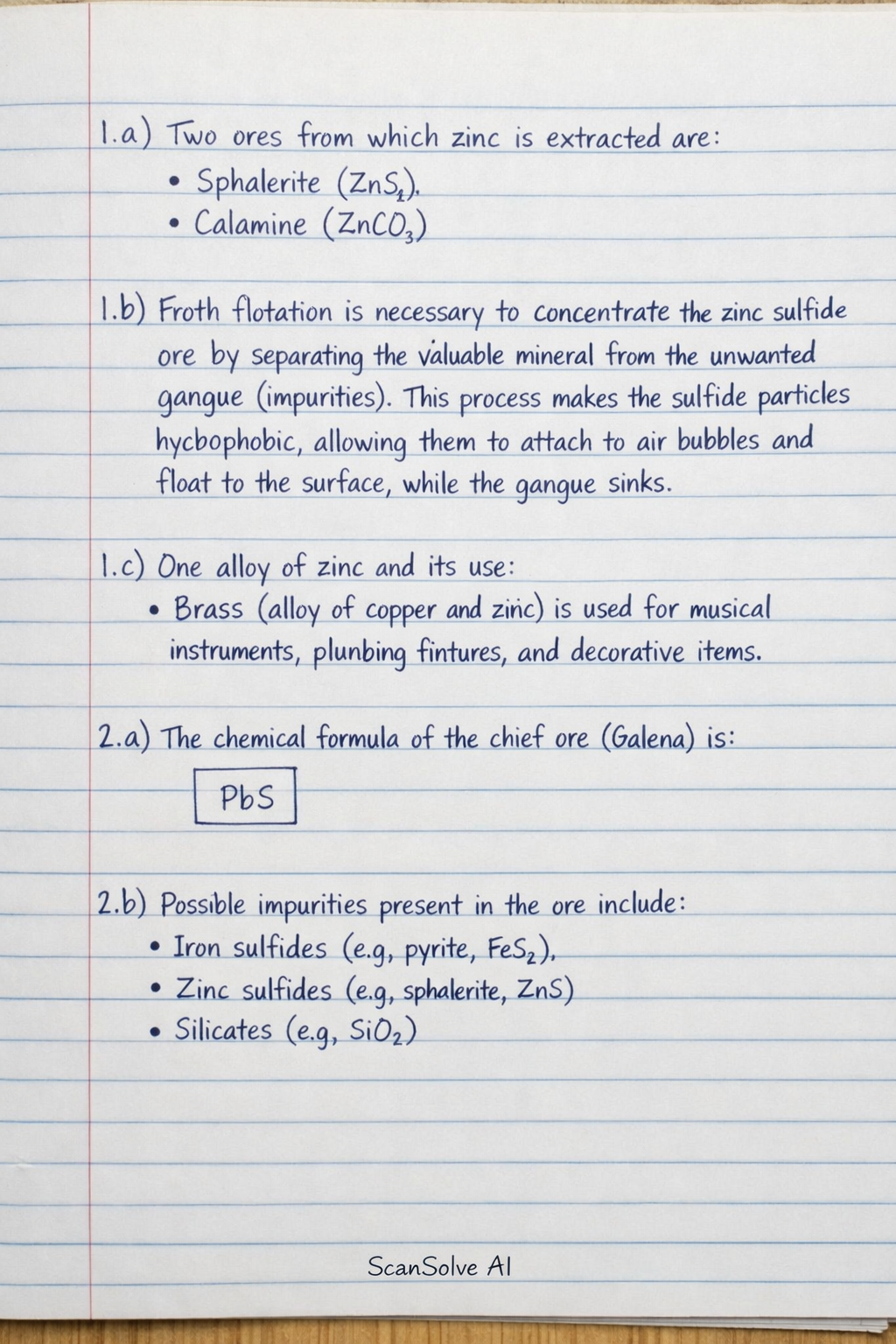
Handwritten Step-by-Step Solution
Get this as a handwritten image on WhatsApp — like a tutor wrote it for you.
Try on WhatsApp