
Give the oxides with their acid base property
ScanSolve AI Answer
here are the oxides with their acid-base properties:
-
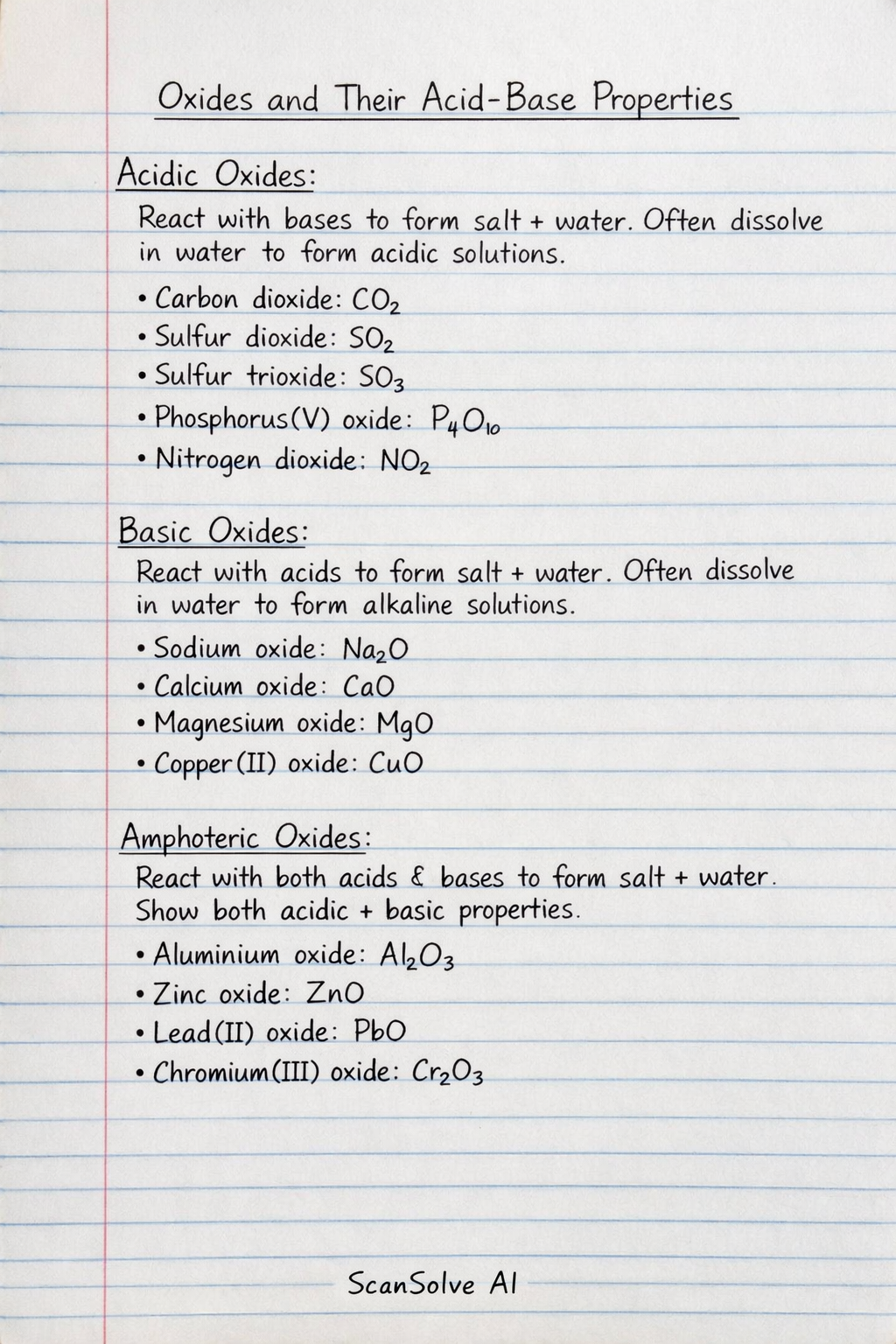
Acidic Oxides: These are typically oxides of non-metals. They react with bases to form salt and water, and often dissolve in water to form acidic solutions.
- Carbon dioxide:
- Sulfur dioxide:
- Sulfur trioxide:
- Phosphorus(V) oxide:
- Nitrogen dioxide:
-
Basic Oxides: These are typically oxides of metals. They react with acids to form salt and water, and often dissolve in water to form alkaline solutions.
- Sodium oxide:
- Calcium oxide:
- Magnesium oxide:
- Copper(II) oxide:
-
Amphoteric Oxides: These oxides can react with both acids and bases to form salt and water. They show properties of both acidic and basic oxides.
- Aluminium oxide:
- Zinc oxide:
- Lead(II) oxide:
- Chromium(III) oxide:
-
Neutral Oxides: These oxides do not react with either acids or bases. They do not form salts or water when mixed with acids or bases.
- Carbon monoxide:
- Nitrogen monoxide:
- Dinitrogen oxide (nitrous oxide):
Still stuck on this one?
Ask a follow-up, and the answer starts from this question.
More Chemistry Questions
Handwritten Step-by-Step Solution
Get this as a handwritten image on WhatsApp — like a tutor wrote it for you.
Try on WhatsApp