
We read your photo as:
What are the answers to questions 2 and 3 regarding chromatography and waste management?
ScanSolve AI Answer
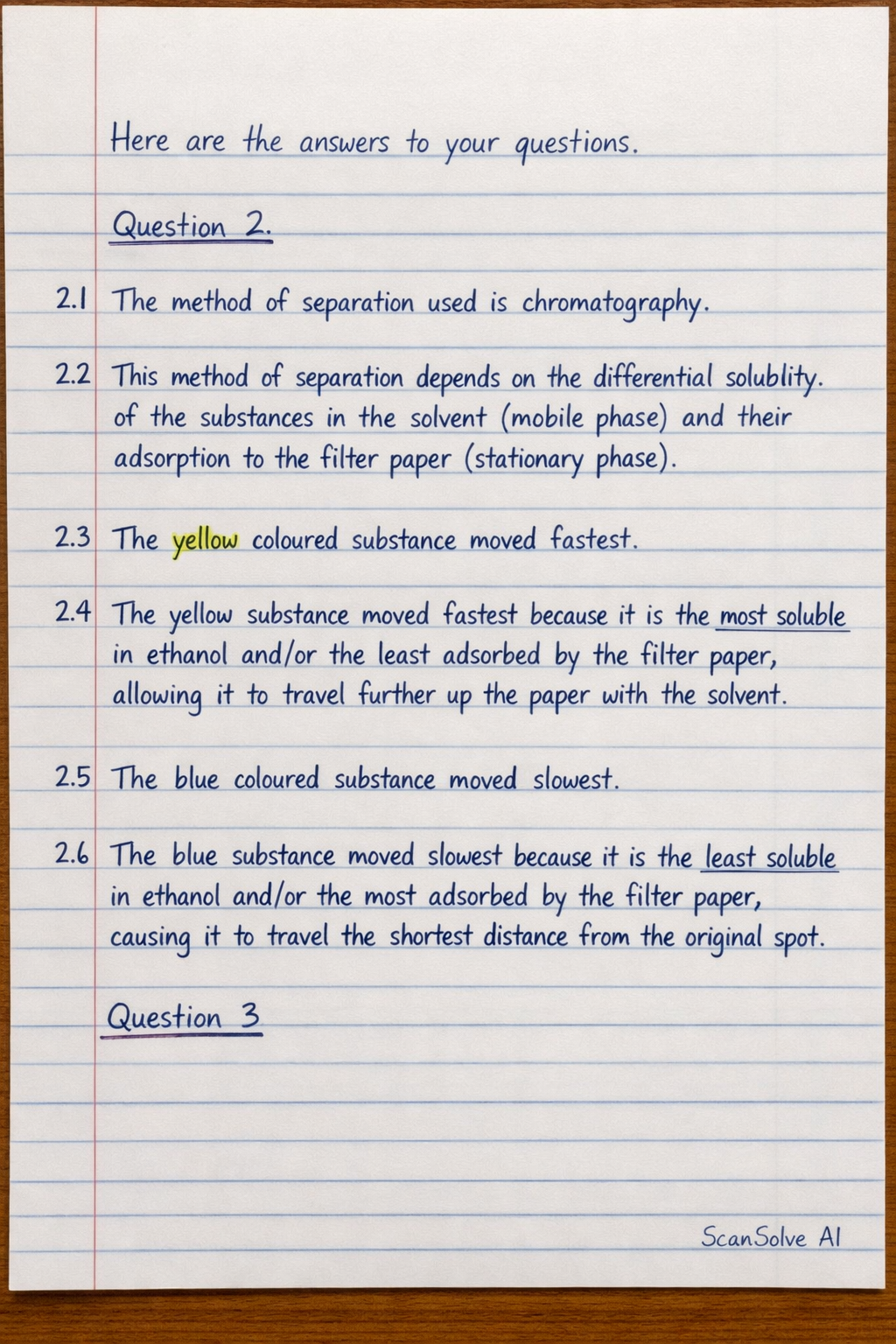
Here are the answers to your questions.
Question 2
2.1 The method of separation used is chromatography.
2.2 This method of separation depends on the differential solubility of the substances in the solvent (mobile phase) and their adsorption to the filter paper (stationary phase).
2.3 The yellow coloured substance moved fastest.
2.4 The yellow substance moved fastest because it is the most soluble in ethanol and/or the least adsorbed by the filter paper, allowing it to travel further up the paper with the solvent.
2.5 The blue coloured substance moved slowest.
2.6 The blue substance moved slowest because it is the least soluble in ethanol and/or the most adsorbed by the filter paper, causing it to travel the shortest distance from the original spot.
Question 3
3.1 Four negative things that may happen if waste is not properly managed:
- Environmental pollution: Unmanaged waste can contaminate soil, water sources, and air, leading to harmful effects on ecosystems and human health.
- Health hazards: Accumulation of waste attracts pests like rats and flies, which can spread diseases and create unsanitary conditions.
- Unpleasant aesthetics and odor: Piles of garbage create an unsightly environment and produce foul smells, reducing the quality of life for residents.
- Blockage of drainage systems: Waste can clog drains and sewers, leading to flooding during rainfall, which can damage property and spread disease.
3.2 People in the area could help solve the problem of too much waste by:
- Practicing the "3 Rs": Reduce consumption of goods, reuse items whenever possible, and recycle materials like plastic, paper, and glass.
- Composting organic waste such as food scraps and yard waste, turning it into valuable soil amendment instead of sending it to landfills.
- Properly disposing of waste by using designated bins and following local waste collection schedules, preventing littering and illegal dumping.
- Participating in community clean-up initiatives and advocating for better waste management policies and infrastructure in their area.
Still stuck on this one?
Ask a follow-up, and the answer starts from this question.
More Chemistry Questions
Handwritten Step-by-Step Solution
Get this as a handwritten image on WhatsApp — like a tutor wrote it for you.
Try on WhatsApp