
This computer science problem involves algorithmic thinking and programming concepts. The solution below explains the approach, logic, and implementation step by step.
ScanSolve AI Answer
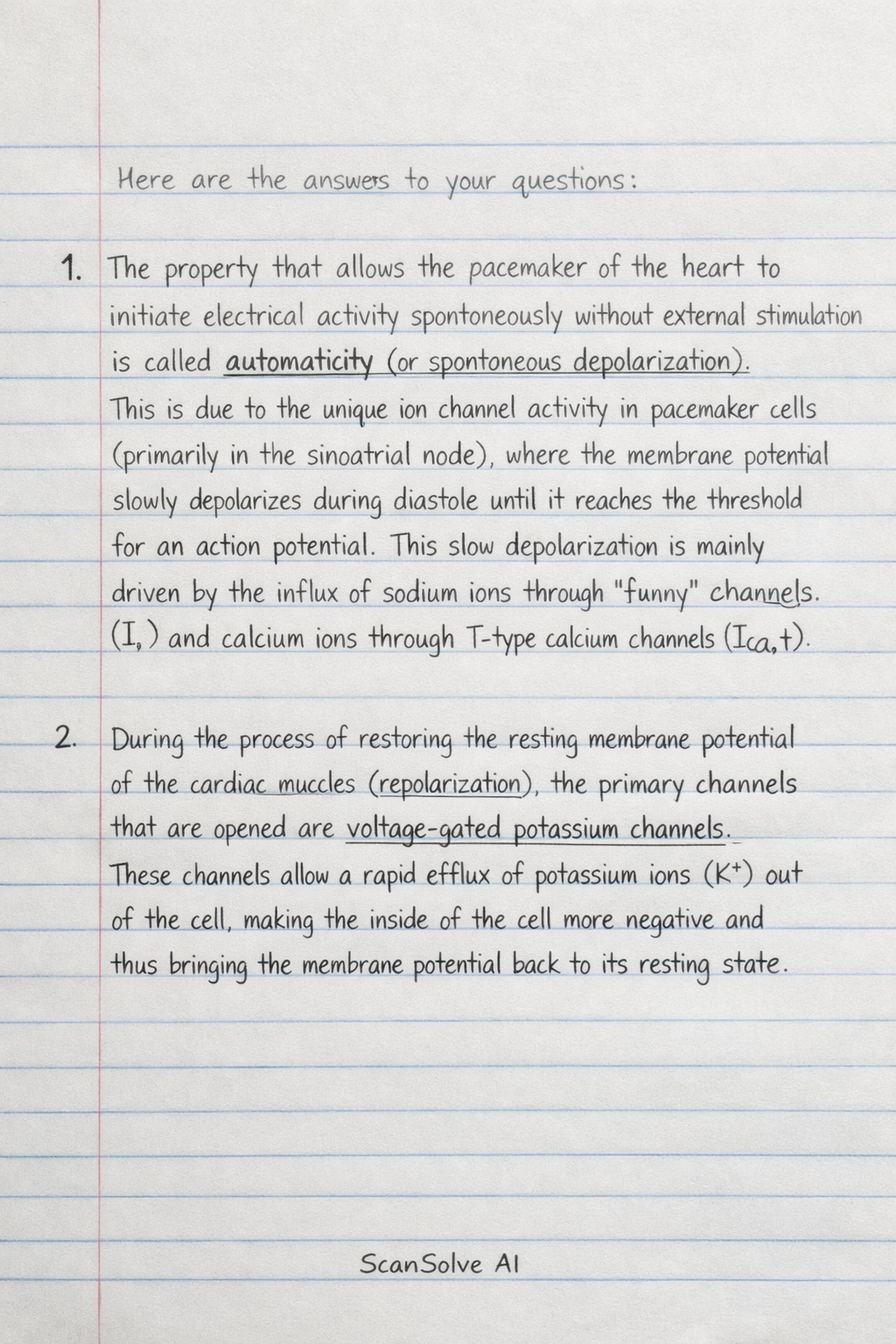
Here are the answers to your questions: 1. The property that allows the pacemaker of the heart to initiate electrical activity spontaneously without external stimulation is called automaticity (or spontaneous depolarization). This is due to the unique ion channel activity in pacemaker cells (primarily in the sinoatrial node), where the membrane potential slowly depolarizes during diastole until it reaches the threshold for an action potential. This slow depolarization is mainly driven by the influx of sodium ions through "funny" channels (I_f) and calcium ions through T-type calcium channels (I_Ca,T). 2. During the process of restoring the resting membrane potential of the cardiac muscles (repolarization), the primary channels that are opened are voltage-gated potassium channels. These channels allow a rapid efflux of potassium ions (K^+) out of the cell, making the inside of the cell more negative and thus bringing the membrane potential back to its resting state.